
The Strategic Advantages of Offshore Staffing for Australian Businesses in 2026
- Offshore staffing
- Australian business
- Cost savings
- Operational efficiency
- Payroll outsourcing
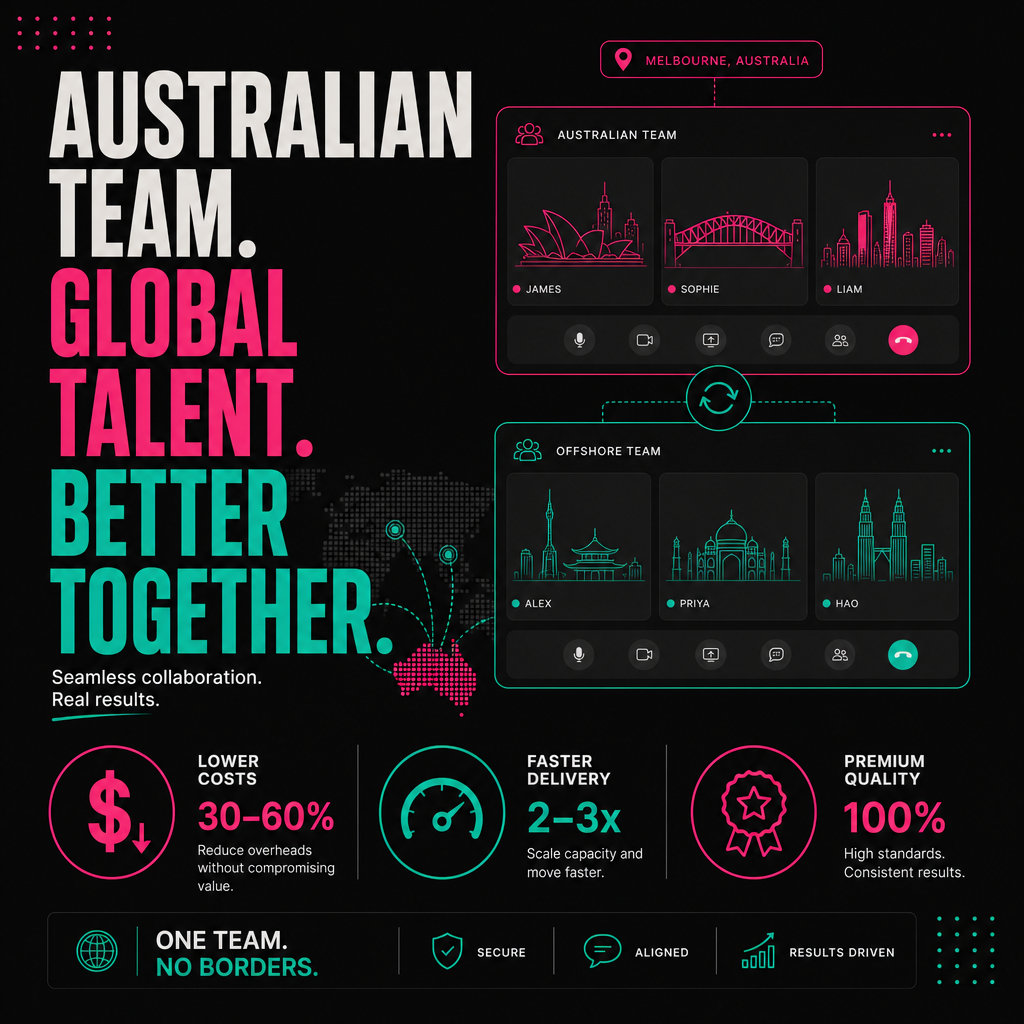
Australian businesses are under pressure on three fronts. Talent shortages that drag out hiring cycles, rising wages and overheads that squeeze margins, and the need to scale capacity without adding chaos. That is the context I see every week speaking with owners and COOs across recruitment, professional services, eCommerce and SaaS. The pattern is consistent. They do not have a pure headcount problem. They have a delivery structure problem that becomes obvious the moment demand spikes or key people go on leave.
Offshore staffing, when it is tied to a delivery system, is the fastest way to resolve this. The keyword is system. Adding people without clarifying workflow, ownership and quality controls only creates new work. Remotee competes on reliability, not resumes. Predictable delivery, not just headcount. What follows is a practical, data-led guide to the benefits of offshore staffing for Australian businesses in 2026, how to do it right, and where it can go wrong if you treat it like a hiring shortcut.
Stats at a glance
- 30-55 percent reduction in total role cost across our 2026 client base, depending on function and seniority
- 6-10 hours of partner or founder time saved per pay cycle in recruitment agencies we implemented this year
- First productive output inside 15 business days on average for back-office functions once the process is documented
- 100 percent payroll compliance across 15 implementations in 2026, driven by compliance-baked workflows
If you want a reliable way to scale capacity, access specialist skills, and protect margins in a tight labour market, offshore staffing deserves a hard look. If you want someone to throw CVs at you and wish you luck, you are in the wrong place.
Key Takeaways
- Offshore staffing delivers real cost savings in Australia when paired with a documented workflow, clear ownership and QA. On its own, cheap labour creates rework.
- Access to a deep offshore talent pool lets you fill specialist roles faster and build follow-the-sun coverage without burning your local team.
- Scalability is not about headcount. It is about installing a delivery system that new people can plug into within days, not months.
- Operational efficiency lifts when routine, rules-based work moves to offshore specialists and local teams focus on higher-value tasks.
- Payroll, finance ops, customer support, recruitment delivery, digital production and analytics are proven offshore wins when systemised.
- The right partner should show you their process, SLAs, QA and security controls before you sign, not after.
Summary Table
| Option | Typical total cost per role | Time to productive output | Control and QA | Best for |
|---|---|---|---|---|
| Local hiring | Highest, plus on-costs and office overheads | 4-12 weeks to recruit, 4-8 weeks to ramp | High, if processes exist | Client-facing work, regulatory interfaces, complex stakeholder roles |
| Offshore staffing with a delivery system | 30-55 percent lower than local, predictable monthly fee | 2-4 weeks if workflows are documented | High, with SOPs, SLAs, QA and reporting | Back-office, operations, finance, recruitment delivery, support, digital production |
| Freelancers or gig platforms | Variable, usually lower on paper | Immediate to variable | Low, inconsistent QA and continuity | One-off tasks, very defined pieces of work |
What offshore staffing means for Australian businesses in 2026
Offshore staffing is not a hiring hack. It is a capacity system that places full-time team members in specialist roles outside Australia, typically in the Philippines for time zone alignment and English proficiency. You retain day-to-day control of work, priorities and standards. A good provider wraps those people in a delivery structure, including documented workflows, SLAs, quality assurance, training and reporting. That is the difference between adding capacity and adding chaos.
For Australian businesses, three specifics matter in 2026:
- Time zone alignment. Manila is two to three hours behind AEST depending on daylight savings. That is real-time collaboration for most of the day.
- Talent depth. The Philippines IT-BPM sector has matured for two decades, producing specialists across finance ops, payroll, customer support, digital production, data, and technical roles. English is the primary business language, and cultural alignment with Australian teams is strong.
- Compliance expectations. Australian employers operate under Single Touch Payroll, superannuation, PAYG, and award interpretation. Getting this wrong is expensive. A reliable offshore partner must understand, document and bake Australian compliance into everyday delivery.
Why offshore staffing has gone mainstream in Australia
The drivers are not hypothetical.
- Persistent skills shortages. ABS job vacancies remain elevated compared to pre-2020 levels, and recruitment for operational and technical roles still takes longer than most businesses can tolerate. When vacancies drag out, service levels slip and local teams burn out.
- Rising labour costs. ABS Wage Price Index data shows steady wages growth across 2024-2026. Combine that with office, compliance and tech stack costs, and many roles become marginal onshore unless they are customer-facing or revenue-critical.
- Demand volatility. Seasonal peaks in eCommerce, project cycles in agencies, and event-driven surges in recruitment make fixed local headcount risky. Offshore staffing provides elastic capacity without burning cash in quiet months.
Two competitors can tell you offshore is normal. I will show you why it works. It works when you eliminate ambiguity from the work, set measurable standards, and build controls that survive staff turnover. That is what we mean by predictable delivery.
The benefits of offshore staffing, with numbers that matter
Cost savings you can bank, not just promise
Across Remotee clients implemented in 2026, total role cost savings range from 30-55 percent versus hiring locally, depending on the function and seniority. That includes salary, benefits, supervision overhead, and our delivery fee. Savings come from wage arbitrage, but the real win is utilising specialist offshore teams who can handle higher throughput per hour due to focus and repetition. It is easier to maintain a cadence of daily, weekly and monthly cycles when that is all a team does.
What cost savings are not. They are not achieved by cramming more work onto one person or ignoring QA. Cheap rework is still expensive. We prioritise first-time-right rates and cycle times as core metrics. If quality slips, savings evaporate.
Access to a deeper talent pool
The offshore talent pool Australia can tap in 2026 is genuinely broad. Payroll specialists with Australian award exposure, Xero and MYOB operators who live in STP and super, support teams with service desk tooling experience, and digital operators who can build, test and ship. Hiring times shorten from months to weeks because the market is deep and active.
Example. A SaaS client needed Tier 1 and Tier 2 support coverage 7am-7pm AEST to meet enterprise SLAs. We stood up a team of six in the Philippines within three weeks, including a Team Lead. Tickets resolved within SLA improved from 82 percent to 95 percent in 60 days. Churn dropped. Local engineers stopped firefighting and focused on roadmap work.
Scalability without chaos
Scaling is not about adding people. It is about making it easy for each new person to slot into a role with a clear playbook. We do that with documented workflows, defined owners and intersection points, and a cadence of daily standups, weekly ops reviews and monthly performance reviews. When peak demand hits, you add people into a machine that is already working. When it is quiet, you redeploy to backlog or reduce capacity cleanly.
Operational efficiency and cycle time reduction
Operational efficiency is the compound result of specialisation, documentation and measurement. When a payroll specialist spends all day in timesheets, awards, leave, STP and reconciliations, they get faster and more accurate. When that is underpinned by checklists and approval gates, errors fall to near zero. Across our recruitment industry implementations in 2026, we cut 6-10 hours of non-billable partner time per pay cycle by pulling them out of manual checks and inbox triage. That time goes back to business development and candidate strategy.
Focus on core activities and customer moments
When your local team stops chasing timesheets, reconciling leave balances or formatting CVs, they can focus on client calls, on-site visits, upsell opportunities and strategic planning. That is where margin lives. We process payroll like it matters, because to your staff, it does. Specialist payroll accountants, not generalist bookkeepers. Payroll done properly. Not squeezed in between tax returns.
Quality, compliance and risk reduction
Most say payroll should stay in-house because it is too sensitive to outsource. My position is different. Payroll is often safer when it is outsourced to specialists. Most payroll risk comes from internal overload, manual checks, rushed pay runs and people wearing too many hats. A specialist payroll team brings structure, controls, deadlines and compliance focus every cycle. Compliance-first payroll, every pay run.
When you wrap specialist offshore staff in a delivery system with documented approvals, segregation of duties, audit trails and reporting, you reduce the chance of single points of failure. Your payroll should not depend on one busy admin person remembering everything. Avoid payroll fines before they become expensive lessons.
How Remotee makes offshore staffing work, step by step
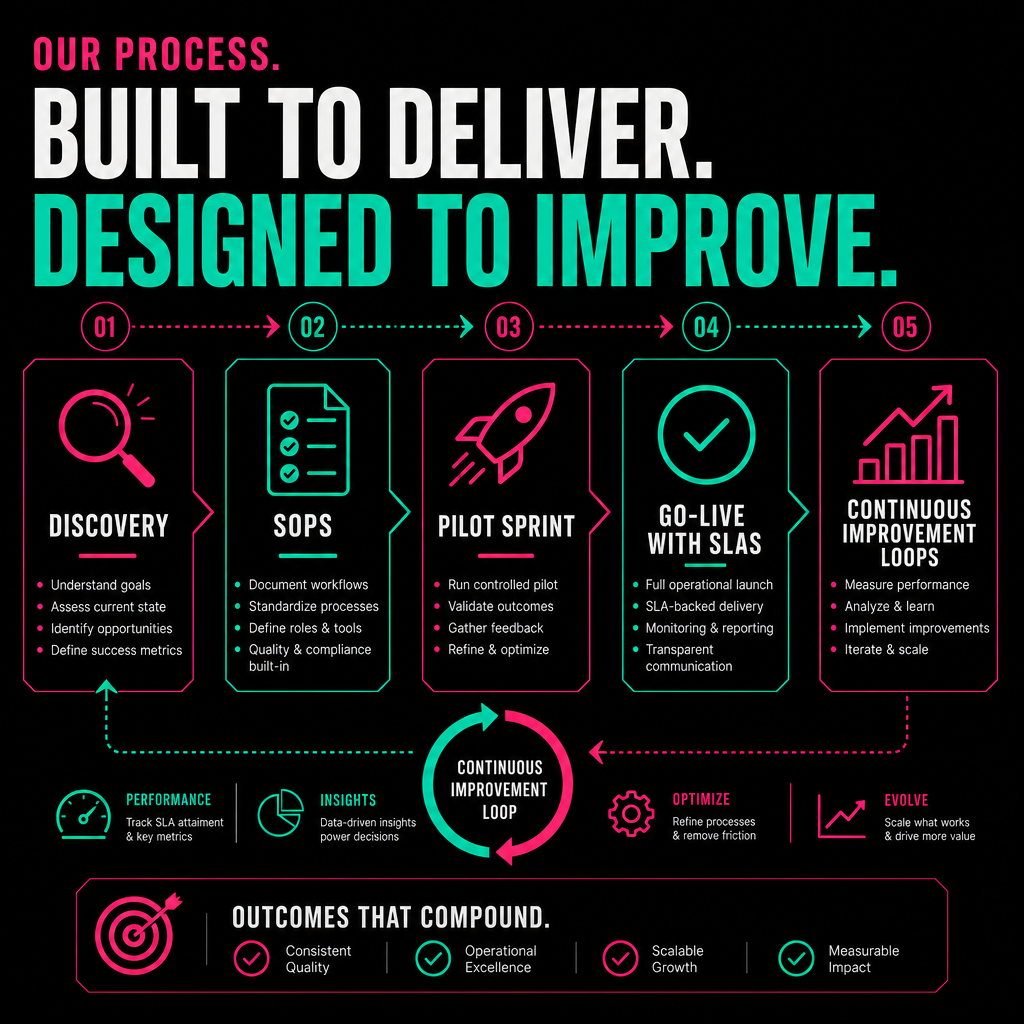
The Remotee system is designed to deliver reliability. Not more CVs.
Step 1: Discovery and documentation We map your current process, the actual one, not the supposed one. Inputs, systems, approvals, exception paths, and the metrics that matter. We look for handoffs that drop balls and inboxes that become black holes. This is where we decide what to offshore and what to keep local. We also define data handling and access controls aligned to the Australian Privacy Principles.
Step 2: Role architecture and SOPs We design roles with outcomes, routines and KPIs. We build SOPs with screenshots, videos and templates. Each SOP has an owner, review cycle and change control. This is not bureaucracy. It is how you onboard people in days, not months.
Step 3: Team assembly and pilot sprints We recruit, vet and assemble your offshore team. English fluency and tooling familiarity are table stakes. We run pilot sprints for two weeks on a subset of the workflow to calibrate quality bars and throughput, and to harden the SOPs.
Step 4: Go-live with SLAs and QA We switch over to steady-state delivery with SLAs for timeliness, first-time-right, and responsiveness. We run daily standups, weekly ops reviews and monthly performance reviews. This rhythm keeps alignment and momentum.
Step 5: Iterate and scale We expand scope cautiously, one stable process at a time. The goal is durable throughput, not a sugar hit. Predictable delivery, not just headcount.
Where this matters most is in compliance-heavy functions like payroll.
The Accountee Payroll Process
For established Australian businesses who want to focus on growth instead of accounting operations, we deploy The Accountee Payroll Process alongside Remotee's staffing model.
- Phase 1, Payroll Discovery & Setup: We review your pay cycles, staff types, award considerations, systems, approvals and reporting to build a clear payroll operating model.
- Phase 2, Payroll Transition: We take over payroll, including required access, templates, pay run calendars, employee data, timesheet flows and approval checkpoints.
- Phase 3, Full Payroll Processing: We process payroll end-to-end, including timesheet review, pay calculations, leave, allowances, deductions, STP, super, payroll reporting and pay run preparation.
- Phase 4, Ongoing Payroll Management: We provide ongoing delivery, issue resolution, compliance support, reporting and account management so payroll runs accurately and on time with minimal internal admin.
STP, super, leave, PAYG and reporting, handled by people who live in payroll. Payroll is too important to be mostly right.
If you want to see our operating model in detail, review our process here: How Remotee works. When you are ready to scope your function, start a conversation here: Talk to us.
Case studies: measurable outcomes in Australia
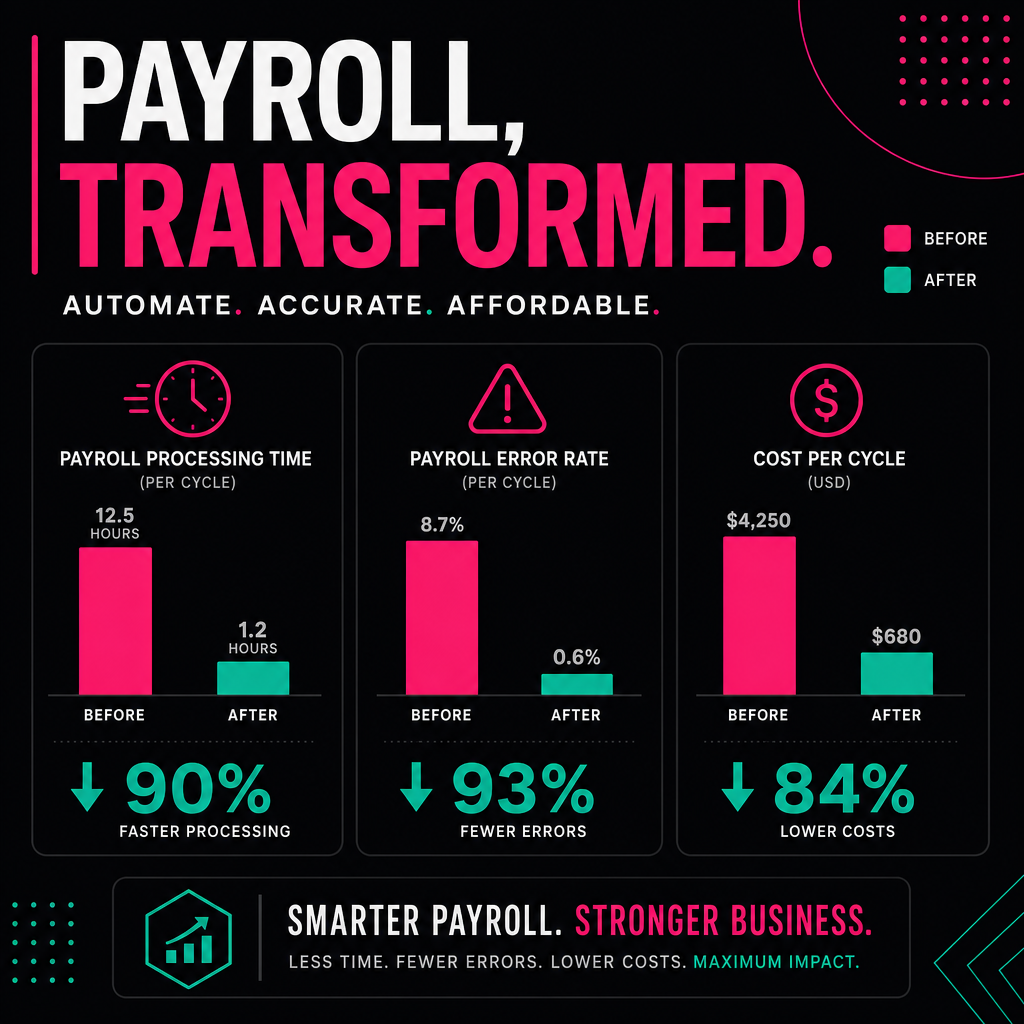
These client names are anonymised, the numbers and outcomes are not. They are representative of what we are delivering in 2026.
Case study 1, Recruitment agency payroll stabilised in two weeks
- Context: Two founders in a specialist recruitment firm were stuck in payroll admin. Hiring in-house did not make commercial sense.
- Intervention: We installed our payroll system and offshore team aligned to their tech stack. Full discovery to go-live in two weeks. Approvals reduced to one email each fortnight. Our team handled payroll, super, STP, compliance and inbound queries.
- Outcome: 6-10 hours of partner time freed per pay cycle. 100 percent on-time pay runs for six months. Zero compliance breaches. Contractor satisfaction rose, measured by a 35 percent drop in payroll-related tickets after month two.
Case study 2, Hospitality labour hire consolidated and cut cost
- Context: A hospitality recruitment and labour hire company used multiple internal staff and external accountants to process weekly payroll. Costs were high, workload spiked weekly, and awards were misinterpreted.
- Intervention: Our specialists completed discovery, built a consolidated system, moved payroll to fortnightly, and took full ownership. We eliminated internal payroll roles and external accountant dependency, with clear SLA and QA gates.
- Outcome: Opex staffing costs down 32 percent. Payroll processing costs down 18 percent by moving to fortnightly. Compliance improved with correct award application and back pay adjustments in month one. First-time-right rate at 98.7 percent by month three.
Client testimonial "Remotee gave us the confidence to stop firefighting payroll. The structure, the cadence and the responsiveness were the difference. We now spend our time on clients and candidates, not timesheets and STP.", Director, national recruitment firm
Explore more results: Remotee case studies.
Role types that work best offshore for Australian teams
Not every role belongs offshore. Many do, provided the work is documented and the quality bar is explicit.
High-fit roles
- Payroll and finance ops: Timesheet triage, award interpretation with decision trees, pay calculations, leave reconciliation, STP submissions, superannuation lodgements, AR and AP processing. KPIs, on-time rate, first-time-right rate, exception resolution SLA, unreconciled items count.
- Recruitment delivery: Sourcing, screening, interview scheduling, reference checks, ATS hygiene. KPIs, time-to-shortlist, response rates, shortlist acceptance, data completeness.
- Customer support and service desk: Tier 1 and Tier 2 inquiries, knowledge base maintenance, triage to engineering. KPIs, SLA adherence, CSAT, first contact resolution.
- Digital production: Content operations, email builds, landing page assembly, QA, analytics tagging. KPIs, cycle time, defect escape rate, adherence to briefs.
- Data and reporting: ETL routines, dashboard updates, data quality checks, finance reconciliations. KPIs, refresh timeliness, accuracy checks passed, incident rate.
Roles to keep local or hybrid
- High-touch sales and enterprise account management that require on-site presence and nuanced stakeholder navigation.
- Roles with regulator-facing responsibilities that carry personal liability without clear delegation.
- Strategy and product management functions where deep market context and rapid iteration with local stakeholders is mission critical.
Use offshoring to move routine, rules-based, or repetitive work to specialists. Keep client intimacy and high-risk decisions close to home.
Risk management, quality, security and compliance
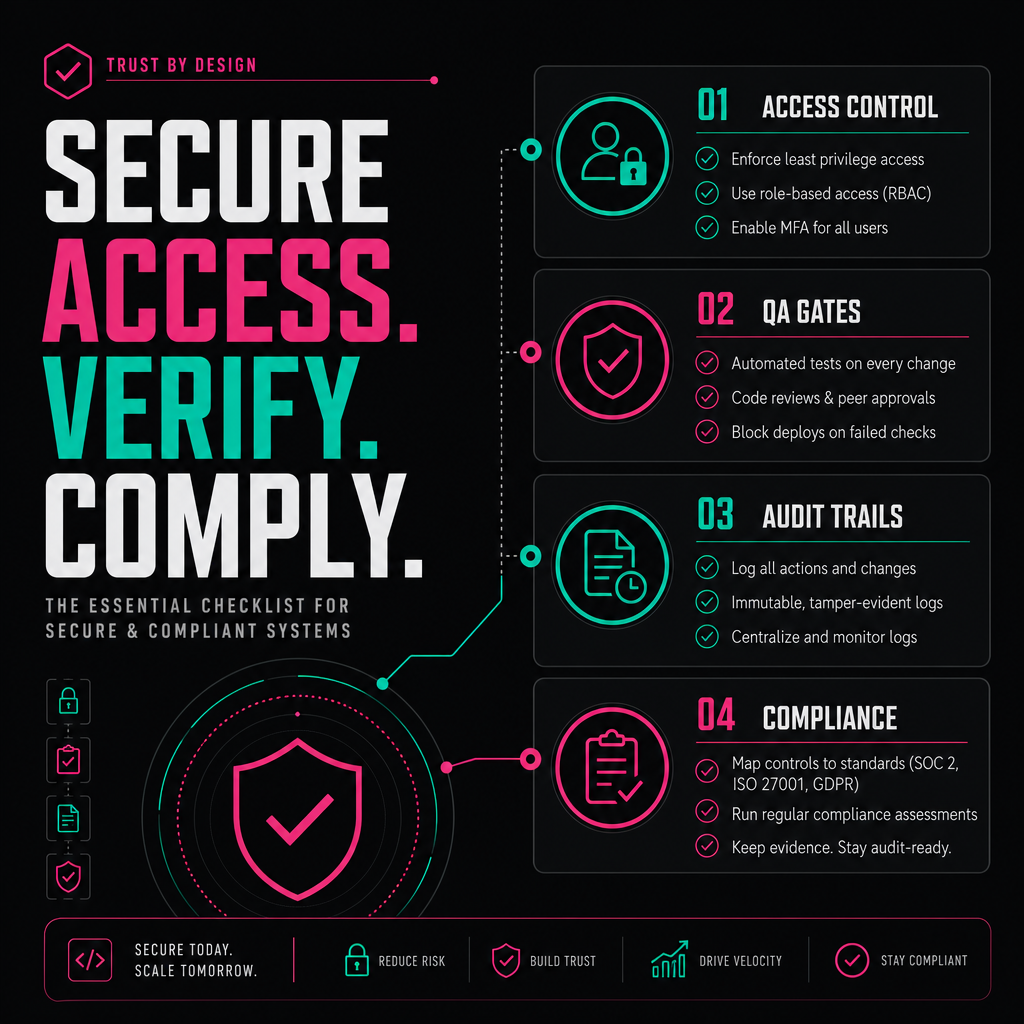
Security
- Access control by role, least privilege, and time-bound permissions. No shared credentials.
- Data handling aligned to the Australian Privacy Principles. Sensitive data stays in client systems where possible. When extraction is required, it is encrypted in transit and at rest.
- Audit trails on all critical workflows, with exception reporting reviewed weekly.
Quality assurance
- SOPs with version control and owners. Peer reviews for changes.
- Checklists and hold points built into the workflow for high-risk steps like final payroll approvals and STP submission.
- Shadowing and double-run periods on initial cycles, then sample-based QA thereafter.
Compliance
- Payroll work aligns to STP and superannuation requirements. Award interpretation is supported by documented decision trees and escalation paths to a qualified reviewer. We subscribe to award updates and revalidate SOPs when rules change.
- Contracts are clear about data handling, IP ownership and confidentiality. We keep local legal review in the loop before go-live.
The outcome is simple. Fewer surprises, fewer single points of failure, and fewer expensive lessons.
Offshore staffing vs local hiring vs freelancers, the real difference
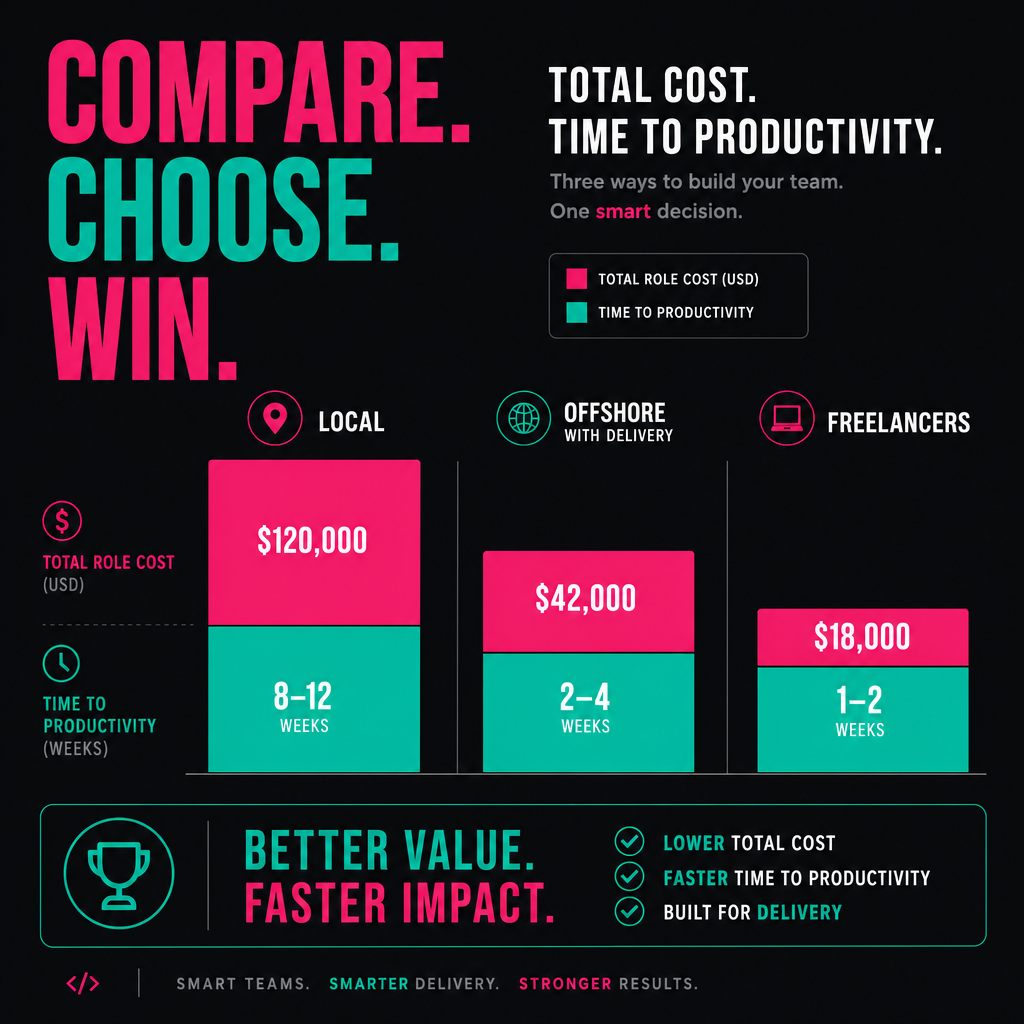
Local hiring
- Pros: Cultural proximity, direct management, client-facing coverage.
- Cons: Long hiring cycles, highest cost base, office overheads, and higher risk if the process depends on a single person.
Offshore staffing with delivery
- Pros: Material cost savings, faster time to productive output, elasticity, and a delivery system that survives turnover. You own the workflow, we own the operating rhythm.
- Cons: Requires upfront documentation and strong change management. If you skip this, the model will stall.
Freelancers or gig platforms
- Pros: Fast for one-off work, low commitment.
- Cons: Inconsistent QA, availability risk, weak continuity, limited accountability for outcomes.
A simple ROI model
- Local payroll officer at $85,000 base, 13 percent on-costs, $96,050 total. Add workstation, software, supervision time, and you will sit near $110,000 per year.
- Offshore payroll specialist plus delivery fee at an equivalent throughput, $48,000-$65,000 per year depending on scope and seniority.
- If the offshore team also eliminates 6-10 hours of partner time per cycle, you recover another $15,000-$30,000 of opportunity cost annually at conservative billing rates.
Numbers vary by function. The direction is consistent.
How to calculate your business case in 30 minutes
- List candidate workflows. Choose rules-based, high-volume, repeatable tasks.
- Measure current effort. Hours per week, error rates, rework time, queue length.
- Price the status quo. Fully loaded local cost plus the value of leadership time spent on supervision and firefighting.
- Estimate offshore model. Use a conservative cost range from our pricing guide and assume a 10-20 percent quality buffer in month one while the team ramps.
- Factor the time value. What would your leaders do with the hours you will reclaim, and what is that worth at your actual billing or contribution margin.
- Decide a pilot scope. One process, one SOP pack, one team of one to three people, 60-90 days, clear KPIs.
If the numbers stack up, proceed. If they do not, refine the scope until they do or shelve the idea. Offshore staffing should survive a spreadsheet.
Implementation timeline and what to expect in the first 90 days
Week 1-2, Discovery and SOPs
- Workshops to map workflows. Access provisioning. Draft SOPs. Define KPIs. Choose pilot metrics. Stakeholder alignment.
Week 3-4, Team assembly and pilot
- Candidate interviews. Tooling setup. Pilot on a contained slice. Daily standups, end-of-week review. Adjust SOPs, improve templates, set baselines.
Week 5-8, Go-live and stabilise
- Expand to full scope. Introduce SLAs. Shift QA from 100 percent to sample-based once quality holds. Remove local double handling.
Week 9-12, Optimise and scale
- Address bottlenecks. Automate low-value handoffs. Consider adding headcount or scope. Lock in reporting pack and monthly ops review.
We routinely see productive output in 10-15 business days for back-office functions once the process is documented. That is not a promise, it is a pattern from 2026 delivery data.
Common myths, tested
Myth: "Offshore equals low quality."
- Test: Define a first-time-right metric and measure it. With SOPs and QA, we see 96-99 percent by month three in rules-based work.
Myth: "Communication will break."
- Test: Put a cadence in place. Daily standups with a three-question format, weekly ops review with three metrics, monthly performance and SOP updates. Most communication issues are cadence issues.
Myth: "Security is weaker offshore."
- Test: Audit access control, logs, and data flows. If the partner cannot show you these on day one, walk away. Geography is not the risk. Ambiguity is.
Myth: "It is only worth it for big businesses."
- Test: Run a two-person pilot on a single workflow for 90 days. If the unit economics do not work, you either chose the wrong process or the partner is not up to it.
When offshore staffing is the wrong move
- You want to avoid documenting processes. If you will not define what good looks like, you will not get good.
- Your workload is unpredictable and tiny. Use freelancers for one-off micro tasks instead.
- Your work requires on-site presence or regulator-facing sign-off that cannot be delegated.
- You expect instant results without investing in change management. Clarity comes before capacity.
Getting started with Remotee
If you are ready to replace chaos with a delivery system, here is the path.
- See how our offshore staffing model works, roles we place, and how we guarantee reliable delivery, Offshore staffing at Remotee.
- Review typical commercial models and inclusions, Pricing.
- Understand our discovery-to-go-live process step by step, Our process.
- Speak with us about your pilot scope, Contact Remotee.
- If you are a specialist looking to join our team in the Philippines, see open roles, Careers.
We compete on reliability. Predictable delivery, not just headcount. If that is what you want, we should talk.
References
- Australian Bureau of Statistics. Job vacancies, Australia. https://www.abs.gov.au/statistics/labour/jobs/job-vacancies-australia
- Australian Bureau of Statistics. Wage Price Index, Australia. https://www.abs.gov.au/statistics/economy/price-indexes-and-inflation/wage-price-index-australia
- Fair Work Ombudsman. Awards. https://www.fairwork.gov.au/awards-and-agreements/awards
- Office of the Australian Information Commissioner. Australian Privacy Principles. https://www.oaic.gov.au/privacy/australian-privacy-principles
- Deloitte. Global outsourcing survey 2022. https://www2.deloitte.com/global/en/pages/operations/articles/global-outsourcing-survey.html
- IT and Business Process Association of the Philippines. Accelerate PH, Roadmap 2028. https://www.ibpap.org/advocacies/accelerate-ph
FAQ_SCHEMA_JSON
FREQUENTLY ASKED QUESTIONS
Common questions
What are the main benefits of offshore staffing for Australian businesses?
- Measurable cost savings, faster access to specialist skills, scalability, stronger operational cadence, and better focus on core customer work. With SOPs, SLAs and QA, risk drops by removing single points of failure.
How much can I realistically save with offshore staffing in Australia?
- Across our 2026 client base, total role cost savings of 30-55 percent are common for back-office and delivery roles. Function, seniority and process maturity set the exact range.
Which roles are best suited to offshore teams?
- Rules-based, high-volume, repeatable work such as payroll and finance ops, recruitment delivery, customer support, digital production, and data operations. Keep client-intimate and regulator-facing roles local or hybrid.
How do you maintain quality and compliance offshore?
- We document workflows, define quality bars, and install QA gates. For payroll we use award decision trees, align to STP and super rules, and operate with audit trails. We measure first-time-right and SLA adherence with weekly and monthly reviews.
How fast can we go live?
- With a clear process, first productive output often lands in 10-15 business days, full scope stability by weeks 5-8. Complex multi-system functions take longer.
What about data security and privacy?
- We apply role-based access, least privilege and logging. Sensitive data stays in client systems where possible. Handling aligns to the Australian Privacy Principles, with documented data flows and controls.
Will my local team lose their jobs?
- Typically no. Local staff are repurposed to higher-value, client-facing work while offshore teams take routine execution. Stabilised delivery and better margins often lead to local growth in strategic roles.
How do I start a low-risk pilot?
- Pick one workflow, write the SOP, set three metrics, and run a 60-90 day pilot with a small team. We can scope and start within weeks via our contact page.

Jon Kelly
Founder, Remotee
Jon helps Australian businesses build compliance-led offshore teams that scale without the burnout. NDIS, accounting, mortgage broking, recruitment and digital marketing.
KEEP READING
Related posts
benefits of offshore staffing Australia
Benefits of Offshore Staffing for Australian Businesses: Beyond Cost Savings
The benefits of offshore staffing for Australian businesses extend well beyond lower employment costs. A well-structured offshore team can expand specialist cap…
14 August 2026 · 18 min read
offshore staffing success stories Australia
Success Stories: Real-World Examples of Australian Businesses with Offshore Teams
Australian offshore staffing success stories show that remote teams produce reliable results when specialist talent is supported by documented workflows, clear…
15 August 2026 · 18 min read
Australian employer obligations when offshoring
Australian employer obligations when offshoring
Australian employers offshoring work must assess employment status, applicable workplace laws, tax, superannuation, privacy, data security, intellectual propert…
1 September 2026 · 17 min read
READY TO SCALE WITHOUT THE BURNOUT?
Build a compliance-led offshore team in 3–4 weeks.
Tell us about your current bottleneck and we'll show you what a Remotee placement would look like for your operation.
Or get our playbooks emailed to you instead.