
Mastering Offshore Staff Time Zone Management for Australian Operations
- Offshore Staffing
- Time Zone Management
- Remote Team Collaboration
- Philippines Outsourcing
- Operations Management
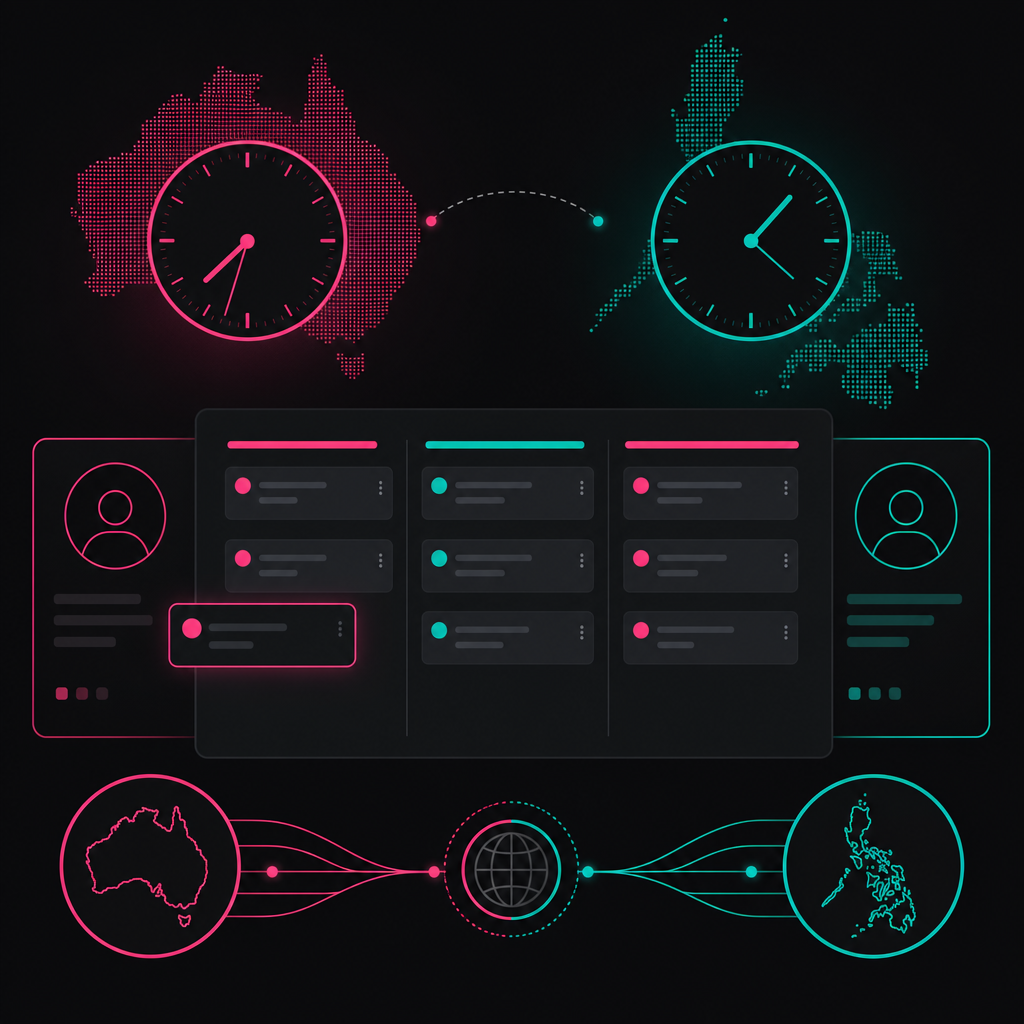
Offshore staff time zone management works when Australian operations define shared working hours, asynchronous tasks, handover rules and decision ownership before hiring. For Philippine teams, the modest time difference allows substantial daily overlap. The operating system matters more than the clock: documented workflows, visible priorities and clear escalation paths create reliable delivery.
Australian businesses often treat time zones as a scheduling problem. They are usually a delivery design problem. A calendar cannot compensate for unclear ownership, undocumented processes or work scattered across email, chat and personal task lists.
This guide explains how to structure Australian and Philippine working hours, choose synchronous and asynchronous work, build handover protocols, and configure Jira or Asana for reliable remote team collaboration.
Working-hours overlap: A standard Australian Eastern Standard Time schedule of 9:00 am to 5:00 pm overlaps a Philippine schedule of 9:00 am to 5:00 pm for six hours. This is calculated from the official AEST and Philippine Standard Time offsets published by the Bureau of Meteorology and PAGASA.
Key takeaways
Effective offshore staffing depends on delivery structure rather than constant live contact. Operations managers should protect a defined overlap window, move focused production work outside meetings, make every handover visible and give each task one accountable owner. Tools support that structure, but they cannot create it on their own.
- AEST is two hours ahead of Philippine Standard Time, while AEDT is three hours ahead, based on the offsets published by the Bureau of Meteorology and PAGASA.
- Use overlap time for decisions, clarification, coaching and exceptions, not routine status reporting.
- Define what must happen synchronously and what should move through documented asynchronous workflows.
- Every handover needs an owner, status, evidence, next action and escalation deadline.
- Jira suits structured queues and controlled workflows. Asana suits broader operational plans and recurring work.
- Predictable delivery comes from documented processes and decision rights, not surveillance or constant availability.
Australian and Philippine working-hours overlap
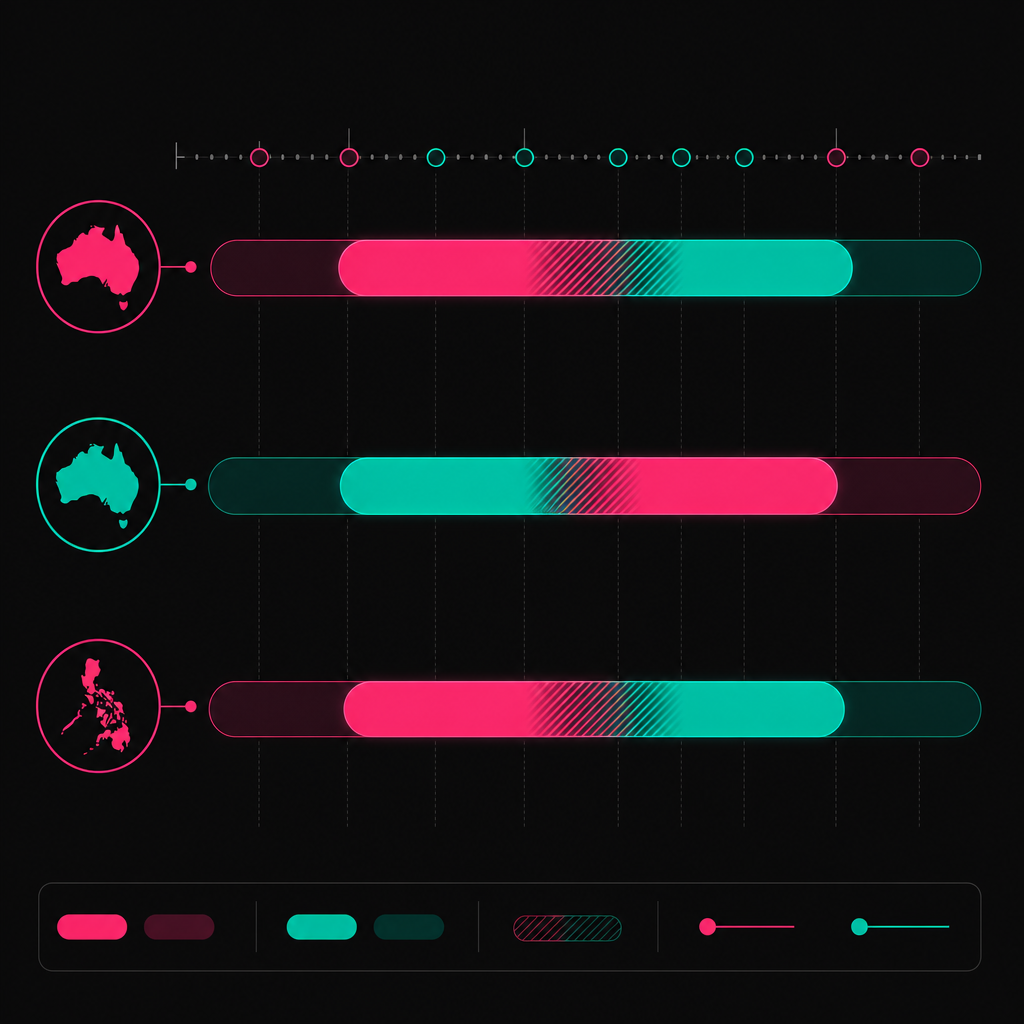
Australian eastern operations can usually create a meaningful live working window with Philippine staff without requiring a night shift. The exact overlap depends on the Australian state, daylight saving and each employee's agreed hours. Operations managers should publish schedules in both local times and review them when daylight saving changes.
The following calculations use the UTC offsets published by the Bureau of Meteorology and PAGASA. They assume both teams work from 9:00 am to 5:00 pm in their respective local time.
| Australian operating zone | Australian hours | Equivalent Philippine hours | Shared window | Source |
|---|---|---|---|---|
| AEST, UTC+10 | 9:00 am-5:00 pm | 7:00 am-3:00 pm PHT | 9:00 am-3:00 pm PHT | Bureau of Meteorology; PAGASA |
| AEDT, UTC+11 | 9:00 am-5:00 pm | 6:00 am-2:00 pm PHT | 9:00 am-2:00 pm PHT | Bureau of Meteorology; PAGASA |
| PHT, UTC+8 | 9:00 am-5:00 pm | 11:00 am-7:00 pm AEST | 11:00 am-5:00 pm AEST | PAGASA; Bureau of Meteorology |
Do not label an Australian schedule as simply "AEST" throughout the year unless the relevant location remains on AEST. Queensland does not follow the same seasonal clock settings as New South Wales or Victoria. A team may therefore have different overlap windows for Australian stakeholders in different states.
Store each person's timezone in the team directory. Configure calendars to display both operating zones. Recurring meetings should be anchored to the timezone of the operational dependency, not whichever manager created the first invitation.
How to divide synchronous and asynchronous work

Synchronous time should be reserved for work where immediate interaction changes the result. Asynchronous work should cover production, documentation, routine approvals and status reporting. This division protects focus while ensuring decisions are not delayed. If every task requires a meeting, the workflow is under-documented or decision authority is unclear.
Use live overlap for decision-heavy work
Good synchronous activities include:
- Resolving blocked tasks where several functions are involved
- Confirming priorities after a material change
- Coaching on unfamiliar or high-risk work
- Reviewing sensitive exceptions
- Running short planning sessions
- Discussing performance or wellbeing privately
A live meeting should have a decision objective. "Weekly catch-up" is not an objective. "Approve the release scope and assign unresolved defects" is.
Status reporting rarely needs a meeting. Require team members to update the work item before the shared window begins. The live conversation can then focus on blockers, trade-offs and decisions rather than reading task lists aloud.
Design asynchronous production work
Asynchronous work needs more context than work passed across a desk. A useful task description states:
- The required outcome
- Why the work matters
- The accountable owner
- Inputs and source files
- Acceptance criteria
- Dependencies
- Due time and timezone
- Reviewer or approver
- Escalation path
Avoid instructions such as "please handle this" or "same as last time". They depend on memory and create inconsistent results. Link the current procedure, identify the expected output and define what completion means.
Recorded demonstrations can help explain unfamiliar processes, but video is not a substitute for a controlled written procedure. Videos become difficult to search and can preserve outdated steps. Use recordings for context, then update the written source of truth.
Set response expectations by channel
Remote team collaboration becomes noisy when every message appears urgent. Define what each channel means:
| Channel | Appropriate use | Required behaviour |
|---|---|---|
| Project platform | Tasks, ownership, evidence and decisions | Update the work item, not a private copy |
| Team chat | Quick clarification and coordination | Link back to the relevant task |
| Video meeting | Decisions, coaching and sensitive discussions | Record decisions in the project platform |
| External communication and formal notices | Convert operational work into a tracked task | |
| Phone escalation | Material operational, compliance or safety issue | Document the outcome after the call |
This table deliberately avoids invented response-time benchmarks. Each organisation should set service expectations according to customer commitments, employment arrangements, task risk and operational coverage.
How to build a reliable handover protocol
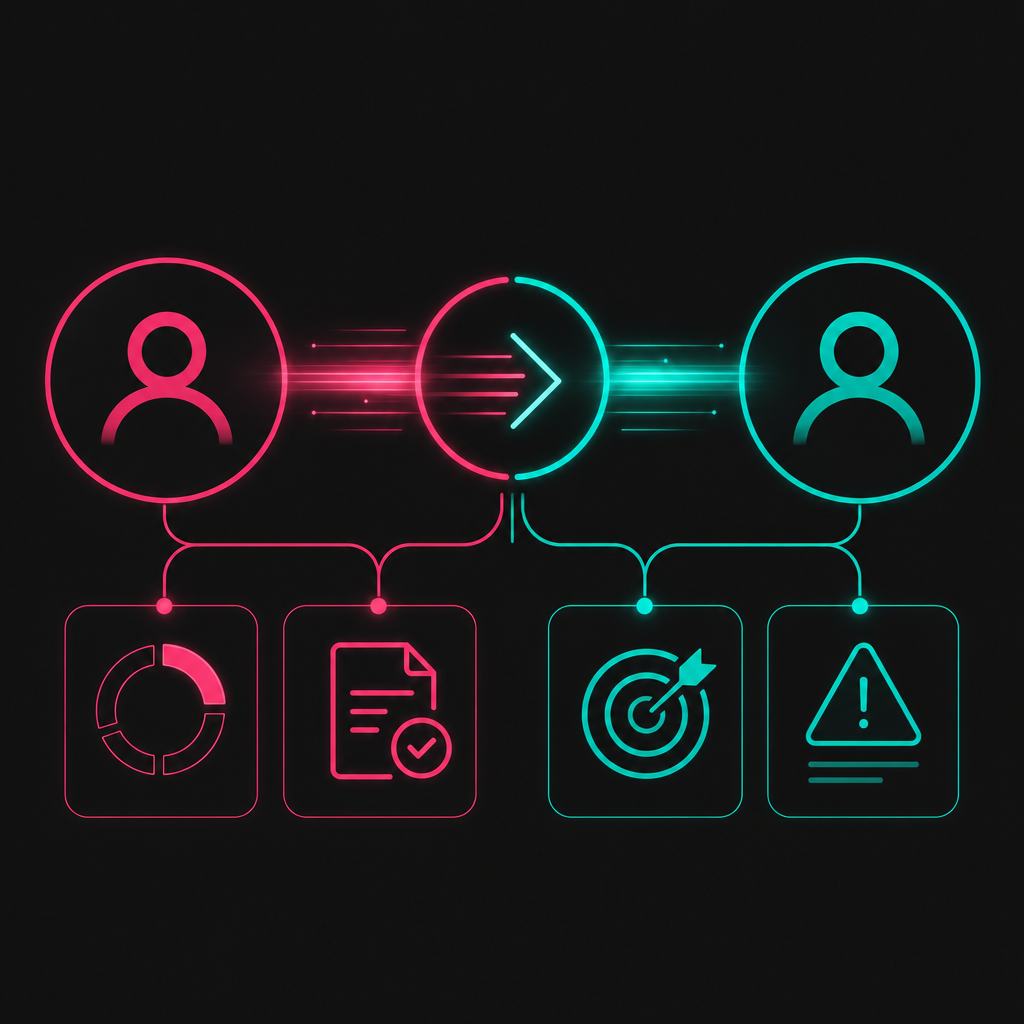
A reliable handover tells the next person what changed, what remains open, what evidence exists and what action is required. It should be completed inside the work system before the outgoing shift ends. A chat message is not enough because it separates context from the task and weakens accountability.
Use a standard handover record
Every handover should contain these fields:
- Work item: The Jira issue, Asana task or controlled record
- Current status: Completed, in progress, blocked or awaiting approval
- Work completed: A concise statement with links to evidence
- Next action: The specific action required from the incoming owner
- Decision required: The question and available options
- Dependency: The person, system or event preventing progress
- Risk: The operational consequence if no action is taken
- Escalation owner: The person authorised to resolve the issue
- Local deadline: The due time with an explicit timezone
Avoid using "end of day" in distributed teams. It can refer to different moments for the writer, recipient and customer. Use the local time and timezone.
Separate ownership from contribution
Several people may contribute to a task, but one person must own its current state. Shared ownership often means no ownership. The accountable person maintains the record, secures required inputs and confirms whether acceptance criteria have been met.
Ownership can change at a handover. When it does, the workflow should record who transferred it and who accepted it. A task should not sit in an ambiguous state such as "with the team".
Build escalation around impact
Not every delay requires management attention. Define escalation triggers around business impact rather than personal judgement. Examples include a customer commitment at risk, an approval approaching its cut-off, missing source data, a suspected privacy incident or a task blocked by unavailable access.
For Australian businesses sharing personal information with an offshore team, access design and data handling must account for the Australian Privacy Principles. The Office of the Australian Information Commissioner provides the authoritative principles. Obtain appropriate legal and privacy advice for the organisation's circumstances.
Jira or Asana for offshore operations
Jira is usually stronger for controlled service queues, technical workflows and work requiring explicit status transitions. Asana is often easier for cross-functional plans, recurring operational tasks and campaign-style work. The correct choice depends on workflow complexity. Whichever platform you choose must become the authoritative record for ownership and progress.
When Jira fits
Jira is well suited to workflows where work passes through defined states. Examples include software delivery, service requests, access changes, quality assurance and issue resolution.
Configure Jira around the actual operating process rather than copying a generic template. Useful controls include:
- Required fields before a status can change
- A single assignee for active work
- Separate statuses for blocked work and pending approval
- Components or labels tied to operational functions
- Automation that alerts an escalation owner
- Dashboards showing ageing work, blockers and ownership gaps
Atlassian's overview of Jira workflows explains how statuses and transitions represent a team's process. Keep the workflow understandable. Excessive statuses can hide the difference between meaningful operational stages.
When Asana fits
Asana works well when managers need accessible task plans across operations, marketing, administration and client delivery. Recurring tasks can support routine checks, monthly processes and scheduled reporting.
A practical Asana structure should include:
- A clear task owner
- A due time with the correct timezone
- Custom fields for risk, status or function
- Dependencies between sequential tasks
- Rules for routine routing and notifications
- Templates for repeatable processes
- Approval tasks for work requiring sign-off
Asana's task management guidance describes the platform's approach to assigning and organising work. Avoid creating a separate project for every minor request. The structure should make work easier to find, not reproduce departmental silos.
Tool rules that apply to both
Do not allow final decisions to live only in chat. Do not use spreadsheets as shadow task systems. Do not mark work complete without evidence. Do not assign a task to a group account. Do not make managers chase updates that could be entered by the owner.
A tool should answer four questions without a meeting: What is being delivered? Who owns it? What is blocking it? What happens next?
Choosing an overlap or follow-the-sun model
An overlapping-shift model is the better default for most Australian businesses using Philippines outsourcing because it preserves direct collaboration during Australian hours. A follow-the-sun model suits work that can move safely between owners. It requires stricter handovers, stable procedures and acceptance criteria that another person can apply without verbal context.
Overlapping-shift model
Use this model when work involves frequent stakeholder contact, changing priorities, coaching or complex approvals. The Philippine employee works a schedule that shares a defined window with Australian colleagues.
The mistake is filling that window with meetings. Protect it for access to people, not continuous attendance. Team members still need uninterrupted production time.
Follow-the-sun model
In a genuine follow-the-sun workflow, one team advances work and hands it to another team operating later. The model can reduce idle time between workflow stages, but it does not automatically increase useful output.
Consider a hypothetical support operation. An Australian team triages a customer issue, documents the reproduction steps and assigns the next diagnostic action. A Philippine specialist continues the investigation within their agreed schedule and returns evidence through the same ticket. The next Australian shift reviews a complete record rather than restarting the investigation.
That model fails when the handover says only "please investigate". It works when the ticket contains logs, customer impact, actions already attempted, expected evidence and escalation authority.
Hybrid model
Many operations need a hybrid. Teams share live hours for planning and exceptions, then complete production work independently. This model is generally more resilient than either permanent meeting-heavy overlap or a pure relay system.
Your employment arrangements, customer commitments and employee wellbeing should shape the roster. Offshore staffing solutions should not depend on routinely shifting employees into unreasonable hours merely to imitate an Australian office.
Delivery-system case studies from payroll operations
Our payroll experience shows why offshore scheduling must be built around repeatable delivery rather than individual availability. These cases are not presented as controlled time-zone experiments. They are first-hand examples of businesses replacing founder dependency and fragmented administration with documented inputs, approval checkpoints, specialist ownership and predictable recurring delivery.
Recruitment agency: one controlled approval point
A recruitment agency's founders wanted to focus on business development and operational execution rather than payroll and accounting. Hiring and managing more internal resources was not considered commercially efficient.
We completed discovery, configured a payroll system and established a specialist delivery team using the client's existing software. The system went live within two weeks, based on Remotee's own implementation record supplied for this case.
The resulting operating model required the client to approve one email each fortnight. The specialist team then managed payroll processing, superannuation, tax, compliance, inbound payroll queries and timesheet questions.
The time-zone lesson is straightforward. The founders did not need continuous access to every person processing payroll. They needed a controlled approval window, complete inputs, named owners and a clear exception path. That is predictable delivery, not just headcount.
Hospitality labour hire: redesign before delegation
A hospitality recruitment and labour hire company had internal staff and external accountants involved in payroll. Weekly processing created concentrated workloads, while responsibility was spread across several parties.
Our team completed discovery and designed a replacement system. Payroll moved from weekly to fortnightly, and the specialist team assumed the processing workflow. The new structure removed duplicated payroll activity and identified industry award requirements that had not been adequately addressed.
This case demonstrates an important rule for remote operations: do not offshore a fragmented process unchanged. First decide who owns each input, check, approval and exception. Then assign the specialist capacity.
Across fifteen recruitment agency implementations in 2026, the author's supplied business data records a reduction of six to ten hours in non-billable partner time per pay cycle. This figure is specific to that implementation set and should not be treated as a universal benchmark.
Time zone problems are usually ownership problems
My view is that most apparent time-zone failures are ownership failures wearing a clock-shaped disguise. Managers notice the delay because colleagues are offline. The underlying cause is usually that nobody could proceed without clarification, the procedure was incomplete, approval authority was missing or the task had no accountable owner.
The difference between a capacity gap and a capacity crisis is usually a delivery structure problem, not a talent problem.
This is why hiring another person does not automatically remove pressure. Adding headcount without adding a system can increase coordination work. Each new person creates more messages, questions, reviews and dependencies unless the operating model absorbs them.
Remotee's position is predictable delivery, not just headcount. Talent quality matters, but quality alone is not enough. A capable specialist cannot reliably execute a process that exists only in a founder's memory.
Payroll makes this visible because deadlines and consequences are unforgiving. Your payroll should not depend on one busy admin person remembering everything. Payroll is too important to be "mostly right". The same principle applies to customer support, finance operations, recruitment administration and project delivery.
Our proprietary Accountee Payroll Process illustrates the structure:
- Payroll Discovery and Setup: Review cycles, staff types, awards, systems, approvals and reporting requirements.
- Payroll Transition: Establish access, templates, calendars, employee data, timesheet flows and approval checkpoints.
- Full Payroll Processing: Execute timesheet review, calculations, leave, allowances, deductions, STP, superannuation and reporting.
- Ongoing Payroll Management: Maintain delivery, resolve issues, support compliance and manage reporting.
Those components come from the author's supplied proprietary framework. The broader lesson is applicable to any offshore role: discover the work, design the transition, define full delivery and manage the process continuously.
Implementing offshore staff time zone management
Start by mapping the workflow, not by choosing meeting times. Identify customer deadlines, required inputs, decision owners, risk points and work that can proceed independently. Then select the roster and collaboration tools. This order prevents the schedule from becoming a workaround for an operating process that was never properly designed.
Map the work before recruitment
List recurring outputs and the conditions required for each to be accepted. Record systems, permissions, source data, reviewers and escalation paths. Separate specialist work from decisions that must remain with Australian leadership.
Remotee's offshore staffing solutions are based on connecting specialist capacity with an operating structure. The role description should reflect actual outputs, not a vague collection of administrative duties.
Define the operating rhythm
Publish:
- Each team member's local schedule
- The shared collaboration window
- The daily or shift handover point
- Meeting purposes and owners
- Approval cut-offs in explicit timezones
- Escalation channels
- Planned coverage for leave and public holidays
Review the schedule when Australian daylight saving changes. Calendar settings do not replace a written operating agreement.
Pilot complete workflows
Test a representative task from intake to approval. Observe where the offshore specialist needs undocumented knowledge, unavailable permissions or unclear decisions. Fix the process rather than expecting the employee to compensate through repeated messages.
Remotee's delivery process provides further context on structuring a role around reliable execution.
Manage outcomes, not online presence
Measure whether agreed outputs are accurate, timely and complete. Review recurring blockers, reopened work, missing evidence and approval delays. Presence indicators do not show whether a workflow is healthy.
If the same clarification appears repeatedly, update the procedure. If approvals routinely wait for one executive, delegate authority within controlled limits. If a task returns incomplete, improve its acceptance criteria before assuming the issue is individual performance.
For help designing an offshore role with documented workflows and clear ownership, contact Remotee.
References
These sources support the timezone, workflow and privacy guidance used in this article. Operational schedules should also account for employment agreements, applicable workplace laws, customer commitments and the organisation's own risk controls. Seek professional advice where a roster, privacy arrangement or offshore data-access model creates legal or compliance questions.
- Australian Bureau of Meteorology, Daylight Saving Time
- Philippine Atmospheric, Geophysical and Astronomical Services Administration, Philippine Standard Time
- Atlassian, What is a Jira workflow?
- Asana, Task management guidance
- Office of the Australian Information Commissioner, Australian Privacy Principles
FAQ_SCHEMA_JSON
FREQUENTLY ASKED QUESTIONS
Common questions
What is the time difference between Australia and the Philippines?
- Philippine Standard Time is UTC+8. Australian Eastern Standard Time is UTC+10, while Australian Eastern Daylight Time is UTC+11. The difference depends on the Australian location and whether daylight saving applies.
How many working hours overlap between AEST and the Philippines?
- If both teams work from 9:00 am to 5:00 pm locally, the shared window is 11:00 am to 5:00 pm AEST, corresponding to 9:00 am to 3:00 pm Philippine Standard Time.
Should offshore staff work Australian business hours?
- Not automatically. Choose hours according to customer contact, workflow dependencies, employee wellbeing and the employment arrangement. Roles requiring live interaction may need greater overlap, while documented production work can often use local Philippine hours.
What should an offshore team handover include?
- Include the work item, current status, completed actions, evidence, next action, dependencies, decision required, risk, deadline with timezone and escalation owner. Store the handover in the project platform.
Is Jira or Asana better for offshore team management?
- Jira is generally better for structured queues, technical work and controlled status transitions. Asana is often easier for cross-functional plans and recurring operational tasks. Configuration and adoption matter more than the brand of tool.
How do you manage daylight saving with offshore staff?
- Maintain schedules in both local timezones, configure calendar timezone support and review recurring meetings when Australian daylight saving changes. Publish roster changes before they affect handovers, approvals or customer coverage.
Jon Kelly
Founder, Remotee
Jon helps Australian businesses build compliance-led offshore teams that scale without the burnout. NDIS, accounting, mortgage broking, recruitment and digital marketing.
KEEP READING
Related posts
HR offshore staff Australia
Optimising HR Processes with Offshore Staff for Australian Companies
HR offshore staff can help Australian companies manage recruitment administration, onboarding, employee records, reporting and payroll support. The model works…
29 August 2026 · 21 min read
offshore marketing operations Australia
Offshore Marketing Operations Staffing for Australian Brands
Offshore marketing operations in Australia means building a remote team that executes defined marketing work under clear Australian ownership. Suitable roles in…
27 August 2026 · 18 min read
offshore staffing risks Australia
Mitigating Risks in Offshore Staffing: A Guide for Australian Businesses
Offshore staffing risks in Australia are best managed through documented workflows, controlled system access, clear accountability, lawful data handling and tes…
26 August 2026 · 22 min read
READY TO SCALE WITHOUT THE BURNOUT?
Build a compliance-led offshore team in 3–4 weeks.
Tell us about your current bottleneck and we'll show you what a Remotee placement would look like for your operation.
Or get our playbooks emailed to you instead.