
Offshore Marketing Operations Staffing for Australian Brands
- Offshore Marketing
- Remote Marketing Teams
- Marketing Operations
- Australian Business
- Offshore Staffing

Offshore marketing operations in Australia means building a remote team that executes defined marketing work under clear Australian ownership. Suitable roles include SEO specialists, content writers, social media managers and campaign coordinators. Success depends less on cheap headcount and more on documented workflows, accountable roles, secure access and consistent quality control.
Australian brands rarely struggle because they have no marketing ideas. They struggle because experienced local staff spend too much time chasing briefs, updating reports, formatting content and moving campaigns through approval queues.
An offshore content marketing team can remove that constraint. However, adding people without a delivery system usually creates more management work. This guide explains which roles to offshore, how to recruit them and how to build predictable delivery around them.
Key takeaways
- Offshore execution works best when strategy and final accountability remain clearly owned.
- SEO, content, social media and campaign operations contain repeatable work suitable for remote delivery.
- Hire against documented outcomes and practical work samples, not polished CVs alone.
- Define briefs, approval rights, service standards and escalation paths before a new team member starts.
- Protect customer data through restricted access, approved systems and deliberate offboarding.
- Measure completed, approved work and business contribution rather than online activity.
Summary table: benefits of offshore marketing operations
| Benefit | What it means for an Australian brand | Required operating control |
|---|---|---|
| More execution capacity | Internal leaders can spend less time on repetitive production | Defined work queues and ownership |
| Specialist support | Brands can recruit for focused SEO, content or campaign skills | Role scorecard and practical assessment |
| Better continuity | Work does not need to depend on one overloaded local generalist | Documented procedures and backup access |
| Faster campaign flow | Preparation, quality assurance and reporting can continue across locations | Approval deadlines and clear handovers |
| More consistent reporting | Recurring data collection and commentary can follow one process | Agreed definitions and reporting templates |
| Controlled operating cost | Staffing can be aligned to stable work rather than agency project scope | Capacity planning and workload review |
| Greater internal focus | Australian marketing leaders retain strategy while delegating production | Decision rights and escalation rules |
Remotee operating-system evidence
The figures below come from Remotee's wider Australian delivery work. They relate to recruitment payroll operations rather than marketing, so they should not be presented as marketing benchmarks. They demonstrate the capacity effect of combining specialist offshore staff with a documented operating model.
| Remotee internal data from 2026 | Observed result | Source |
|---|---|---|
| Recruitment agency implementations | 15 completed implementations | Remotee internal implementation data, 2026 |
| Non-billable partner capacity released | 6-10 hours per pay cycle | Remotee internal implementation data, 2026 |
What are offshore marketing operations?
Offshore marketing operations are the recurring production, coordination, quality assurance and reporting tasks performed by remote specialists outside Australia. They support an in-house marketing function rather than replacing brand strategy. The Australian team sets direction, controls approvals and owns commercial decisions, while offshore staff execute structured work inside the brand's systems.
This distinction matters. Hiring digital marketing offshore staff is not the same as appointing a full-service agency. An agency usually sells a managed scope, methodology and output. An offshore team member works as part of your operating environment and follows your priorities.
That model suits brands that already know what they want to achieve but lack reliable execution capacity. It is less suitable when the business has no positioning, marketing plan, channel ownership or agreed offer.
A useful division of responsibility is:
- Australian marketing leadership owns positioning, budgets, campaign priorities and final approval.
- Channel owners define plans, briefs and performance expectations.
- Offshore specialists complete production, research, implementation, monitoring and reporting.
- Subject matter experts validate technical or regulated claims.
- An accountable manager resolves blocked work and competing priorities.
Remote marketing support in Australia becomes valuable when it removes execution pressure without weakening accountability. If nobody owns the outcome locally, offshore staff will receive conflicting requests and vague feedback. That is a management failure, not a remote-work failure.
Which marketing roles are suitable for offshore staffing?
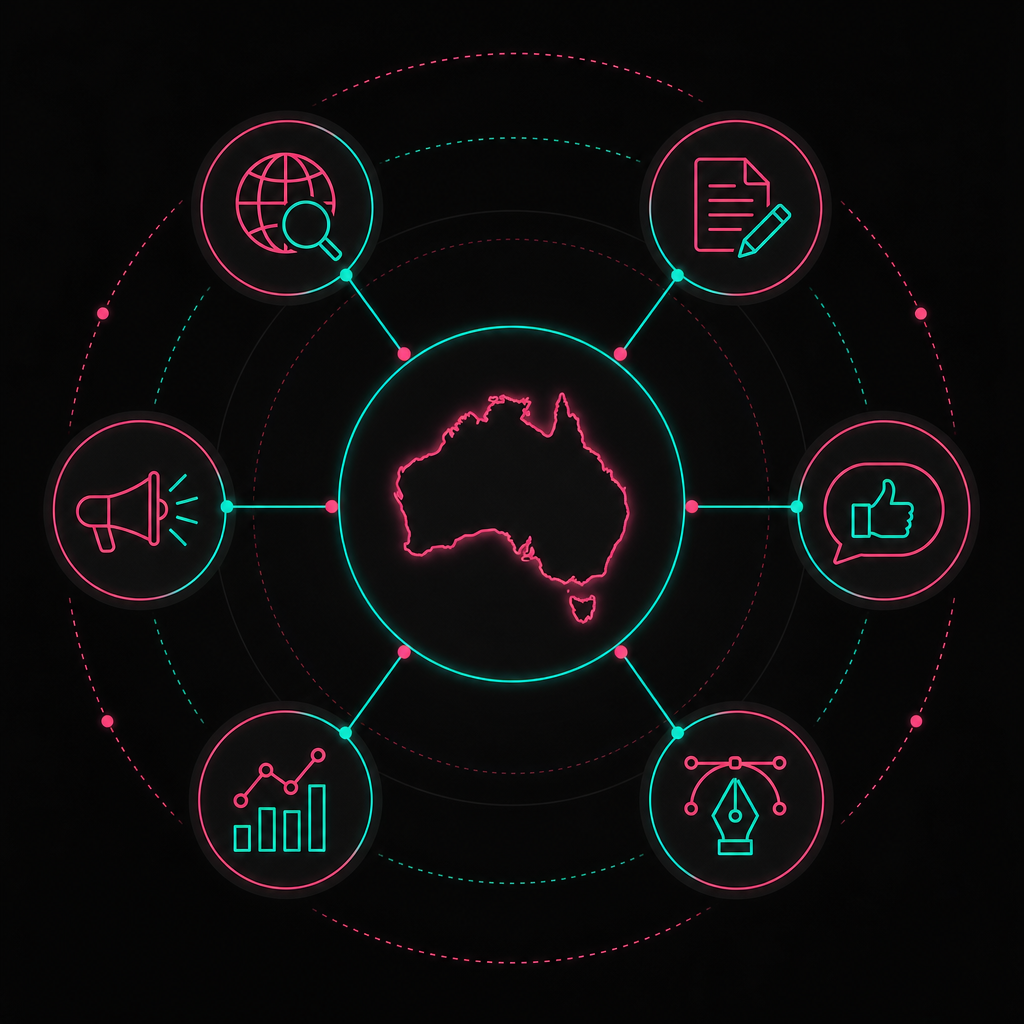
The best offshore marketing roles contain recurring work, observable outputs and teachable quality standards. SEO production, content operations, social media coordination and campaign administration often meet those conditions. Brand leadership, sensitive public responses and major budget decisions generally require closer Australian ownership, even when offshore specialists prepare the underlying analysis.
SEO specialists
An offshore SEO specialist can support keyword mapping, content briefs, on-page checks, internal link reviews, rank monitoring and technical issue triage. The role should not be reduced to publishing keywords into pages.
A useful SEO workflow defines:
- which search intents matter to the business
- who approves recommendations
- how changes move from audit to implementation
- which claims require subject matter review
- how indexing, visibility, leads and revenue are interpreted
Google's Search Essentials and SEO Starter Guide provide a practical baseline. Your internal standards still need to address brand voice, commercial priorities and acceptable risk.
Content writers and content operations specialists
An offshore content marketing team can research topics, prepare outlines, draft articles, repurpose approved material, upload content and maintain editorial records. The most reliable model separates drafting from approval.
Writers should receive a brief covering the reader, search intent, desired action, evidence requirements, prohibited claims and internal expert input. Without that structure, the writer must guess what the business believes. More editing will not fix an absent position.
For regulated or technically complex brands, assign a qualified Australian reviewer. Offshore writers can organise and express expert knowledge, but they should not invent expertise the organisation does not possess.
Social media managers
Remote social media staff can maintain calendars, prepare captions, resize approved assets, schedule posts, monitor routine comments and compile reporting. They need explicit escalation rules for complaints, legal threats, safety incidents, media enquiries and sensitive customer information.
Do not give a new staff member unrestricted authority to speak for the brand. Start with draft and scheduling access. Broader publishing or response rights can follow once judgement and process adherence are demonstrated.
Campaign coordinators
Campaign coordinators are useful when marketing work repeatedly stalls between the idea and launch. They can build project plans, collect assets, check tracking links, update landing pages, coordinate approvals and confirm that scheduled elements are ready.
This role often creates value through follow-through rather than channel strategy. The coordinator should know who can approve copy, who controls the website, who resolves tracking problems and when a missed deadline must be escalated.
Marketing analysts and reporting support
Offshore analysts can collect channel data, maintain dashboards, annotate campaign changes and prepare initial commentary. They should work from a shared measurement dictionary.
Terms such as lead, qualified enquiry and conversion are often used inconsistently inside the same organisation. A dashboard cannot correct unclear definitions. Agree on the calculation, system of record, reporting window and owner before automating the report.
Design and marketing production support
Production designers can adapt approved concepts into channel formats, prepare presentation graphics and maintain asset libraries. Keep brand direction and final approval with an accountable owner.
Templates improve speed, but they also spread errors quickly. Control master files, naming conventions, version history and approval status. Staff should be able to distinguish a draft asset from an approved asset without opening it.
How should Australian brands recruit offshore marketing staff?
Recruit offshore marketing staff by defining the required outcome, recurring work and decision boundaries before advertising the role. Then use work samples that resemble the actual job, structured interviews and reference checks. A broad marketing title attracts broad claims. A precise scorecard reveals whether the candidate can perform inside your delivery system.
Start by examining the existing workload. Group tasks into work that is recurring, project-based, judgement-heavy, confidential or blocked by another team. This prevents the common mistake of combining unrelated work into a marketing generalist position.
A role scorecard should state:
- the purpose of the role
- recurring outputs
- systems used
- required channel knowledge
- quality standards
- approval boundaries
- stakeholder interactions
- data access requirements
- indicators of reliable delivery
Practical assessments should be short, relevant and respectful of candidates' time. An SEO candidate might prioritise a supplied list of issues and explain the reasoning. A content candidate might improve a weak brief. A campaign coordinator might identify missing dependencies in a launch plan.
Assess communication through realistic work, not accent or conversational polish. Can the person summarise a problem? Do they identify missing information? Can they separate assumptions from facts? Those behaviours matter in asynchronous marketing operations.
References are also more useful when questions concern specific conduct. Ask how the candidate managed deadlines, responded to corrections, documented work and escalated uncertainty. Generic questions usually produce generic praise.
Finally, decide the engagement structure with appropriate Australian and Philippine advice. Calling someone a contractor does not settle the legal question. The Fair Work Ombudsman's independent contractor guidance explains relevant Australian considerations, but each arrangement should be assessed on its facts.
How do you integrate an offshore marketing team?

Integrate offshore marketers through a controlled onboarding sequence covering business context, role outcomes, systems, workflows, communication and supervised delivery. Do not begin by transferring a backlog. A new hire needs to understand why the work matters, how approval operates and what to do when information is missing or contradictory.
Begin with context. Explain the customer, offer, brand position, priority channels and commercial model. A person can follow a checklist without context, but they cannot make sound decisions when the checklist stops.
Then establish the operating environment:
- create individual accounts rather than shared logins
- provide only the access required for the role
- assign a manager and backup contact
- document working hours and expected overlap
- record recurring meetings and communication channels
- provide examples of approved work
- explain escalation triggers
- test the offboarding process before it is needed
The first work should be representative but controlled. A content writer might prepare a brief before drafting a full article. A campaign coordinator might shadow an active launch and document the handovers. An SEO specialist might review a defined page set before receiving broader site access.
Feedback must be actionable. Replace comments such as make it punchier with a clear reason and example. State whether the issue concerns accuracy, tone, structure, audience or compliance. Record recurring corrections in the workflow so the same lesson does not depend on memory.
Australian and Philippine public holidays, planned leave and connectivity contingencies should be visible in the same capacity plan. Remote delivery does not require constant online presence. It requires known availability, reliable handovers and early warning when a commitment is at risk.
How should marketing workflows be documented and managed?
Document marketing workflows from request to approval, not merely as instructions for completing isolated tasks. Every workflow should identify its trigger, required inputs, owner, quality checks, approver, deadline and exception path. This makes the system usable when priorities change, a team member is absent or a campaign develops an unexpected problem.
A strong content workflow, for example, may move through these states:
- request accepted
- brief prepared
- subject matter input collected
- draft completed
- editorial review completed
- expert review completed
- final approval received
- content published
- indexing and performance monitored
The status should describe reality. In progress is rarely useful because it hides whether work is being drafted, reviewed or blocked.
Each recurring workflow also needs a definition of done. A published article may not be complete until metadata, links, author details, tracking and quality checks have been confirmed. A social post may not be complete until the approved asset, destination link and scheduled time have been checked.
Keep procedures close to the work. A concise checklist inside the project management system is more useful than a long manual nobody opens. Link supporting examples where judgement is required.
Use one intake path for new requests. Marketing teams lose control when work arrives through meetings, email, chat messages and verbal instructions. A central queue allows the manager to compare urgency, capacity and dependencies before promising delivery.
This is why Remotee focuses on predictable delivery, not just headcount. Adding another person to a fragmented request system increases the number of conversations. It does not automatically increase approved output.
How should offshore marketing performance be measured?
Measure offshore marketing staff through delivery reliability, quality, process adherence and contribution to channel outcomes. Avoid equating logged hours, message volume or task activity with value. Staff should understand what they control directly, what they influence and which commercial results remain shared across marketing, sales, product and leadership.
Operational measures can include whether agreed work was completed, whether it passed approval, whether rework themes are declining and whether risks were raised early. Channel measures depend on the role.
An SEO specialist can influence crawlability, content coverage and organic performance, but cannot control every ranking movement. A writer can own brief adherence and evidence quality, but not the entire sales result. A campaign coordinator can own launch readiness, but not market demand.
Review performance at three levels:
- Output: Was the agreed work completed and approved?
- Process: Was the workflow followed, documented and improved?
- Outcome: Did the work contribute to the intended marketing or commercial result?
Do not create targets simply because a platform displays a metric. Reporting should support a decision. If nobody changes priorities, budget, creative or process after reviewing a dashboard, the report may be administrative theatre.
Managers should also review capacity. Persistent spare capacity can indicate an unclear role or weak intake process. Persistent overload can indicate unrealistic planning, avoidable rework or work that should be automated, stopped or reassigned.
Why the delivery system matters more than another CV
Our position is direct: most offshore marketing failures begin before recruitment. The business has undocumented work, unclear approval rights and competing priorities, then expects a new hire to create order while also producing output. The difference between a capacity gap and a capacity crisis is usually a delivery structure problem, not a talent problem.
That perspective comes from wider operational delivery, not a claim that payroll and marketing are identical. Both functions, however, expose the same management weakness. Important recurring work becomes dependent on overloaded people, informal knowledge and manual reminders.
Case study: recruitment agency payroll delivery
In one anonymised recruitment agency, the founders wanted to focus on new business development and operational execution rather than payroll and accounting. Hiring and managing additional in-house resources was not considered commercially efficient.
Our wider delivery team completed discovery, implemented a payroll system and installed a specialist team around the client's existing software. The function went live within two weeks, according to Remotee's internal project record.
The founders' ongoing involvement became approval of one email each fortnight. The delivery team handled payroll, superannuation, compliance, tax, inbound questions and timesheet queries.
The transferable marketing lesson is not to outsource everything. It is to define the approval checkpoint. A marketing leader should not need to chase every production step if the system brings complete, checked work to a clear decision point.
Case study: hospitality recruitment and labour hire
Another anonymised hospitality recruitment and labour hire business had internal staff and external accountants involved in weekly payroll. The arrangement created duplicated effort and substantial workload.
Our wider specialist team completed discovery, designed a replacement operating system and assumed the recurring payroll work. The pay cycle moved to fortnightly. Internal payroll work and reliance on external accountants were reduced, while previously unrecognised award requirements were identified.
Again, this is an operations case study rather than a marketing performance claim. Its relevance is structural. Moving work offshore without redesigning the process would have relocated complexity. Discovery, ownership and control had to come first.
Remotee's operating principle is: "The difference between a capacity gap and a capacity crisis is usually a delivery structure problem, not a talent problem."
For marketing leaders, that means conducting a capacity assessment before opening a role. Identify what should stop, what should remain local, what can be systemised and what genuinely requires another specialist.
What risks must Australian brands manage?
Offshore marketing operations require deliberate controls for privacy, account security, intellectual property, advertising compliance and employment arrangements. These risks are manageable, but not through trust alone. Use restricted access, written agreements, approved systems, quality checks and named escalation owners. Obtain professional advice where legal, tax or employment obligations are uncertain.
Marketing teams routinely handle customer records, analytics, advertising accounts, unpublished offers and commercially sensitive plans. Access should follow least-privilege principles. A social media coordinator may need scheduling access without billing control. A writer may need a content workspace without access to customer data.
The Office of the Australian Information Commissioner's Australian Privacy Principles guidelines should inform how Australian organisations manage personal information. Overseas disclosure and access need particular attention. Privacy obligations depend on the organisation, information and arrangement, so seek legal advice where needed.
Security controls should include individual identities, multi-factor authentication, password management, access reviews, device expectations and prompt offboarding. The Australian Signals Directorate's Essential Eight provides a recognised cyber security framework, although implementation must be adapted to the organisation.
Email and message campaigns also need compliant consent and unsubscribe processes. The Australian Communications and Media Authority explains practical obligations in its guidance on avoiding spam. An offshore team member can follow the process, but the Australian business remains responsible for ensuring its systems and instructions are lawful.
Create an incident path before an incident occurs. Staff should know how to report a mistaken publication, suspicious login, privacy concern or inaccurate claim without hiding the problem. Early escalation protects the brand better than a culture that punishes every disclosed error.
Build capacity without creating delivery chaos
A useful offshore marketing team gives Australian leaders more control, not less. That outcome requires a role designed around real work, a secure operating environment and a manager who owns priorities. If those foundations are missing, assess the workflow first. Then recruit the specialist capacity the system can productively absorb.
Remotee helps Australian brands identify capacity constraints and build specialist offshore roles around documented delivery. Start with the digital marketing capacity assessment to clarify where work is blocked and what should be delegated.
When you are ready to supercharge your brand's marketing with Remotee's offshore talent, contact Remotee. The objective is predictable delivery, not just another person added to the team chart.
References
The following recognised sources support the search, privacy, cyber security, employment and communications guidance used in this article. They do not provide Remotee's internal implementation figures or endorse a specific staffing arrangement. Businesses should apply each source to their circumstances and obtain professional advice where required.
- Google Search Central, Search Essentials
- Google Search Central, SEO Starter Guide
- Office of the Australian Information Commissioner, Australian Privacy Principles guidelines
- Australian Signals Directorate, Essential Eight
- Australian Communications and Media Authority, Avoid sending spam
- Fair Work Ombudsman, Independent contractors
FREQUENTLY ASKED QUESTIONS
Common questions
What marketing roles can be offshored?
- SEO specialists, content writers, social media managers, campaign coordinators, marketing analysts and production designers are suitable when outputs are defined and reviewable. Strategy, final brand approval, crisis communication and sensitive commercial decisions should retain clear accountable ownership.
Is offshore marketing suitable for a small Australian brand?
- It can be suitable when the brand has stable recurring work, clear priorities and someone available to manage outcomes. It is usually premature when the offer, channel strategy and approval process change constantly.
Should an offshore marketer replace an Australian marketing manager?
- Usually not. Offshore specialists work best when an accountable marketing leader owns priorities, budgets and final decisions. The remote team expands execution capacity rather than removing local ownership.
How do you maintain content quality with an offshore team?
- Use detailed briefs, approved examples, evidence standards, staged reviews and a documented definition of done. Assign subject matter experts to validate technical or regulated claims and record recurring corrections in the workflow.
How do you protect business data when hiring offshore staff?
- Provide individual accounts, restrict access to role requirements, require multi-factor authentication and use approved storage and password systems. Document privacy obligations, incident reporting and offboarding.
How long does it take to build an offshore marketing team?
- There is no responsible universal timeframe. Timing depends on role clarity, candidate availability, assessment requirements, system access and the quality of existing workflows. Reliable recruitment should not be rushed before the work is documented.

Jon Kelly
Founder, Remotee
Jon helps Australian businesses build compliance-led offshore teams that scale without the burnout. NDIS, accounting, mortgage broking, recruitment and digital marketing.
KEEP READING
Related posts
HR offshore staff Australia
Optimising HR Processes with Offshore Staff for Australian Companies
HR offshore staff can help Australian companies manage recruitment administration, onboarding, employee records, reporting and payroll support. The model works…
29 August 2026 · 21 min read
offshore staffing risks Australia
Mitigating Risks in Offshore Staffing: A Guide for Australian Businesses
Offshore staffing risks in Australia are best managed through documented workflows, controlled system access, clear accountability, lawful data handling and tes…
26 August 2026 · 22 min read
scaling business offshore Australia
Scaling Your Business with Offshore Teams: A Step-by-Step Australian Guide
Scaling a business offshore in Australia requires more than hiring lower-cost staff. Sustainable growth comes from selecting repeatable roles, documenting deliv…
21 August 2026 · 20 min read
READY TO SCALE WITHOUT THE BURNOUT?
Build a compliance-led offshore team in 3–4 weeks.
Tell us about your current bottleneck and we'll show you what a Remotee placement would look like for your operation.
Or get our playbooks emailed to you instead.