
Offshore Staffing Compliance and Data Security for Australian Businesses
- offshore staffing companies
- offshore staffing solutions
- data security compliance
- offshore IT staffing
- Australian Privacy Act
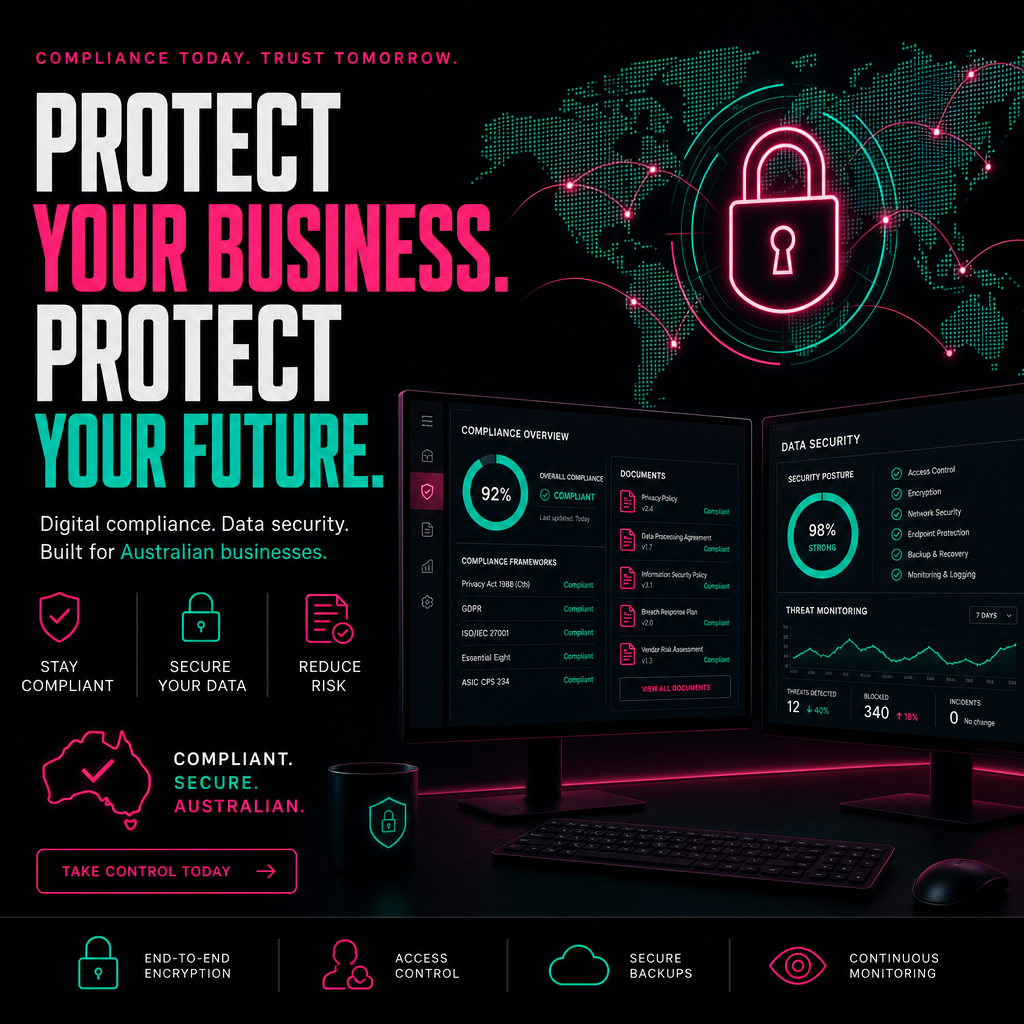
| Metric | Statistic |
|---|---|
| Australian Privacy Act Penalties | Up to $50 million |
| Compliance Rate with Specialist Offshore Staffing | 100% |
| Reduction in Partner Admin Time | 6-10 hours per cycle |
| Noticeable Difference in Delivery | Structured processes |
Most Australian businesses approach offshore staffing with excitement about cost savings, followed immediately by fear of data breaches. This is the wrong sequence. If you do not have your compliance and data security frameworks sorted before you hire offshore staff, you are building a liability, not a capacity solution.
The market is flooded with offshore staffing companies promising cheap labour and instantaneous setup. What they rarely discuss is how they handle the Australian Privacy Act 1988, cross-border data transmission, or the specific security clearances required for offshore IT staffing. At 3P Digital, we have seen the fallout when businesses prioritise cost over compliance. Adding headcount without adding system is how scaling creates chaos.
This article breaks down exactly how to secure your offshore staffing solutions. We will cover the regulatory landscape, hardware policies, secure networks, and how to structure agreements so your local business is protected. We will also look at why payroll and accounting functions, often deemed too sensitive to outsource, are actually safer when handed to dedicated specialists.
Key Takeaways
- Regulatory alignment is non-negotiable: Offshore staffing solutions must comply with the Australian Privacy Principles (APPs) regarding cross-border disclosure.
- Hardware policies dictate security: Offshore staff should operate on secure, company-controlled hardware within ISO 27001 certified facilities, not personal devices.
- Structure beats talent: The difference between a capacity gap and a capacity crisis is usually a delivery structure problem, not a talent problem.
- Specialists reduce risk: Outsourcing sensitive functions like payroll to dedicated specialists reduces errors caused by internal overload.
- Agreements must bind the provider: Your contracts need enforceable NDAs and clear IP assignment clauses governed by Australian law.
Risk Factors and Mitigation Tactics for Offshore Staffing
| Risk Factor | Potential Impact | Mitigation Tactic |
|---|---|---|
| Data Breach | Fines up to $50 million under the Privacy Act | Implement ISO 27001 certified facilities and zero-trust networks |
| Intellectual Property Loss | Loss of competitive advantage | Strict NDAs and Australian governed IP assignment agreements |
| Non-Compliance | Legal action and reputational damage | Align with APP 8 requirements and use compliance-baked operating systems |
| Equipment Tampering | Unauthorised access to local systems | Lockdown USB ports, disable local storage, use thin clients |
| Internal Payroll Errors | High staff turnover and Fair Work penalties | Use specialist payroll delivery rather than generalist internal admin |
The Australian Regulatory Landscape for Offshore Staffing
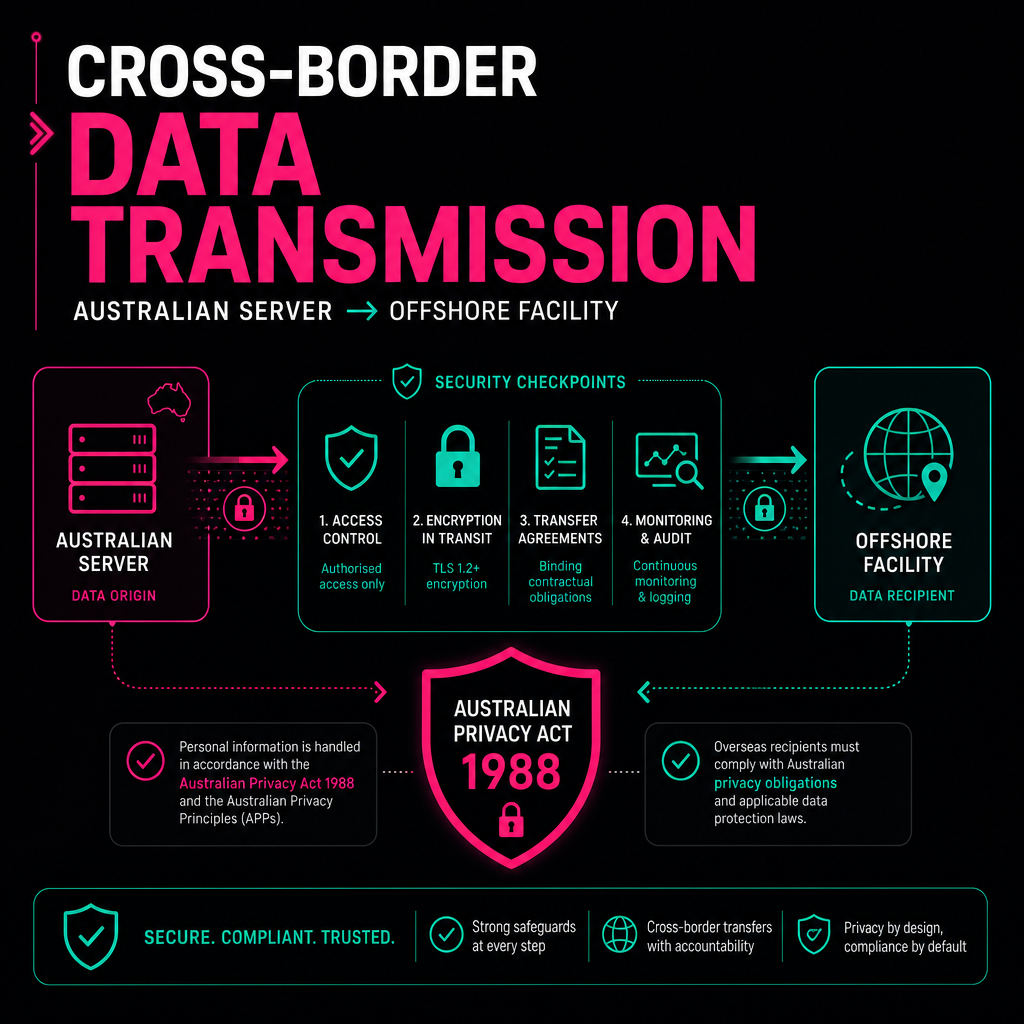
When you move operations offshore, the regulatory environment does not change. You are still operating an Australian business, which means the Australian laws apply. The Office of the Australian Information Commissioner (OAIC) does not care if your data breach originated in Manila or Melbourne. If the data belongs to an Australian resident, you are liable.
Offshore staffing companies must build their delivery systems around the Australian Privacy Act 1988. Specifically, Australian Privacy Principle (APP) 8 governs cross-border disclosure of personal information. Before you disclose personal information to an overseas recipient, you must take reasonable steps to ensure the overseas recipient does not hold or use the information in breach of the APPs.
Privacy Act 1988 and APP 8 Requirements
Reasonable steps means having documented data security protocols, encrypted transmission channels, and strict access controls. You cannot simply hire a contractor offshore, give them access to your local CRM, and hope for the best. Hope is not a compliance strategy.
If an offshore staff member accesses personal information, and that access results in a data breach, you are accountable. This is why our technology security framework relies on restrictive access. We ensure data is accessible only on a need-to-know basis.
IRAP and ISM Requirements for Offshore IT Staffing
If you are engaging in offshore IT staffing, particularly for government or highly regulated enterprise clients, the Information Security Registered Assessors Program (IRAP) and the Information Security Manual (ISM) become highly relevant. The Australian Signals Directorate (ASD) publishes the ISM to outline a framework for protecting information and systems.
While your offshore provider might not need an IRAP certification themselves, the systems they connect to and the protocols they follow must align with ISM controls. This includes gateway security, patch management, and secure remote access. If your offshore IT staffing solutions do not explicitly map their processes to ISM guidelines, they are introducing unmanaged risk into your digital ecosystem.
Securing the Offshore Environment: Hardware, Networks, and Facilities
Data security fails at the endpoint. You can have the most secure cloud infrastructure in the world, but if your offshore staff are accessing it from a personal laptop riddled with malware over an unsecured public Wi-Fi network, you have a breach waiting to happen. Compliance-first offshore staffing solutions mandate strict control over the physical and digital working environment.
Hardware Policies and Zero-Trust Networks
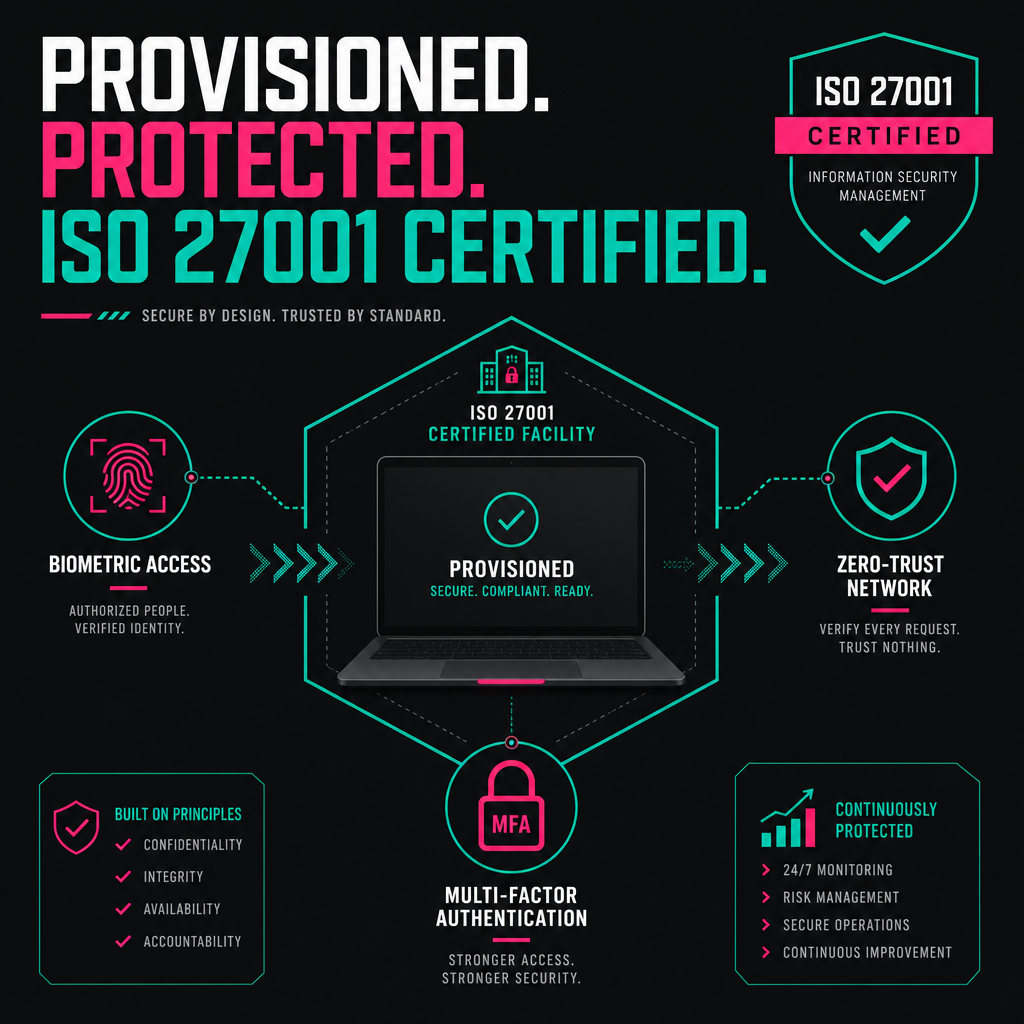
Every offshore staff member must operate on provisioned hardware. No exceptions. Personal devices cannot be trusted to meet baseline security requirements. Provisioned hardware allows your IT team to enforce mobile device management (MDM) profiles, push mandatory security updates, and monitor for anomalous behaviour.
A zero-trust network architecture assumes threats exist both outside and inside the network. Every access request must be authenticated, authorised, and continuously validated. Offshore staff should connect through a secure VPN with multi-factor authentication (MFA). They should not have blanket access to your entire server. Access should be segmented based on their specific role and daily tasks.
The Role of ISO 27001 Certified Facilities
If data security is critical to your business, your offshore staff need to work from an ISO 27001 certified facility. ISO 27001 is the international standard for information security management systems. It dictates strict physical security controls, including:
- Biometric access controls to prevent unauthorised entry.
- 24/7 CCTV monitoring with extended retention periods.
- Clean desk policies to ensure no sensitive data is left unattended.
- Prohibition of personal mobile phones on the operational floor.
Working from home introduces unmanaged variables. A certified facility removes those variables. It ensures the physical environment matches the digital security protocols you have built. Remotee installs compliance-baked operating systems around specialist roles, and physical facility security is a massive part of that compliance.
Addressing the Specific Risks of Payroll and Accounting Functions
Most business owners say payroll should stay in-house because it is too sensitive to outsource. I completely disagree. Payroll is often safer when it is outsourced to specialists. The real risk in payroll is not the location of the person processing it, it is the lack of process, internal overload, and rushed manual checks.
Most payroll risk comes from people wearing too many hats. A specialist payroll team brings structure, controls, deadlines, and compliance focus to every cycle. Your payroll should not depend on one busy admin person remembering everything. Payroll is a business-critical trust function. When payroll is wrong, staff confidence drops immediately. Accurate, on-time payroll protects culture, cash flow, compliance, and your employer brand. We process payroll like it matters, because to your staff, it does.
How Compliant Offshore Staffing Companies Structure Agreements
The legal framework binding your offshore staff is your last line of defence. If your provider hands you a generic employment contract, walk away. Compliant offshore staffing companies structure agreements that explicitly protect the local Australian business.
Enforceable NDAs and IP Assignment
A standard non-disclosure agreement is weak if it is not enforceable. Your agreements must explicitly state:
- All intellectual property created during the employment period is fully assigned to your Australian business.
- Confidentiality clauses survive the termination of the contract.
- Data cannot be retained on local hard drives or personal clouds after the engagement ends.
Proper compliance training ensures offshore staff actually understand these obligations. They need to know what constitutes a breach, not just sign a piece of paper.
Jurisdictional Clauses and Insurance
Your contract should specify that any disputes are governed by Australian law, or at minimum, an internationally recognised arbitration framework. Furthermore, your offshore staffing provider must carry Professional Indemnity and Cyber Liability insurance. If they make an error that leads to a breach, their insurance should cover your mitigation costs, not yours.
Transitioning High-Risk Functions: Case Study 1
I want to share a direct example of how structured offshore delivery solves high-risk operational bottlenecks. A recruitment agency we worked with was struggling with their payroll. The founders wanted to focus on new business development and operational execution, not payroll and accounting. Hiring in-house resources to manage it was not providing a good commercial return on investment.
We executed our proprietary framework, "The Accountee Payroll Process".
- Phase 1 - Payroll Discovery and Setup: We reviewed their current payroll process, pay cycles, staff types, award considerations, systems, approvals, and reporting requirements to build a clear payroll operating model.
- Phase 2 - Payroll Transition: We took over the payroll function from the client. This included managing access, templates, pay run calendars, employee data, timesheet flows, and approval checkpoints.
- Phase 3 - Full Payroll Processing: We processed payroll end-to-end. This covered timesheet review, pay calculations, leave, allowances, deductions, Single Touch Payroll (STP), superannuation, payroll reporting, and pay run preparation.
- Phase 4 - Ongoing Payroll Management: We provided ongoing payroll delivery, issue resolution, compliance support, reporting, and account management.
The outcome was immediate. We completed the discovery and implementation within two weeks. We were live and managing payroll rapidly. The client went from drowning in administrative tasks to approving one email once per fortnight. Our team manages all payroll, super, compliance, and tax. All inbound queries and timesheet queries are handled by us, resulting in our clients focusing on what they do best: recruitment. We are specialist payroll accountants, not generalist bookkeepers.
System Overhaul and Cost Reduction: Case Study 2
Another hospitality recruitment and labour hire company we advised had multiple people in-house as well as external accountants managing their payroll at great expense. They were processing payroll weekly, which created massive workloads and constant bottlenecks.
Our expert team came in, completed a discovery phase, and presented a system that eliminated their need for internal staff and external accountants. We moved their payroll to fortnightly and our team picked up the entire function. It was a plug-and-play solution, all done for them.
The results spoke for themselves. They saw a reduction in opex staffing costs and a reduction in payroll costs simply by moving to a fortnightly cycle. More importantly, we drove an improvement in compliance. They were not aware of multiple industry award requirements prior to our arrival. By installing "The Accountee Payroll Process", we protected them from severe Fair Work penalties.
The Cost of Non-Compliant Offshore Staffing
Businesses look at offshore versus local hiring cost comparison in Australia and immediately fixate on the hourly rate. The hourly rate is a distraction. The real cost of offshore staffing lies in the delivery system.
If you hire an offshore worker directly for $8 an hour, but they use a personal computer, work over public Wi-Fi, and do not understand Australian data privacy laws, your actual cost of risk is astronomical. A single data breach under the Privacy Act 1988 can result in fines of up to $50 million. A Fair Work penalty for payroll non-compliance can reach hundreds of thousands of dollars.
Non-compliant offshore staffing is a false economy. You save $50,000 a year on wages, only to lose $500,000 in a regulatory fine or a catastrophic data breach. This is why we insist on compliance-first payroll, every pay run. It is why our offshore IT staffing solutions require secure VPNs and provisioned hardware.
Avoid payroll fines before they become expensive lessons. Do not treat your back-office operations as an afterthought.
Why Generalists Fail and Specialists Succeed
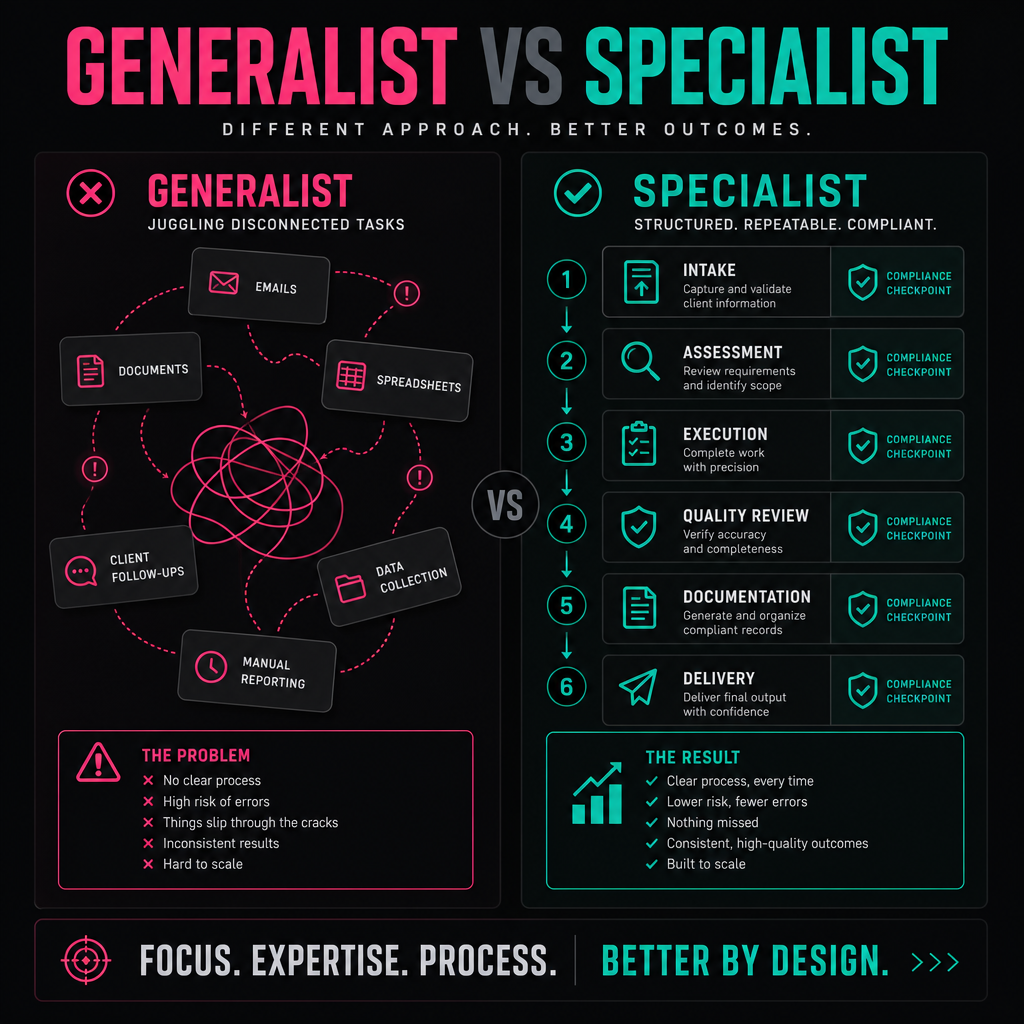
The difference between a capacity gap and a capacity crisis is usually a delivery structure problem, not a talent problem. Most offshore staffing companies operate as generalists. They will hire you a virtual assistant, a marketer, a developer, and an accountant. But they do not build the system around that person.
When payroll is wrong, staff confidence drops quickly. You do not need a generalist bookkeeper squeezing your pay run in between BAS statements. You need payroll specialists who understand recruitment agencies. You need dedicated resources who live and breathe specific compliance frameworks.
- Generalists rely on you to provide the process. They drop a human into your business and expect you to train them on your systems.
- Specialists bring the system with them. They install the compliance, the software, and the workflows.
Not jack-of-all-trades accounting. Specialist payroll delivery. STP, super, leave, PAYG and reporting must be handled by people who live in payroll. Payroll done properly. Not squeezed in between tax returns. Payroll is too important to be "mostly right".
Our data proves this. Across 15 implementations in 2026, we have delivered a 100% compliance rate and a reduction in non-billable partner time of 6-10 hours per pay cycle.
Sector-Specific Security Demands
Different industries face entirely different data security demands. Compliant offshore staffing solutions recognise these differences and tailor the delivery system accordingly.
Financial Services and Recruitment Payroll
If you are running a recruitment agency, you hold vast amounts of sensitive data. Tax File Numbers, bank account details, superannuation funds, and employment contracts. This is a goldmine for cybercriminals. Furthermore, Australian labour hire laws and modern awards are notoriously complex.
Processing payroll for a hospitality labour hire firm is not just a data entry task. It involves calculating penalties, overtime, and allowances across various awards. When a generalist internal admin person attempts this while doing fifty other tasks, they make mistakes. These mistakes cost money and damage trust. A specialist offshore payroll team mitigates this risk entirely.
Healthcare and the NDIS
The healthcare sector faces some of the strictest compliance requirements in Australia. The Office of the Australian Information Commissioner (OAIC) aggressively polices data handling in healthcare. Furthermore, regulatory frameworks evolve rapidly. For instance, providers must stay ahead of changes like the NDIS reform in 2026 to ensure their administrative and billing processes remain legally compliant.
Offshore IT staffing and administration in healthcare requires stringent adherence to the Privacy Act. It demands secure, encrypted transmission of patient data and rigid access controls. A breach here does not just result in a fine, it results in a loss of human trust.
Step-by-Step Implementation for Maximum Security
Implementing a secure offshore staffing model requires a deliberate sequence of events. Skipping steps introduces vulnerabilities.
- Audit Your Current Delivery Structure: Before you offshore, document your existing workflows. Identify where data lives, who accesses it, and where the bottlenecks are. You cannot secure a system you have not mapped.
- Select a Specialist Provider: Look for offshore staffing companies that talk about systems, not just resumes. Ask them directly about their hardware policies, ISO certifications, and approach to APP 8.
- Execute Secure Setup: Deploy zero-trust networks, provision company-controlled hardware, and implement multi-factor authentication. Lock down USB ports and disable local storage.
- Install Compliance Frameworks: Ensure your provider conducts regular compliance training. Every offshore staff member must understand their legal obligations regarding Australian data privacy.
- Move to Ongoing Management: Do not treat offshore staff as set-and-forget. Use a structured framework like "The Accountee Payroll Process" to ensure continuous compliance, regular reporting, and proactive issue resolution.
Building a Resilient Delivery Model
A resilient business does not just react to problems, it prevents them. When you wrap your offshore staff in a robust delivery system, you move from being a Doer to being a Strategist.
We recently received this feedback from a client who transitioned their payroll to our offshore model:
"Before switching, our internal team was stretched thin, manually processing weekly payroll and constantly managing timesheet queries. Since implementing the offshore delivery model, our opex costs dropped significantly, and our compliance issues disappeared. The structured approach means I just review the final reports. It is predictable delivery, not just headcount."
Predictable delivery is the ultimate goal. When your systems are compliant, your data is secure, and your processes are documented, you can scale without fear.
Secure Your Offshore Future
Data security and compliance are not roadblocks to offshoring. They are the blueprint for doing it correctly. If you work with offshore staffing companies that prioritise cost over compliance, you will eventually pay for it. Protect your business, your data, and your team by building a system that works.
If you are ready to install a compliance-baked delivery system around your offshore roles, contact us to discuss secure staffing solutions.
References
- Office of the Australian Information Commissioner (OAIC). Australian Privacy Principles (APPs) guidelines, specifically APP 8: Cross-border disclosure of personal information.
- Office of the Parliamentary Counsel. Privacy Act 1988 (Cth).
- Australian Cyber Security Centre (ACSC). Information Security Manual (ISM).
- International Organization for Standardization. ISO/IEC 27001 Information security management systems.
FREQUENTLY ASKED QUESTIONS
Common questions
What are the key Australian data privacy laws affecting offshore staffing?
- The primary law is the Privacy Act 1988, specifically the Australian Privacy Principles (APPs). APP 8 deals with cross-border disclosure of personal information. It requires Australian businesses to take reasonable steps to ensure overseas recipients handle personal data in compliance with the APPs. If an offshore staff member breaches data privacy, the Australian business is held accountable by the Office of the Australian Information Commissioner (OAIC).
Are non-disclosure agreements (NDAs) enforceable for offshore staff?
- Yes, NDAs are enforceable, but they must be structured correctly within the employment contract. A robust NDA for offshore staff should clearly define what constitutes confidential information, state that intellectual property is assigned to the Australian business, and include clauses that survive the termination of the contract. For maximum enforceability, the agreement should specify dispute resolution mechanisms and be backed by the offshore staffing provider's Professional Indemnity insurance.
How do you secure equipment for offshore staff?
- Equipment security requires a zero-compromise approach to hardware and networks. Offshore staff must use provisioned company hardware rather than personal devices. These machines should run mobile device management (MDM) software, have disabled USB ports, and prevent local storage. Access to Australian servers should only occur through a secure VPN with multi-factor authentication. Ideally, the staff work from an ISO 27001 certified facility with biometric access and strict clean desk policies.
Is offshore IT staffing safe for highly regulated industries?
- Offshore IT staffing is safe for regulated industries if the provider maps their processes to recognised security standards like the Australian Signals Directorate (ASD) Information Security Manual (ISM). Providers must use zero-trust network architectures, segment access based on role requirements, and maintain strict patch management protocols. The safety lies entirely in the system, not just the individual technician.
Why should I outsource payroll instead of keeping it in-house?
- Payroll is often safer when outsourced to specialists because most payroll risk stems from internal overload, manual checks, and people wearing too many hats. A specialist offshore team uses documented systems, strict deadlines, and compliance focus every single cycle. Internal generalists often rush pay runs, leading to Fair Work penalties and STP errors. Outsourcing to payroll specialists ensures the function is treated as business-critical, not just an admin task.
How does the Accountee Payroll Process improve compliance?
- The Accountee Payroll Process is a four-phase system that ensures total compliance. It starts with a deep discovery of your current awards and systems, moves through a secure transition, and ends with full end-to-end processing. By handling timesheet review, pay calculations, STP, superannuation, and reporting through a controlled framework, it eliminates the manual errors that cause non-compliance. Across 15 implementations in 2026, this framework has delivered a 100% compliance rate.
What happens if there is a data breach involving offshore staff?
- If a data breach occurs involving offshore staff, the Australian business is legally responsible for managing the fallout under the Privacy Act 1988. This involves conducting an assessment of the breach, notifying the OAIC if it is deemed an eligible data breach, and notifying the affected individuals. This is why you must use offshore staffing companies that carry Cyber Liability insurance and maintain ISO 27001 certified facilities, as their protocols and coverage will mitigate your financial and legal exposure.

Jon Kelly
Founder, Remotee
Jon helps Australian businesses build compliance-led offshore teams that scale without the burnout. NDIS, accounting, mortgage broking, recruitment and digital marketing.
KEEP READING
Related posts
offshore teams for startups
How to Scale Australian Startups Using Offshore Teams
Australian startups rarely fail because founders lack ambition. They fail when cash, execution capacity and market timing stop lining up. Hiring locally for eve…
13 July 2026 · 22 min read
reduce labour costs offshore
Proven Strategies to Reduce Labour Costs with Offshore Staff in Australia
Australian business owners and CFOs are facing unrelenting margin pressure. Local wage growth is climbing, onshore overheads are inflexible, and the cost of doi…
11 July 2026 · 14 min read
offshore staff leasing
Long-Term Offshore Staff Leasing: Building Dedicated Teams in Australia
The difference between a capacity gap and a capacity crisis is usually a delivery structure problem, not a talent problem. Australian business owners frequently…
5 July 2026 · 18 min read
READY TO SCALE WITHOUT THE BURNOUT?
Build a compliance-led offshore team in 3–4 weeks.
Tell us about your current bottleneck and we'll show you what a Remotee placement would look like for your operation.
Or get our playbooks emailed to you instead.