
How to Build a Virtual Team for Your Australian Business
- virtual team management
- remote team building
- virtual teams
- Australian business operations
- remote hiring
Australian businesses are operating in a highly competitive local market. Finding experienced professionals who fit within local budget constraints is harder than ever. The shift to distributed workforces is no longer an experiment. It is a core operational strategy for companies that want to scale efficiently. When you build a virtual team, you access a global talent pool while reducing the overheads associated with traditional office spaces.
However, most Australian business owners approach remote hiring entirely the wrong way. They focus purely on finding cheap labour or hiring a specific resume. They assume that dropping a remote worker into a disorganised business will automatically generate capacity. It will not. The difference between a capacity gap and a capacity crisis is usually a delivery structure problem, not a talent problem. Adding headcount without adding system is exactly how scaling creates chaos.
If you want to build a virtual team that actually drives revenue and operational efficiency, you need a different approach. You need documented workflows, clear ownership, and repeatable processes. This guide breaks down exactly how to establish virtual teams, manage them effectively, and install the compliance-baked operating systems required for predictable delivery.
Key Takeaways
- Cost efficiency and scalability: Building a virtual team drastically reduces capital expenditure on office space, local salaries, and GST-inclusive overheads while allowing you to scale up or down based on demand. -Access to specialist talent: You gain access to a global pool of highly skilled professionals, particularly in areas like administrative support, IT, and specialist payroll.
- Systems over resumes: Successful virtual teams rely on documented workflows and repeatable processes rather than just raw talent. Your goal is predictable delivery, not just headcount.
- Technology enables structure: A focused tech stack encompassing communication, project management, and security is the backbone of effective virtual team management.
- Compliance and security: Outsourcing complex functions like payroll to specialists ensures 100 percent compliance with Australian Taxation Office requirements, mitigating the risks of internal overload.
Local Hires vs. Virtual Teams
Before you build a virtual team, you need to understand the exact operational differences. The table below compares local Australian hires with structured virtual teams across key business metrics.
| Feature | Local Australian Hires | Structured Virtual Teams |
|---|---|---|
| Cost (AUD) | High base salary, superannuation, payroll tax, workers comp | Lower operational cost, flat rate, no hidden on-costs |
| Talent Pool | Restricted to your specific suburb or city | Global access to specialised professionals |
| Compliance Management | Handled internally, prone to human error during busy periods | Managed by specialists with dedicated compliance focus |
| Scalability | Slow, expensive, and resource-heavy to recruit and onboard | Fast, flexible, and systemised for rapid deployment |
| Overhead Requirements | Requires physical space, hardware, and local infrastructure | Operates independently, requiring only cloud infrastructure |
| Delivery Model | Relies heavily on the individual's internal knowledge | Relies on documented systems, workflows, and processes |
Defining the Modern Virtual Team
A virtual team is a group of professionals working together from different geographic locations, connected entirely by digital communication and cloud-based technologies. Unlike traditional outsourcing, which often involves handing off isolated tasks to a third party, a modern virtual team operates as an integrated extension of your core business. They are not external contractors. They are dedicated personnel who understand your company values, operate within your workflows, and drive specific business outcomes.
When we talk about virtual teams, we are talking about embedded personnel. They attend your meetings, use your software, and report directly to your local management team. The only difference is their physical location.
The barrier to entry for remote work has been completely removed. High-speed internet, secure cloud environments, and advanced collaboration platforms mean a team member in Manila can function identically to a team member in Melbourne. The focus has shifted from where people sit to how effectively their work is structured and measured. Remote hiring only creates real value when it is wrapped in a rigorous delivery system. Talent quality matters, but quality alone is not enough to guarantee success.
Core Roles to Fill First When You Build a Virtual Team
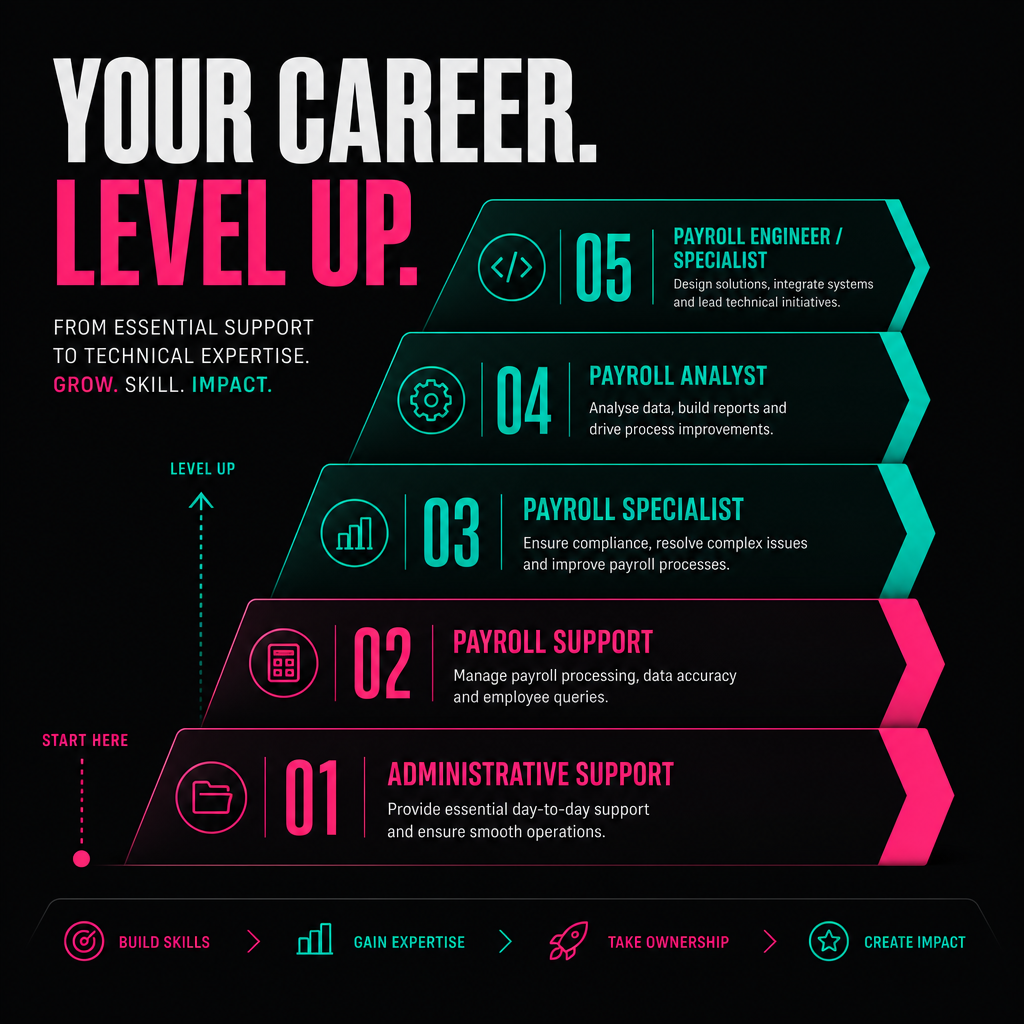
One of the biggest mistakes business owners make is trying to hire for high-level strategic roles before they have built a solid operational foundation. You cannot hire a remote Chief Operating Officer if your basic administrative tasks are falling through the cracks. When you start building your virtual team, you need to target the roles that immediately reduce friction and reclaim partner time.
1. Administrative Support and Customer Service
Administrative bottlenecks are the silent killers of growth. When your high-paid local staff are spending hours managing inboxes, scheduling meetings, and formatting documents, your profit margins shrink. Your first virtual hire should always be a dedicated administrative assistant or customer service representative.
A virtual admin professional takes ownership of daily data entry, calendar management, and general correspondence. This immediately frees your local team to focus on revenue-generating activities. Customer service roles are equally critical. Australian consumers expect rapid responses. Having a virtual team manage inbound queries ensures your local reputation remains intact while keeping overheads low.
2. Specialist Payroll and Accounting Functions
Payroll is a business-critical trust function. When payroll is wrong, staff confidence drops immediately. Yet, most Australian businesses treat payroll as a basic admin task. They assign it to a generalist bookkeeper or an internal staff member who is already wearing too many hats. This is where businesses expose themselves to massive compliance risks.
Most payroll errors come from internal overload, manual checks, rushed pay runs, and people trying to manage too many responsibilities. You need specialist payroll accountants, not generalist bookkeepers. A dedicated remote payroll team brings structure, controls, strict deadlines, and a compliance focus to every single pay cycle. We process payroll like it matters, because to your staff, it does.
3. IT Support and Technical Operations
Every modern business relies on a complex stack of software applications. When technical issues arise, productivity grinds to a halt. Hiring a full-time, local IT professional is often cost-prohibitive for small to medium Australian businesses. Building a virtual team of IT support technicians provides you with enterprise-level technical management at a fraction of the cost.
Virtual IT professionals can manage helpdesk queries, maintain server security, oversee software updates, and ensure your data architecture remains robust. They integrate seamlessly into your operations, providing proactive maintenance rather than reactive troubleshooting.
The Recruitment and System Onboarding Process
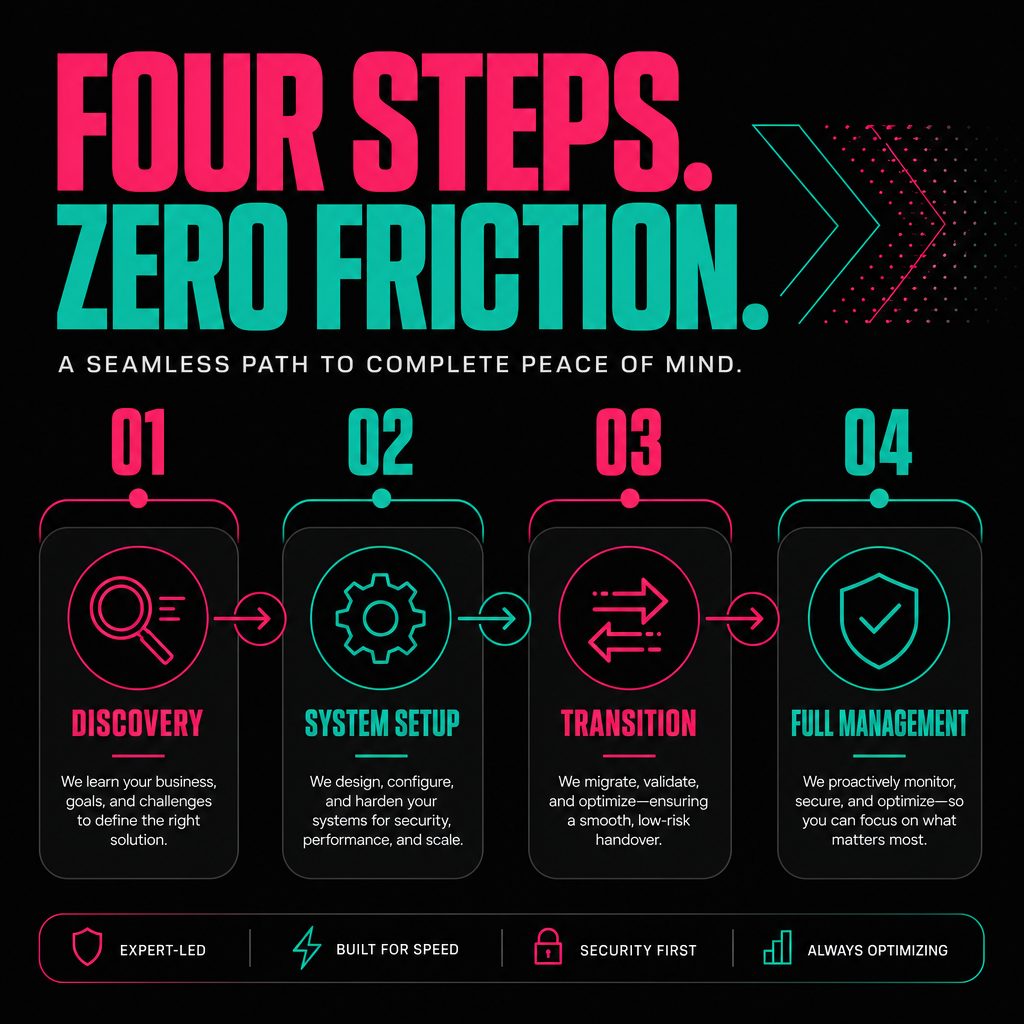
Successful remote hiring requires a process that prioritises system integration just as heavily as skills testing. You are not just hiring a resume. You are installing a delivery mechanism into your business. At Remotee, we use a strict, proprietary methodology to ensure every new virtual team member operates within a predictable, reliable framework.
Our proven process guarantees that your business achieves predictable delivery, not just increased headcount. We move business owners from being the bottleneck, acting as the Doer, to acting as the Strategist by installing compliance-baked operating systems around specialist roles.
To illustrate how systemised hiring works in a highly sensitive area, consider the exact framework we use when deploying virtual payroll teams for recruitment agencies. We call this "The Accountee Payroll Process". It is designed for established Australian businesses that need to focus on growth rather than being bogged down in complex accounting operations.
Phase 1: Payroll Discovery and Setup. We review the client's current payroll process, pay cycles, staff types, award considerations, systems, approvals, and reporting requirements. We build a clear, documented payroll operating model. There is no guessing.
Phase 2: Payroll Transition. We take over the payroll function entirely from the client. This includes securing the required system access, establishing templates, setting pay-run calendars, migrating employee data, and structuring timesheet flows and approval checkpoints.
Phase 3: Full Payroll Processing. The specialist team processes payroll end-to-end. This includes timesheet review, pay calculations, leave management, allowances, deductions, Single Touch Processing (STP), superannuation, payroll reporting, and final pay-run preparation.
Phase 4: Ongoing Payroll Management. We provide ongoing payroll delivery, rapid issue resolution, continuous compliance support, detailed reporting, and dedicated account management. This ensures payroll runs accurately, on time, and with zero internal admin required from the business owner.
By following this exact structured onboarding sequence, you guarantee that your virtual team knows exactly what to do, when to do it, and how their performance will be measured.
Case Study: Scaling Admin and Payroll for a Melbourne Recruitment Agency
To understand the impact of a systemised virtual team, look at how structured delivery changes operational capacity. We worked with a Melbourne-based recruitment agency where the founders wanted to focus entirely on new business development and operational execution. However, they were losing 6 to 10 hours per pay cycle managing internal payroll, accounting, and basic administrative tasks.
They initially tried managing these functions internally and using external local accountants. The commercial return on investment was poor. The internal overhead was distracting the founders, and the external accountants lacked the specific recruitment industry focus required to manage complex compliance.
We intervened by installing a dedicated virtual payroll and administrative team. We customised our setup to integrate perfectly with the existing software they used. Within exactly two weeks of the initial discovery phase, our specialist team was live and fully managing their payroll operations.
The outcome was immediate. The founders now only spend the time it takes to approve one single email once per fortnight. Our virtual team manages all payroll calculations, superannuation, tax compliance, and inbound timesheet queries. Because we deployed specialist payroll accountants who understand recruitment agencies, the transition was seamless. They achieved a 100 percent compliance rate across all STP and superannuation requirements, completely eliminating the risk of payroll fines.
Case Study: Structured Payroll Delivery for a Hospitality Labour Hire Firm
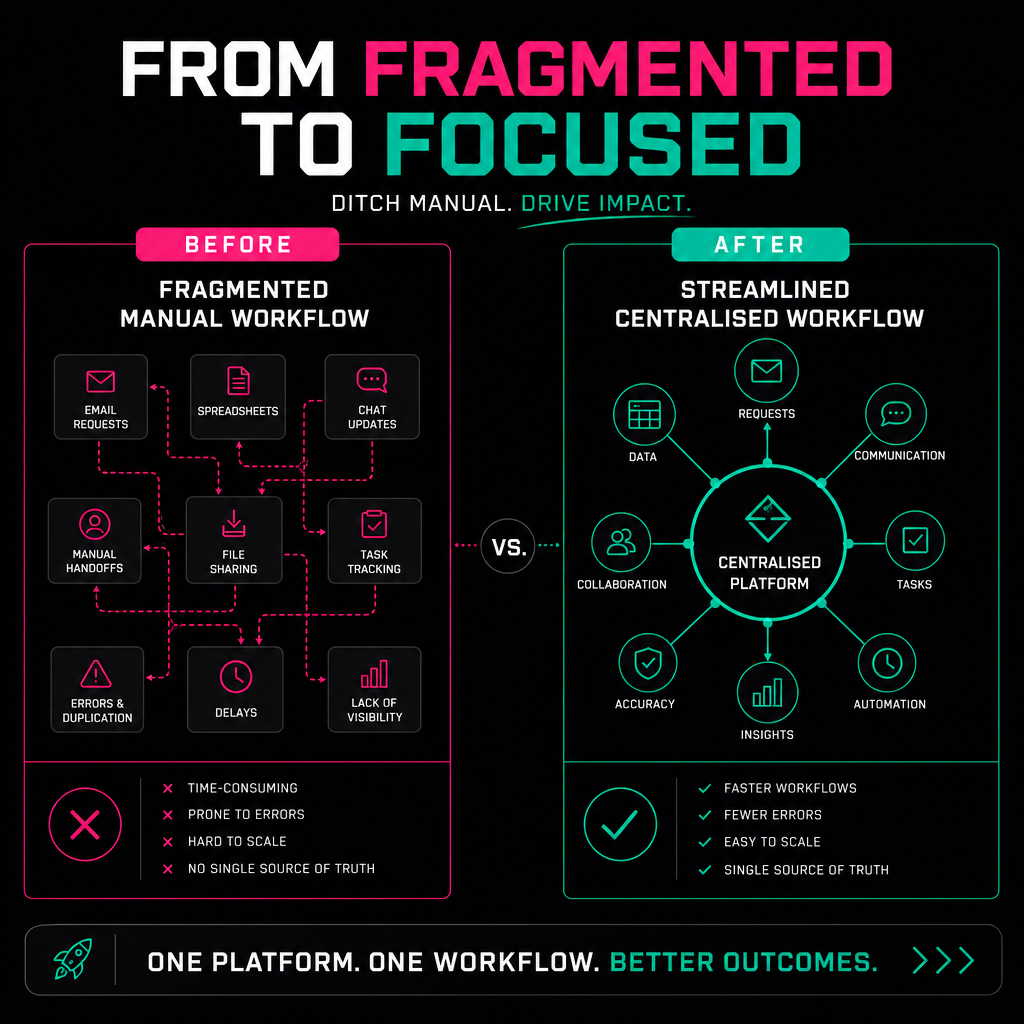
A hospitality recruitment and labour hire company based in Sydney approached us with a severe operational bottleneck. They had multiple people in-house as well as external accountants managing their payroll at great expense. The situation was further complicated because they processed payroll weekly, creating massive, recurring workloads and constant stress for their internal team.
We completed a full discovery phase and presented a system that completely eliminated their reliance on internal admin staff and external local accountants. We structured a plan to move their pay cycle from weekly to fortnightly. This simple structural change immediately reduced the administrative burden by half. We then provided our dedicated virtual team to pick up the payroll function plug-and-play.
The results were significant. They experienced a drastic reduction in operational staffing costs and external accounting fees. Furthermore, there was a distinct improvement in their overall compliance. Their previous generalist staff were not fully aware of multiple complex hospitality industry award requirements. By moving to a specialist remote team, they avoided the expensive lessons associated with Fair Work non-compliance.
This is the power of moving away from generalist administration to specialist remote delivery. It is not just about saving money on hourly rates. It is about installing a compliant, efficient structure that protects the business. You can implement this exact level of structured remote support by working with our team through our contact page.
Virtual Team Management Across Time Zones
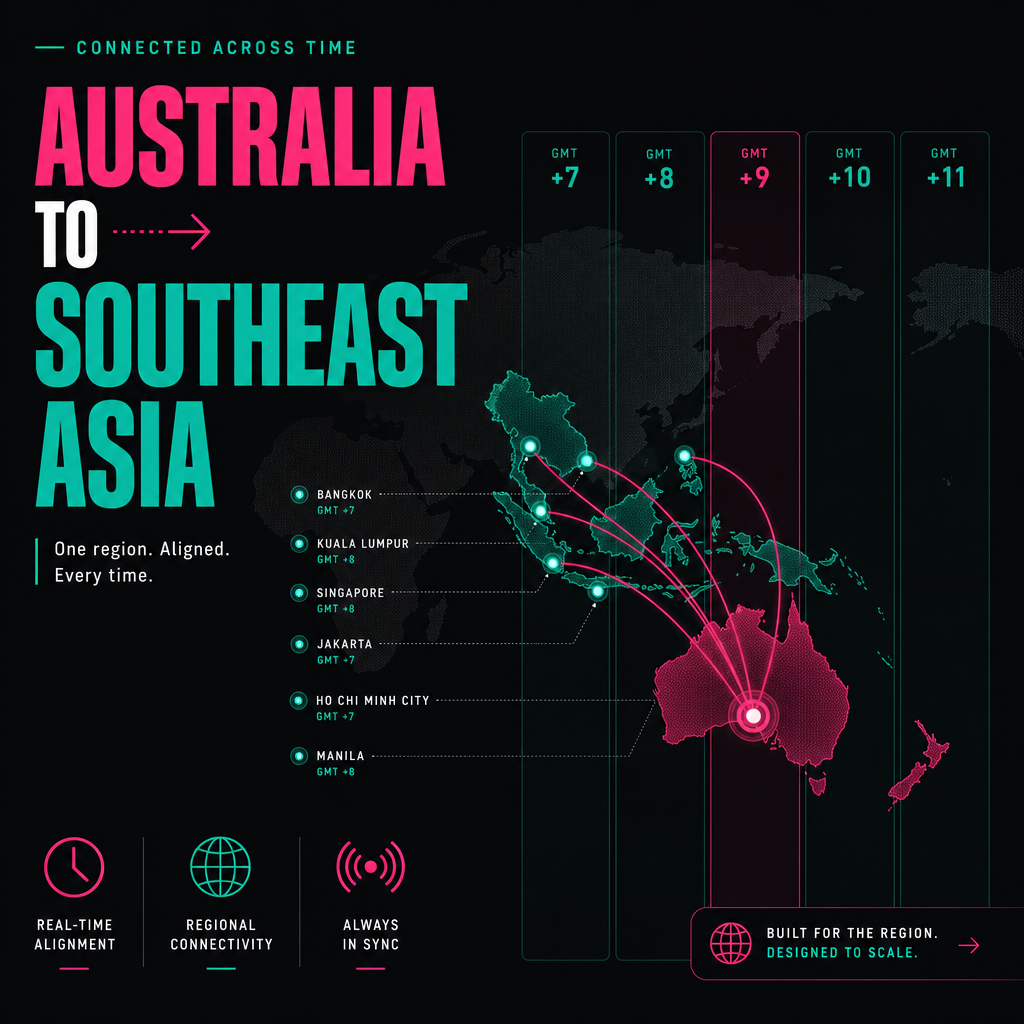
A major concern for Australian business owners is managing staff across different time zones. When you build a virtual team, particularly one sourced from regions like the Philippines, you actually gain a distinct geographical advantage. The time zone alignment between Australia and Southeast Asia is highly favourable for local operations.
Most major virtual team hubs are only two to three hours behind Australian Eastern Standard Time. This means your virtual team can start their day slightly earlier, handle the overnight queries, and have tasks prepared for your local team before they even log on. You effectively achieve a follow-the-sun workflow without the friction of drastic time differences.
Effective virtual team management across time zones requires strict operational rules:
- Establish core overlapping hours. Determine a specific window of 3 to 4 hours where both your local and virtual teams are online simultaneously. Use this time for meetings, quick approvals, and collaborative problem-solving.
- Shift from synchronous to asynchronous communication. Not every question requires an immediate phone call. Train your team to use detailed Loom videos, comprehensive project briefs, and recorded updates. This allows work to continue seamlessly regardless of the time zone.
- Set clear Service Level Agreements (SLAs). Your virtual team needs to know exactly how quickly you expect a response. Establish clear turn-around times for specific tasks. This removes the anxiety of waiting for a reply when someone is off the clock.
- Track deliverables, not screen time. When managing remote staff across borders, you cannot monitor physical presence. You must manage by outcome. If the payroll is processed accurately and on time, it does not matter what specific hours the team member worked. As long as they are available during your agreed core hours, the relationship will thrive.
Communication and Collaboration Tech Stacks
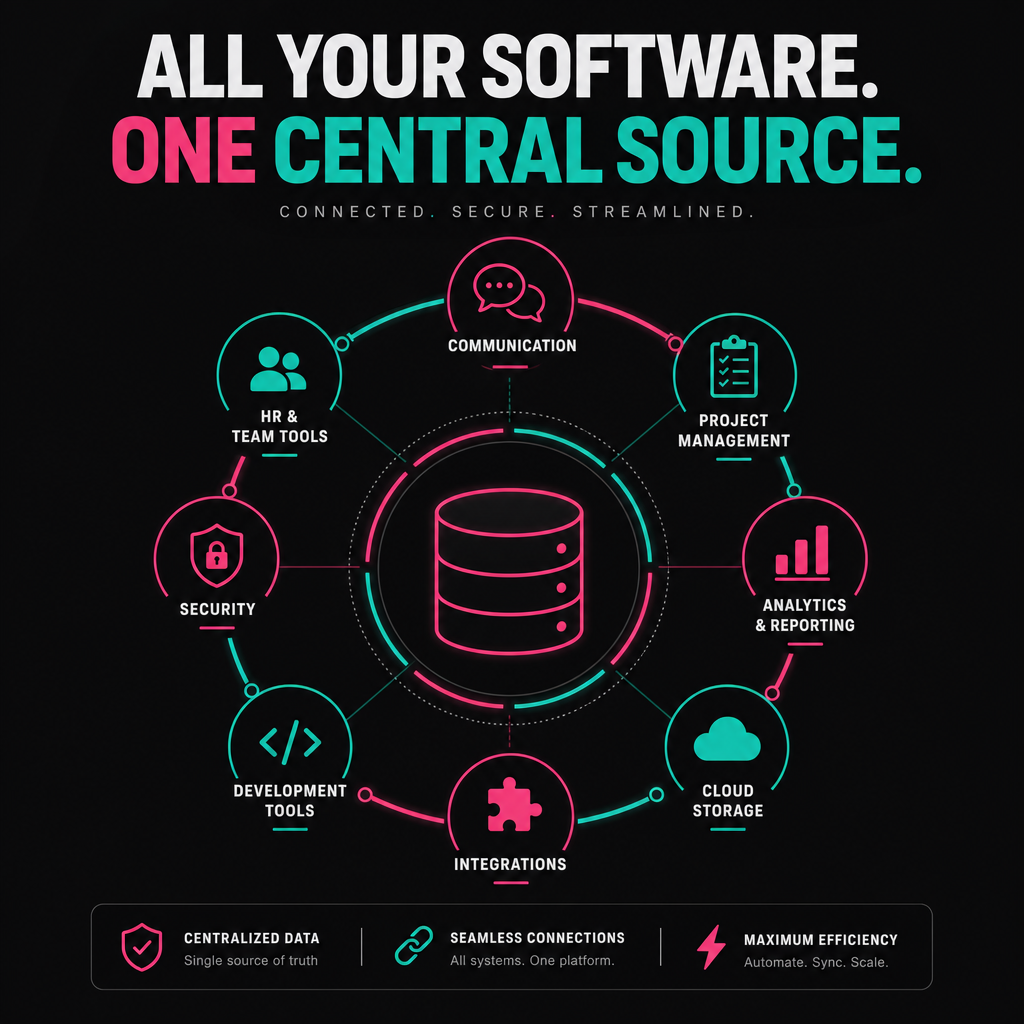
Your technology stack is the central nervous system of your virtual team. Without the right infrastructure, even the most talented professionals will struggle to deliver consistent results. When you build a virtual team, you must provide them with enterprise-grade tools that facilitate seamless communication, transparent project management, and total data security.
Communication Infrastructure
Real-time communication and asynchronous messaging are both required. Your local team needs a reliable way to reach out without disrupting workflows.
- Slack: Essential for quick, text-based communication. Create specific channels for different projects or departments. This keeps conversations organised and searchable.
- Zoom: Utilised for weekly check-ins and complex problem-solving. Video calls should be reserved for relationship building or discussing sensitive topics, not basic status updates.
Project Management Platforms
- ClickUp or Asana: These platforms act as your digital office. Every task, deadline, and file must live inside the project management tool. This creates total transparency. If a team member is sick, another person can look at the board and see exactly where a project stands.
Security and Data Compliance
When your team operates remotely, data security becomes paramount. You cannot afford to have sensitive client information or payroll data compromised. We enforce strict technology and security protocols across every deployment.
- Virtual Private Networks (VPNs): All remote workers must connect through encrypted VPNs to prevent unauthorised data interception.
- Multi-Factor Authentication (MFA): Every software login requires MFA. This simple step blocks the vast majority of automated hacking attempts.
- Role-Based Access Control: Virtual team members should only have access to the specific systems required for their role. A customer service rep does not need access to your main banking portal.
- Secure Cloud Storage: Use platforms like Google Workspace or Microsoft SharePoint to manage documents centrally. Never allow work to be saved locally on a remote worker's personal hard drive.
Changing the Model: From Generalist Admin to Specialist Delivery
The traditional approach to remote hiring focuses on finding a generalist. A business owner looks for a virtual assistant who can answer phones, do basic data entry, and manage a calendar. While this provides some relief, it does not change the fundamental trajectory of the business. Generalists keep the wheels turning, but they rarely optimise the engine.
The most successful Australian businesses are taking a different approach. They are using virtual teams to install specialist capabilities that were previously too expensive to justify locally.
Payroll is the perfect example. The standard consensus is that payroll should stay in-house because it is too sensitive to outsource. Our position is the exact opposite. Payroll is often significantly safer when it is outsourced to specialists.
Why? Because most payroll risk comes from internal overload. A generalist admin person remembers a lot of things, but they also forget details when they are busy. Your payroll should not depend on one busy admin person remembering everything. A specialist payroll team brings dedicated structure, automated controls, strict deadlines, and an absolute compliance focus to every single cycle. They are not jack-of-all-trades accounting. They are specialist payroll delivery.
When you outsource to specialists, you achieve highly specific operational improvements. Across our accountee recruitment agency clients in 2026, we have consistently measured a reduction in non-billable partner time of 6 to 10 hours per pay cycle. By moving the work to people who live in payroll every single day, you guarantee accuracy. STP, super, leave, PAYG and reporting are handled by experts. This shifts payroll from being a source of stress to being a reliable, invisible function of your business.
Maintaining Team Culture in a Virtual Environment
Virtual team building is not about forced social activities or virtual escape rooms. While those can be fun, real team culture is built on reliability, clear communication, and shared objectives. When people know exactly what is expected of them and they have the tools to succeed, morale stays high.
To build a strong culture with your virtual teams, you must integrate them completely. Do not treat them as a separate, external entity. Include them in company-wide announcements, invite them to celebrate local milestones, and ensure they understand how their specific role contributes to the overall success of the Australian business.
Regular feedback loops are critical. Implement monthly performance reviews for the first 90 days of employment. This ensures any minor issues are corrected immediately before they become ingrained habits. Recognise outstanding work publicly in your communication channels. When a remote worker processes a complex payroll run perfectly, highlight that achievement to the entire team.
Finally, document everything. Your internal wiki or company handbook must be a living document. When you document processes, you empower your virtual team to make decisions without constantly waiting for local approval. This autonomy is what drives job satisfaction and long-term retention.
References
- Australian Small Business and Family Enterprise Ombudsman (ASBFEO). Resources for small business operations and workforce management.
- Australian Bureau of Statistics (ABS). Data on business indicators and the labour force.
- Fair Work Ombudsman. Guidelines on modern awards, pay slips, and national employment standards.
- Australian Taxation Office (ATO). Single Touch Payroll reporting requirements and superannuation guarantee regulations.
FREQUENTLY ASKED QUESTIONS
Common questions
How much money can I actually save by building a virtual team?
- The cost savings are substantial, but they go beyond an hourly rate. When you build a virtual team, you save on base salaries, superannuation, office space, equipment, and local taxes. However, the real financial return on investment comes from efficiency gains. For example, deploying our specialised payroll process has saved recruitment agency partners 6 to 10 hours of non-billable time per pay cycle. You save money on labour while simultaneously reclaiming local hours to focus on high-value business development.
Is my business data secure with remote workers?
- Yes, provided you use the correct infrastructure. Do not allow remote workers to use personal computers or unsecured internet connections. Implement a strict security protocol including company-issued devices or heavily locked-down Bring Your Own Device (BYOD) policies. Enforce Multi-Factor Authentication on every application, utilise encrypted VPNs for all network access, and use centralised cloud document management to prevent local downloads.
Who provides the equipment for the virtual team?
- This depends on your hiring model. If you hire independent contractors, they typically provide their own equipment. If you hire dedicated employees through a management service, equipment is usually included as part of the monthly fee. The most critical factor is that the equipment meets your minimum security and processing specifications to handle your specific software stack efficiently.
How do I track the performance of remote staff?
- You track performance through outcomes and Service Level Agreements (SLAs), not screen time. Measure how quickly tasks are completed, the accuracy of the work, and the impact on your business operations. Use project management software like ClickUp or Asana to track task completion rates. For roles like payroll, performance is measured by a 100 percent compliance rate, zero late pay runs, and a complete absence of compliance penalties.
Can a virtual team handle complex Australian payroll?
- Absolutely, provided they are specialists. Generalist virtual assistants cannot handle complex Australian payroll. You need dedicated payroll specialists who understand local legislation, modern awards, Single Touch Processing, and superannuation requirements. By using a structured framework, specialist remote payroll accountants can execute your payroll end-to-end with a higher degree of accuracy and compliance than a distracted internal admin team.
What is the biggest mistake businesses make when building a virtual team?
- The biggest mistake is prioritising cheap labour over systems. Business owners hire a remote worker and expect them to magically fix broken internal processes. The result is always failure. You must map your workflows, document your standard operating procedures, and establish clear communication channels before you bring a new team member on board. If you build the delivery system first, the talent will thrive within it.

Jon Kelly
Founder, Remotee
Jon helps Australian businesses build compliance-led offshore teams that scale without the burnout. NDIS, accounting, mortgage broking, recruitment and digital marketing.
KEEP READING
Related posts
how offshore staffing works
How Offshore Staffing Works: A Step-by-Step Guide for Australian Businesses in 2026
Most Australian business owners I speak to already know offshore staffing exists. They've heard the pitch. They've seen the cost comparisons. What they don't ha…
22 May 2026 · 26 min read
transparent provider pricing comparison
Offshore Staffing Pricing Transparency: How to Compare Provider Quotes Without Getting Caught Out
Transparent provider pricing comparison means evaluating offshore staffing quotes against total cost of engagement, not headline hourly rate. A genuine quote it…
13 September 2026 · 17 min read
hire offshore staff
How to Hire Dedicated Offshore Staff Quickly and Compliantly
Australian businesses face a persistent problem in 2026: finding skilled talent locally is expensive and slow. HR managers and business owners spend months adve…
6 July 2026 · 17 min read
READY TO SCALE WITHOUT THE BURNOUT?
Build a compliance-led offshore team in 3–4 weeks.
Tell us about your current bottleneck and we'll show you what a Remotee placement would look like for your operation.
Or get our playbooks emailed to you instead.