
Offshore Staffing Pricing Transparency: How to Compare Provider Quotes Without Getting Caught Out
- offshore staffing
- pricing transparency
- offshore VA cost
- managed offshore staffing
- Australian business operations

Transparent provider pricing comparison means evaluating offshore staffing quotes against total cost of engagement, not headline hourly rate. A genuine quote itemises recruitment, salary, statutory payroll compliance, equipment and software, account management, and replacement cover. Anything missing one of these six layers is not a complete quote, it is a rate with unknown liabilities attached.
Two offshore staffing quotes land on your desk. One says $10 an hour. The other says $14. On paper, the cheaper one wins. In practice, the businesses that choose on rate alone are the same ones calling six months later asking why their "affordable" hire turned into a compliance headache, a retention problem, or a full-time internal admin job nobody budgeted for.
Pricing comparison in offshore staffing is not a maths problem. It is a delivery question dressed up as a maths problem. This article breaks down exactly what a transparent quote should disclose, the pricing models providers use and what each one signals about who carries the risk, and the internal cost most businesses never think to price in until it is already eating their week.
Key Takeaways
- Headline hourly rate is one input among six. Total cost of engagement is what actually matters.
- A transparent quote itemises recruitment, salary, statutory compliance, equipment, supervision and replacement cover.
- The pricing model a provider uses (fixed managed fee, per-hour, or placement-fee-plus-DIY) signals who owns delivery risk, not just who owns the invoice.
- Red flags include quotes that can't itemise, vague FX treatment, unclear notice or replacement terms, and unclear compliance ownership.
- Internal management time is the largest unquoted cost in offshore staffing. Across recruitment agency clients, we cut non-billable partner time by 6 to 10 hours per pay cycle across 15 implementations in 2026, with a 100 percent compliance record.
- A structured checklist, taken into every provider conversation, stops you comparing apples to oranges.
Offshore Staffing Pricing Models Compared
| Pricing Model | What It Typically Includes | Who Carries Delivery Risk | Best Suited To | Main Watch-Out |
|---|---|---|---|---|
| Fixed monthly managed fee | Recruitment, salary, compliance, equipment, supervision and replacement cover bundled into one fee | Provider carries most of the operational and compliance risk | Businesses that want predictable cost and no internal HR or payroll load | Looks higher upfront than a raw hourly rate, until you total the alternative |
| Per-hour or timesheet billing | Hourly rate for hours worked, sometimes with a margin on top | Risk is split. Provider owns the talent, client usually owns management and compliance follow-up | Businesses with fluctuating, project-based workload and existing management capacity | Hourly rate hides unbilled hours: compliance, HR, supervision, replacement |
| Placement fee plus DIY management | One-off placement fee, client manages payroll, compliance, HR and replacement independently | Client carries almost all ongoing risk | Businesses with an existing offshore payroll and compliance function already built | Lowest visible cost, highest hidden cost if internal systems are thin |
Why the Headline Hourly Rate Is the Wrong Starting Point
Headline hourly rate is the wrong starting point because it measures one input, labour cost, while ignoring the five other layers that determine total cost of engagement. Two providers quoting $10 and $14 an hour can land at nearly identical total cost, or wildly different cost, depending on what else is bundled in.
Consider a business comparing two quotes for an offshore bookkeeper. Provider A quotes $10 an hour. Provider B quotes $14 an hour. On a 38-hour week, that's a difference of roughly $150 a week, which looks significant. But Provider A's quote covers labour only. The client still has to source a laptop and software licences, run their own recruitment if the first hire doesn't work out, manage the person's day-to-day output personally, and figure out compliance obligations under Philippine law on their own. Provider B's $14 rate already has all of that built in.
Once you add those missing pieces to Provider A's number, the "cheaper" quote is often more expensive in year one, and considerably more expensive if the hire needs replacing. This is the core problem with comparing offshore staffing providers on rate alone: rate tells you the cost of labour, not the cost of the engagement.
Total cost of engagement is a simple idea. It's the hourly or monthly rate, plus every one-off cost (recruitment, equipment, setup), plus every ongoing cost (compliance, supervision, software), plus the cost of risk (what happens if the hire leaves, underperforms, or is non-compliant). A transparent quote should let you calculate all four. Most quotes only give you the first number and expect you to assume the rest is included, or worse, to not notice it isn't.
The Six Cost Layers a Transparent Offshore Staffing Quote Must Disclose

A transparent offshore staffing quote discloses six cost layers: recruitment and onboarding, salary, statutory payroll and compliance, equipment and software, account management and supervision, and replacement or transition cover. If a provider can't itemise these six, you are not comparing quotes, you are comparing guesses.
1. Recruitment and Onboarding
Sourcing, screening, interviewing, reference and background checks, and contract administration all cost money and time before a single billable hour starts. Some providers absorb this into the monthly fee. Others charge a separate placement fee, sometimes disclosed, sometimes buried in month one's invoice. Ask directly: is recruitment a one-off charge, and does it apply again if a replacement is needed?
2. Salary and Take-Home Pay
The salary component should show what the worker actually takes home, not just the rate the client is billed. In the Philippines, employers are also required to fund a 13th month pay obligation under Philippine labour law. A transparent quote states whether this accrual is already factored into the rate, or added later as a surprise annual cost.
3. Statutory Payroll and Compliance
This is where most quotes go quiet. Philippine statutory contributions, including the Social Security System (SSS), PhilHealth and Pag-IBIG, are mandatory employer obligations. A quote should state clearly who is registered as the employer of record, who calculates and remits these contributions, and who is accountable if a payment is late.
This is also where our contrarian view kicks in. Most Australian business owners assume payroll is safer kept close, handled internally or bolted onto whoever is already doing the books. In our experience, the opposite is usually true. Most payroll risk comes from internal overload: manual checks, rushed payruns, and one person wearing five hats. Payroll is a business-critical trust function, not an admin task, and it deserves specialist payroll accountants, not generalist bookkeepers squeezing it in between other jobs.
4. Equipment, Software and Licences
Laptop, monitor, headset, VPN, endpoint security, and task or communication software licences all have a cost. The question is whether that cost is a one-off capital charge to the client, embedded in the monthly fee, or simply not mentioned until it appears as a separate line item in month one. Also ask who owns the equipment if the engagement ends.
5. Account Management and Supervision
Someone has to manage performance, escalate issues, and keep the role accountable to KPIs. If this isn't costed into the quote, it defaults to you. This is the layer that turns a capacity gap into a capacity crisis: the client becomes the de facto operations manager for someone working in a different country, different time zone, and different employment framework, with none of the systems to support it.
6. Replacement or Transition Cover
What happens if the hire resigns, underperforms, or needs to be replaced? A transparent quote states the notice period, whether a replacement is provided at no additional recruitment cost within a defined window, and how transition and handover are managed. Without this in writing, replacement becomes a fresh negotiation, usually at the worst possible time.
Fixed Fee, Per-Hour or Placement-Plus-DIY: What Each Pricing Model Signals
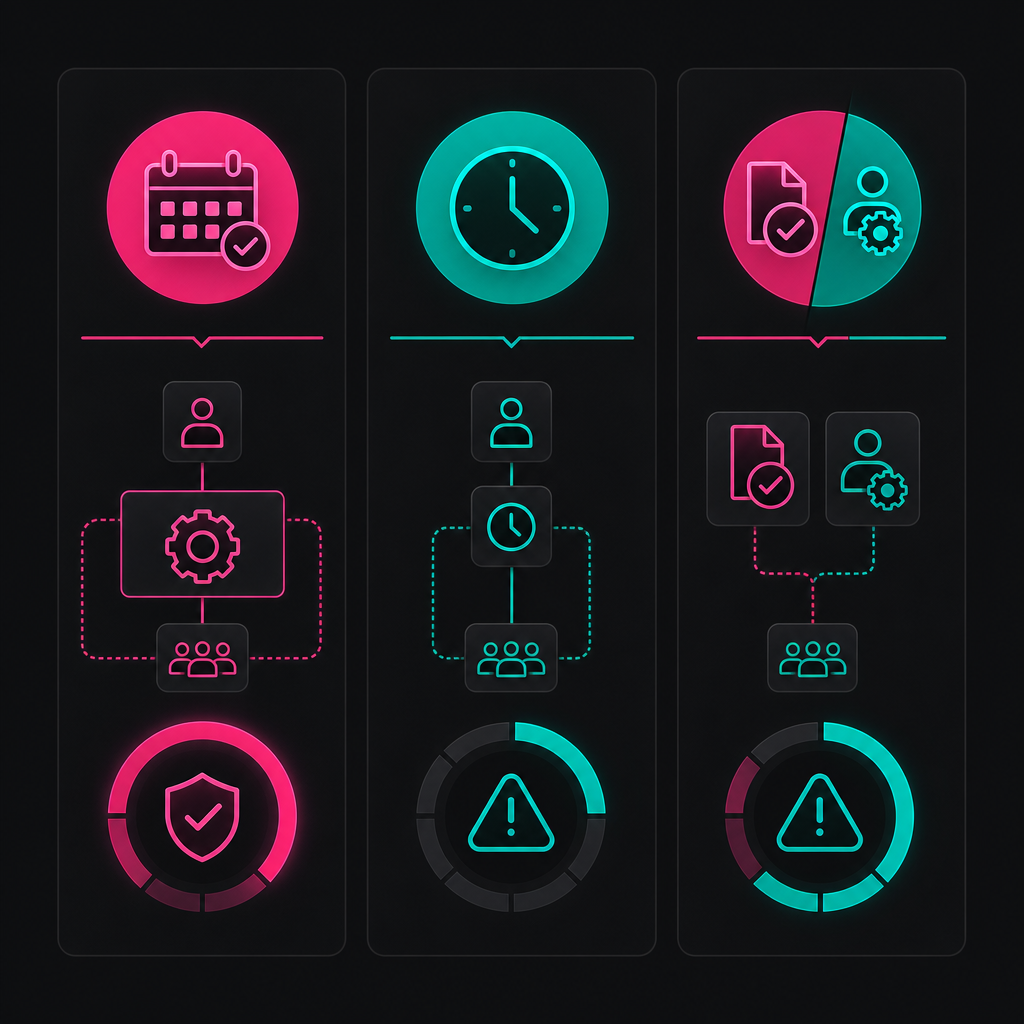
The pricing model a provider uses tells you more than the number does. A fixed monthly managed fee signals the provider is carrying delivery risk. A per-hour rate signals a partial handoff of that risk to you. A placement fee with DIY management signals you're carrying nearly all of it, in exchange for the lowest visible number.
Fixed monthly managed fees bundle recruitment, salary, compliance, equipment and supervision into one predictable figure. It looks higher than a bare hourly rate because it is priced to include the things a bare hourly rate leaves out. The trade-off is control: you're paying for a system, not just a person, and that system is what stops a single offshore hire from becoming an unmanaged liability.
Per-hour or timesheet billing is common with staffing platforms and recruitment-style offshore providers. The rate covers labour, sometimes with a margin. Everything else, compliance, supervision, replacement, equipment, is either quoted separately or left for the client to organise. This model can work well for businesses that already have an internal offshore management function. It becomes expensive fast for businesses that don't, because the missing layers don't disappear, they just move onto someone's desk internally, unbudgeted and unbilled.
Placement-fee-plus-DIY is the model most likely to look cheapest on the first page of a proposal. You pay once to have someone sourced and placed, then you manage payroll, compliance, HR and replacement yourself, or via a separate local provider. This can genuinely be the right call for a business with a mature in-house offshore function already built. For everyone else, it quietly transfers six cost layers onto internal time, at the exact moment the business least has spare capacity to absorb them.
None of these models is inherently wrong. The mistake is comparing a fixed managed fee against a per-hour rate as if they were the same product. They're not. One is a system. One is a person. Pricing should always be read as a proxy for how much of the delivery system the provider is actually taking on.
Red Flags That Reveal an Offshore Staffing Quote Is Incomplete
A quote that can't be itemised on request is the clearest signal it's incomplete. Other red flags include vague currency treatment, undefined notice and replacement terms, and no clear answer to who owns compliance. Each of these hides cost rather than removing it.
Can't itemise on request. If a provider hesitates or refuses to break a monthly figure into recruitment, salary, compliance, equipment and management components, assume the missing detail is where the risk sits, not where the savings sit.
Ambiguous currency and FX treatment. Philippine-based staff are typically paid in PHP. If your quote is in AUD, ask whether the rate is fixed for the term of the engagement or floats with the exchange rate. An unclear answer here means you could be absorbing FX risk without knowing it.
Vague notice and replacement terms. "We'll sort something out if it doesn't work" is not a term, it's a hope. Ask for the specific notice period and whether replacement recruitment is included or billed again.
Unclear compliance ownership. Someone has to be the legal employer, responsible for statutory contributions, tax withholding and local labour law compliance. If the quote doesn't name who that is, you are carrying that exposure, whether you realise it or not. This is one of the areas covered in more detail when reviewing Australian employer obligations when offshoring and the broader question of offshore staffing service inclusions: what's genuinely bundled versus what's assumed.
Pricing that looks too good given the market. If a quote sits well below every other provider you've spoken to, ask what's been left out rather than assuming you've found a bargain. It's rarely a bargain. It's usually a shorter list.
The Cost Nobody Quotes: Your Own Management Time
The largest cost in most offshore hires never appears on a quote: the hours a business owner or operations manager spends personally managing an unsupported hire. This isn't a talent problem. It's a delivery structure problem, and it's the single biggest reason a "cheap" offshore hire ends up expensive.
We've seen this play out directly. In one recruitment agency, the founders wanted to spend their time on new business development and running the desk, not on payroll and accounting admin. Hiring in-house for that function wasn't a good use of their money either. We ran a full discovery and installed a payroll system and team customised to their business and their existing software. We were live and managing their payroll within two weeks. Today, their involvement is one approval email per fortnight. Our team handles payroll, superannuation, compliance, tax, and every inbound timesheet query, so the founders stay focused on recruitment, which is what actually grows their business.
In another case, a hospitality recruitment and labour hire business had multiple in-house staff plus external accountants managing payroll, at real cost, and running it weekly, which meant a heavy admin workload every single week. Our team completed discovery, then took over the function entirely: moved the pay cycle to fortnightly, eliminated the need for the in-house staff and the external accountants, and corrected several modern award compliance gaps the business didn't know they had. The result was lower operating cost, lower payroll processing cost, and better compliance, not worse, because a specialist team was running it instead of a stretched internal one.
Across recruitment agency clients specifically, this kind of payroll takeover has reduced non-billable partner time by 6 to 10 hours per pay cycle, across 15 implementations completed in 2026, with a 100 percent compliance record maintained throughout. That's not a soft benefit. That's hours back in a principal's week, every fortnight, that used to go into chasing timesheets and double-checking pay runs.
We formalise this through what we call the Accountee Payroll Process: a four-phase model built for established Australian businesses that want to focus on growth, not accounting operations. Phase one is discovery and setup, mapping pay cycles, award considerations, systems and approval flows. Phase two is transition, taking over access, templates, calendars and data. Phase three is full processing, timesheets through to STP, super, leave, allowances and deductions. Phase four is ongoing management, so payroll keeps running accurately with minimal internal admin, cycle after cycle.
The reasoning behind our position is simple, and it runs against the conventional wisdom. Most businesses assume payroll should stay in-house because it's too sensitive to hand over. In our experience, it's the opposite: most payroll risk comes from internal overload, not external delegation. Manual checks, rushed pay runs, and one overworked person carrying it all in their head are what actually cause errors and fines. Your payroll should not depend on one busy admin person remembering everything. A specialist team brings structure, deadlines and compliance focus to every single pay run, which is exactly what avoids payroll fines before they become expensive lessons. Payroll is too important to be "mostly right".
When you're comparing offshore staffing quotes, this is the layer to price in even though no provider will quote it for you: how many hours a week will this arrangement take out of your calendar, and is that time worth more than the difference between the cheap quote and the transparent one?
A Provider Comparison Checklist: 12 Questions Before You Sign
The fastest way to compare offshore staffing providers fairly is to ask every one of them the same structured set of questions, then compare answers side by side rather than comparing headline numbers. Use this list in every quoting conversation.
- Can you itemise this quote across all six cost layers: recruitment, salary, compliance, equipment, supervision and replacement cover?
- Is the quoted rate in AUD fixed for the term, or does it float with the exchange rate?
- Who is the legal employer of record, and who is accountable for statutory contributions?
- What Philippine statutory obligations (SSS, PhilHealth, Pag-IBIG, 13th month pay) are included, and are they already factored into the rate?
- Is equipment (laptop, software licences, security tools) included, billed separately, or client-supplied?
- Who owns the equipment if the engagement ends?
- What is the notice period on both sides?
- If the hire leaves or underperforms, is a replacement included at no extra recruitment cost, and within what window?
- Who manages day-to-day performance and escalations, you or the provider?
- What reporting do we receive, and how often?
- How is GST treated on the invoice, and is that reflected in the total shown?
- What happens operationally in month one if we sign today, who does what, and by when?
A provider that answers all twelve without hesitation is showing you a real delivery system. A provider that can only answer the ones about rate is showing you a price.
This is also where it pays to look past the headline offer and compare like for like against the criteria that actually matter, whether that's through a structured offshore staffing company comparison criteria framework, weighing managed offshore staffing against freelancer platforms, or checking what's actually written into the offshore staffing service-level agreement you'll be signing.
If you want a genuine like-for-like comparison, we'll provide an itemised quote against these twelve points, along with a role scope review so you can see exactly what's included before you compare it against any other provider on your shortlist.
References
- Fair Work Ombudsman, National Employment Standards and employer obligations, fairwork.gov.au
- Australian Taxation Office, Single Touch Payroll and superannuation guarantee obligations, ato.gov.au
- Philippines Department of Labor and Employment (DOLE), labour standards and statutory entitlements, dole.gov.ph
- Philippines Social Security System (SSS), employer contribution obligations, sss.gov.ph
FREQUENTLY ASKED QUESTIONS
Common questions
What is a fair hourly rate for offshore staffing in Australia?
- There's no single fair rate, because rate alone doesn't tell you what's included. A lower rate with no compliance, equipment or supervision bundled in can cost more overall than a higher rate that includes all six cost layers. Compare total cost of engagement, not the rate in isolation.
Why do offshore staffing quotes vary so much between providers?
- Quotes vary because providers bundle different things into the number. Some include recruitment, compliance, equipment and supervision. Others quote labour only and leave the rest for the client to organise or absorb. The variation is usually about scope, not just margin.
What hidden fees should I watch for in offshore staffing contracts?
- Watch for separate recruitment or replacement fees not disclosed upfront, equipment and software licence charges added after signing, unclear FX treatment on AUD-quoted rates, and statutory contribution costs that appear later as extras rather than being built into the original quote.
Is a fixed monthly managed fee better than a per-hour rate?
- It depends on how much delivery risk you want to carry yourself. A fixed managed fee usually bundles compliance, supervision and replacement cover, so the provider carries more of the risk. A per-hour rate is often cheaper on paper but leaves more of those layers, and the time cost of managing them, with you.
Who is responsible for superannuation and compliance when hiring offshore staff?
- Australian superannuation guarantee obligations generally apply to Australian employees, not offshore staff engaged through a provider in the Philippines. Philippine statutory contributions such as SSS, PhilHealth and Pag-IBIG apply instead. A transparent quote should state clearly who is registered as the employer and who manages these obligations.
How long does it typically take to replace an offshore staff member who leaves?
- This depends entirely on what's written into the contract. Some providers guarantee replacement recruitment within a set window at no extra cost. Others treat it as a fresh recruitment process, with a fresh fee and no defined timeframe. Always confirm this in writing before signing.

Jon Kelly
Founder, Remotee
Jon helps Australian businesses build compliance-led offshore teams that scale without the burnout. NDIS, accounting, mortgage broking, recruitment and digital marketing.
KEEP READING
Related posts
thinking about offshore staffing
Thinking About Offshore Staffing? What Australian Businesses Need to Know Before They Start in 2026
If you have found yourself Googling "offshore staffing" at 11pm, you are probably not doing it because business is running perfectly. You are doing it because t…
25 June 2026 · 25 min read
onboarding offshore staff
Onboarding Offshore Staff: A Step-by-Step Process for Australian Businesses in 2026
Hiring offshore staff is the easy part. Posting a role, reviewing candidates, making an offer, most Australian businesses can work through that sequence without…
10 June 2026 · 29 min read
how offshore staffing works
How Offshore Staffing Works: A Step-by-Step Guide for Australian Businesses in 2026
Most Australian business owners I speak to already know offshore staffing exists. They've heard the pitch. They've seen the cost comparisons. What they don't ha…
22 May 2026 · 26 min read
READY TO SCALE WITHOUT THE BURNOUT?
Build a compliance-led offshore team in 3–4 weeks.
Tell us about your current bottleneck and we'll show you what a Remotee placement would look like for your operation.
Or get our playbooks emailed to you instead.