
Offshore Project Management Staffing for Australian Businesses
- Offshore staffing
- Project management
- Remote teams
- Australian business
- Philippines staffing

Offshore project management staffing gives Australian businesses access to dedicated project coordinators, PMO analysts and project managers without building every role locally. It works when recruitment is paired with documented workflows, decision rights, secure systems, Australian-hours coverage and measurable delivery standards. The objective is predictable project delivery, not cheaper headcount.
Efficient project management is vital, but simply hiring another person rarely fixes late decisions, unclear ownership or inconsistent reporting. Australian businesses need a delivery structure that helps offshore staff coordinate work without creating another management burden.
This guide explains which roles to offshore, how to recruit and vet candidates, how to manage communication, and how Remotee approaches project coordination offshore.
Delivery-system evidence: Across the author's Accountee recruitment agency work, internal data from 15 implementations in 2026 recorded a reduction of 6-10 hours in non-billable partner time per pay cycle. These were payroll implementations, not project management engagements, but they demonstrate the operational value of documented ownership, approval checkpoints and specialist delivery.
Key takeaways
Offshore project management succeeds when the operating model is designed before recruitment begins. The business must define what the offshore employee owns, what remains with Australian leaders, how decisions are escalated and which evidence demonstrates that projects remain under control.
- Project coordinators, PMO analysts and delivery support roles are strong offshore candidates because their outputs can be documented and reviewed.
- Senior project managers can work offshore when authority, stakeholder access and commercial boundaries are explicit.
- Recruitment should test practical delivery ability, not just certifications or polished CVs.
- A shared project system must be the source of truth. Email and meetings should support it, not replace it.
- Privacy, access controls, worker classification and contractual obligations must be addressed before access is granted.
- Remote hiring creates value when talent is wrapped in repeatable workflows, controls and escalation paths.
Summary table: Benefits of offshore project management staffing
The best offshore model assigns repeatable coordination and governance work to a dedicated specialist while retaining strategic sponsorship and sensitive commercial authority in Australia. This creates useful capacity without disconnecting project decisions from the people accountable for business outcomes.
| Area | Potential benefit | Required control |
|---|---|---|
| Project coordination | Consistent task follow-up, registers and status reporting | Defined templates, deadlines and escalation rules |
| PMO support | Better portfolio visibility and governance administration | Agreed reporting definitions and data ownership |
| Delivery management | Dedicated oversight across distributed teams | Clear authority and Australian stakeholder access |
| Documentation | Decisions, risks and dependencies become visible | One approved repository and version control |
| Coverage | Work can progress across Australian and Philippine working hours | Agreed overlap periods and handover procedures |
| Cost control | A specialist role can be added without every local employment overhead | Compare total service cost, supervision and systems, not salary alone |
| Continuity | Processes become less dependent on one local employee's memory | Documented workflows, access management and backup coverage |
Which project management roles are suitable for offshore staffing?
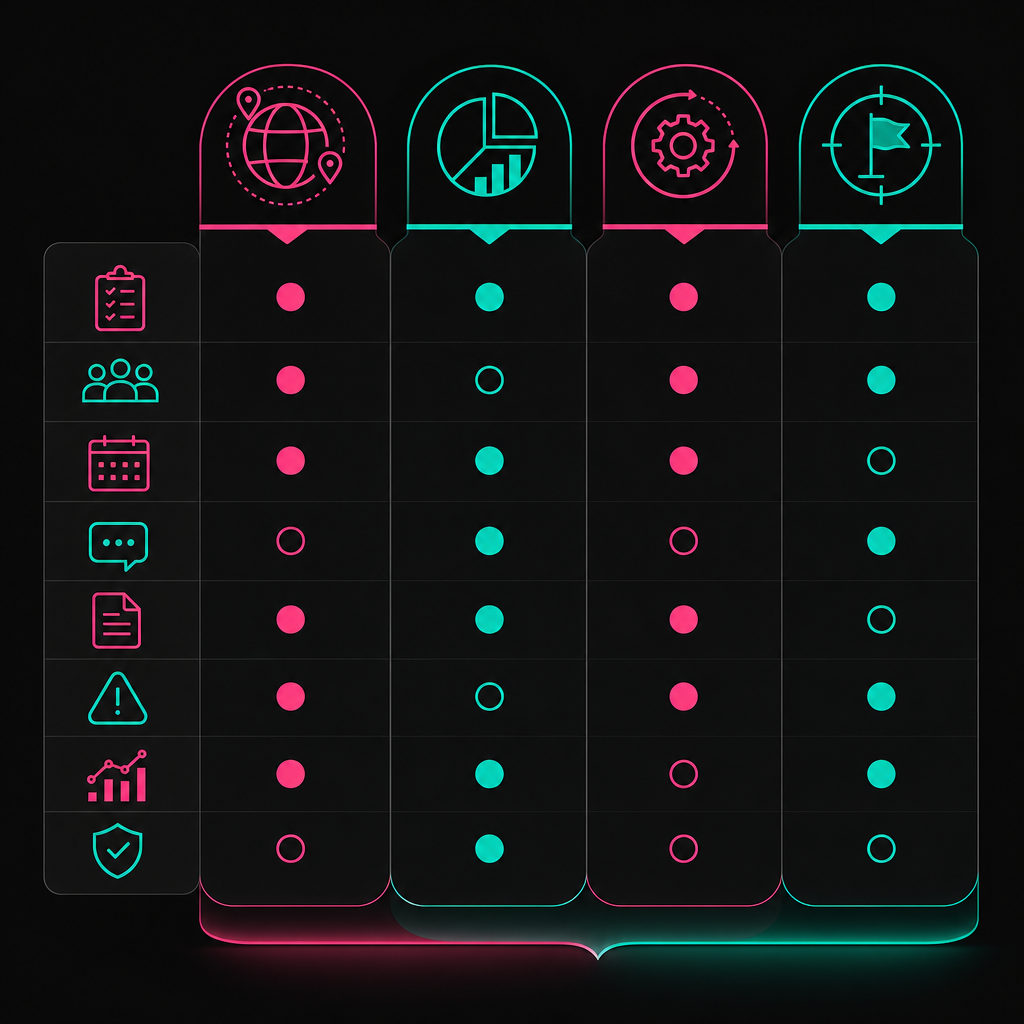
Project coordinators, PMO analysts, implementation coordinators and delivery support specialists are usually the strongest offshore roles. Their work produces observable outputs such as plans, registers, meeting records and reports. Senior project managers can also work offshore, but only when authority, stakeholder access and decision boundaries are clearly designed.
Project coordinator
A project coordinator can maintain schedules, prepare meetings, update actions, follow up task owners and assemble status reports. This is often the most practical starting point for a business whose project managers spend too much time administering work rather than resolving delivery issues.
The role should own specific artefacts, including:
- The master action register
- Meeting agendas and minutes
- Risk, issue and dependency logs
- Status report preparation
- Document control
- Task reminders and overdue follow-up
- Handover records between teams
The coordinator should not be treated as a general virtual assistant. Project coordination requires judgement about dependencies, urgency and escalation.
PMO analyst
A PMO analyst supports governance across several projects. Suitable responsibilities include checking reporting quality, consolidating portfolio information, maintaining templates and identifying missing approvals.
This role is useful when leaders receive inconsistent project updates. The analyst creates a common reporting language, so executives can compare delivery health without interpreting a different spreadsheet for every project.
Implementation or onboarding coordinator
Implementation coordinators manage repeatable customer, employee or system onboarding projects. They can collect information, schedule activities, monitor prerequisites and coordinate handovers.
The role works well when the implementation follows a defined pathway but still requires human follow-up. Exceptions should move to an Australian account owner or subject matter expert through a documented escalation process.
Offshore project manager
An experienced offshore project manager can manage scope, schedules, risks, vendors and distributed delivery teams. The business must provide genuine authority to obtain updates, challenge missed commitments and escalate unresolved decisions.
Do not assign accountability without authority. A project manager who cannot access sponsors, question local managers or raise commercial risks becomes a report writer, not a delivery leader.
Roles that should usually remain close to Australian leadership
Executive sponsorship, investment approval and sensitive commercial negotiation should normally remain with accountable Australian leaders. Product ownership may also need to stay inside the business because it requires customer judgement and authority to prioritise competing outcomes.
The offshore role can prepare evidence and coordinate decisions. It should not quietly inherit decisions that business leaders are avoiding.
How should Australian businesses recruit and vet offshore project managers?
Recruitment should test whether a candidate can control real work, communicate risk and operate inside a defined system. Certifications and software experience are useful filters, but they do not prove delivery ability. Effective vetting uses work samples, scenario questions, reference checks and role-specific evidence before an offer is made.
Define outputs before writing the position description
Start with the work, not a generic title. Document the projects involved, stakeholders, required systems, expected artefacts, decision rights and escalation points.
A useful role brief answers:
- Which project records does the employee own?
- Who approves scope, schedule or budget changes?
- Which stakeholders can the employee contact directly?
- What information is confidential?
- What constitutes an urgent escalation?
- Which Australian working hours require coverage?
- How will delivery quality be assessed?
Without these answers, recruitment tends to select an impressive generalist for an undefined role.
Use practical work samples
Give candidates an anonymised project scenario. Ask them to identify missing information, create a status update and explain what they would escalate.
A strong candidate separates facts from assumptions. They identify dependencies, name the decision owner and communicate impact without hiding behind project terminology.
For a PMO role, provide inconsistent project updates and ask the candidate to consolidate them. For a coordinator, use a meeting transcript and request actions, owners, due dates and unresolved questions.
Test communication under pressure
Remote project managers Australia-wide must communicate clearly across video, chat, email and project platforms. Interviews should test how candidates handle missed deadlines, unresponsive stakeholders and conflicting instructions.
Ask candidates to explain how they would report an issue to an executive and then to a delivery team. The facts should remain consistent, while the level of detail changes for the audience.
Verify tools without overvaluing software badges
Experience with Jira, Asana, Monday.com, ClickUp, Microsoft Planner or similar platforms can reduce onboarding effort. However, tool familiarity is not project control.
Test whether the candidate understands ownership, workflow states, dependencies, baselines and change control. A person who can configure a dashboard but cannot explain a late dependency is not ready to manage delivery.
Complete identity, employment and reference checks
Reference questions should focus on observable behaviour. Ask whether the candidate raised risks early, maintained reliable records and followed through after meetings. Confirm identity, employment history and relevant qualifications through appropriate channels.
The engagement model also matters. The Fair Work Ombudsman explains that contractor status depends on the real working relationship, not merely the label used in an agreement. Obtain advice for the Australian and Philippine aspects of the arrangement.
How do you manage communication and oversight with an offshore PM?

Effective oversight requires one source of truth, a fixed reporting rhythm, documented decision rights and clear escalation thresholds. Australian leaders should review exceptions and decisions rather than manually checking every task. The offshore project manager should maintain delivery evidence continuously, making project health visible without creating meeting-heavy supervision.
Make the project platform authoritative
Tasks, owners, due dates, risks and decisions should live in the approved project system. Chat messages can accelerate discussion, but they should not become the only record of an agreement.
A useful rule is simple: if a message changes scope, ownership, timing or risk, the project record must be updated.
Project practices can draw from established guidance such as the Project Management Institute's standards and ISO 21502 project management guidance. The objective is not bureaucratic compliance. It is a shared operating language.
Define decision rights
Create a responsibility and approval matrix for the role. It should distinguish between:
- Work the offshore PM can complete independently
- Decisions requiring an Australian project owner
- Commercial matters requiring executive approval
- Security or privacy incidents requiring immediate escalation
- Customer commitments requiring account-owner approval
This prevents two common failures. The first is an offshore employee waiting for approval on routine matters. The second is a project manager making commitments beyond their authority.
Use exception-based reporting
Status reports should direct attention to decisions, changes and threats. They should not repeat every completed task.
A useful report covers current status, upcoming milestones, unresolved risks, blocked work, scope changes and decisions required. Each item needs an owner and a clear next action.
Leaders should be able to understand what changed, why it matters and what they need to decide. If the reporting process produces activity without clarity, redesign it.
Design working-hour overlap deliberately
Philippine and Australian time zones can support practical collaboration, but assumptions vary by state, daylight saving and employee schedule. Define the required overlap in the employment or service arrangement.
Use shared time for decisions, workshops and stakeholder conversations. Use asynchronous time for plan updates, reporting, documentation and follow-up. This reduces unnecessary meetings while preserving access when judgement is required.
Measure delivery quality, not online presence
Green status indicators and quick chat replies do not prove project control. Review whether records are current, risks are raised early, actions close properly and stakeholders receive accurate information.
A remote employee should not have to perform visibility all day to demonstrate value. The delivery system should make their output evident.
How should an offshore project manager be integrated into the business?
Integration should begin with process access, authority and relationships, not a long presentation about company history. The employee needs to understand how work enters the system, who owns each decision, where records belong and what must be escalated. Early onboarding should use real workflows under controlled supervision.
Prepare the operating system first
Before the employee starts, document the core project workflow. Include intake, prioritisation, planning, execution, reporting, change control, closure and handover.
Templates should support the workflow rather than create paperwork for its own sake. Remove duplicate spreadsheets and conflicting reporting channels before expecting a new employee to manage them.
Introduce stakeholders by decision role
Do not provide only an organisation chart. Explain what each stakeholder decides, what information they need and how they prefer urgent issues to be raised.
The offshore PM should know who sponsors the work, who owns delivery, who controls budget, who approves customer commitments and who manages system access.
Start with controlled responsibility
Give the employee ownership of defined project records and coordination activities. Review the quality of those outputs, then expand authority as the working relationship becomes established.
This is different from micromanagement. Controlled responsibility uses explicit checkpoints. Micromanagement relies on constant observation because expectations were never properly defined.
Document recurring exceptions
Every repeated question reveals a missing rule, template or decision boundary. Capture the answer in the operating procedure rather than answering the same question indefinitely.
This is how onboarding becomes an organisational asset. The process improves while the employee learns, reducing dependence on individual memory.
What are the benefits and risks for Australian businesses?
Offshore project management can increase delivery capacity, improve documentation and make project oversight more consistent. Those benefits are conditional. Poorly defined roles can create rework, security exposure and slower decisions. Businesses should assess total operating value, not compare an offshore salary with a local salary in isolation.
More specialist capacity
A dedicated coordinator or PMO analyst can take recurring delivery administration away from founders, consultants and technical specialists. This allows expensive local expertise to focus on decisions, customers and specialist work.
The benefit is not that administration disappears. It is handled deliberately by someone whose role is built around reliable follow-through.
Better process visibility
Offshore hiring exposes unclear processes quickly. A local employee may fill gaps through informal knowledge and proximity. A remote employee needs explicit ownership and accessible records.
That pressure can improve the operating model for everyone. Project information becomes easier to find, responsibilities become clearer and management is less dependent on corridor conversations.
More predictable cost structure
An offshore model can reduce the cost of adding specialist capacity, but buyers should compare the complete arrangement. Include recruitment, employment administration, software, equipment, security, management time, leave coverage and provider fees.
Remotee publishes its available service information on the pricing page. Scope should still be matched to the role and required delivery system.
Privacy and data access risks
Australian Privacy Principle 8 addresses cross-border disclosure of personal information. The Office of the Australian Information Commissioner explains that an Australian entity may remain accountable when personal information is disclosed overseas.
Apply least-privilege access, role-based permissions, multi-factor authentication, approved storage and prompt access removal. Review customer contracts before allowing offshore access to confidential project information.
The Australian Cyber Security Centre's Essential Eight provides a recognised baseline for mitigation planning. It should inform controls, but it does not replace a risk assessment tailored to the systems and information involved.
Dependence on one person
Offshore staffing should reduce key-person risk, not move it overseas. Store project records in company-controlled systems and document recurring procedures. Critical access should never depend on a personal account.
Backup arrangements matter for important delivery functions. The business should know how work continues during leave, illness or role changes.
The real constraint is delivery structure, not offshore talent
My view is direct: most failed offshore hires are designed to fail before recruitment starts. The business hires a capable person into undocumented work, gives them vague authority and expects initiative to compensate. Adding headcount without adding a system increases coordination load. Predictable delivery comes from combining specialist talent with operating discipline.
"The difference between a capacity gap and a capacity crisis is usually a delivery structure problem, not a talent problem."
Remotee operating principle
Most staffing providers compete on cost, speed or CV volume. Those factors matter, but they do not solve the underlying delivery problem. A strong candidate still needs defined inputs, outputs, systems, controls and ownership.
Consider a founder who says, "I need a project manager because nothing gets finished." The real causes could include changing priorities, unapproved scope, weak task ownership or decisions waiting on the founder. Hiring a PM may improve reporting while leaving every constraint untouched.
Remotee's position is to diagnose the operating gap before filling the role. Ask:
- Is the missing capacity administrative, analytical or managerial?
- Are projects late because nobody follows up, or because leaders delay decisions?
- Does the role have authority to resolve blockers?
- Can delivery quality be observed through records and outcomes?
- Which process must exist before the employee begins?
This distinction changes the role design. It may reveal that the business needs a coordinator rather than a senior PM. It may also show that local leaders must retain product or commercial decisions while the offshore employee controls execution.
The goal is to move owners from Doer to Strategist. That does not happen by delegating chaos. It happens by installing a reliable system around specialist capacity.
What do operating-system case studies teach us about offshore PM staffing?
The strongest evidence for a structured offshore model often comes from recurring business-critical operations, where missed steps have immediate consequences. The following anonymised examples concern payroll delivery rather than project management. Their relevance lies in the operating design: discovery, controlled transition, explicit approvals, specialist ownership and documented exception handling.
Case study: Recruitment agency payroll ownership
A recruitment agency's founders wanted to focus on business development and operational execution rather than payroll and accounting. Hiring and managing additional in-house resources was not considered commercially efficient.
We completed discovery, customised the payroll system and team around the agency's existing software, and moved into live delivery within 2 weeks. The ongoing client responsibility became approval of one email once per fortnight. The specialist team managed payroll, super, tax, compliance, inbound queries and timesheet questions.
The project management lesson is not about payroll outsourcing. It is that delegation became reliable only after inputs, systems, approvals, responsibilities and exceptions were designed together.
Case study: Hospitality recruitment and labour hire payroll
A hospitality recruitment and labour hire business had several internal employees and external accountants involved in weekly payroll. The arrangement created high workloads and fragmented responsibility.
Following discovery, the operating model was redesigned. Payroll moved from weekly to fortnightly processing, and the specialist team assumed end-to-end responsibility. This removed the need for multiple internal and external participants in the process, reduced operating costs and improved compliance handling around industry award requirements.
Again, the transferable lesson is structural. The improvement did not come from adding another person to the existing process. It came from removing duplicated ownership, establishing one accountable delivery team and changing the workflow.
Project coordination offshore should follow the same logic. Document the current state, remove unnecessary hand-offs, define approvals and then place a vetted specialist inside the resulting system.
Enhance project delivery with Remotee
Remotee helps Australian businesses define, recruit and support offshore project management roles in the Philippines. The service is designed around predictable delivery rather than headcount alone. That means clarifying responsibilities, workflows, controls and reporting before expecting a remote employee to carry project accountability.
Suitable roles include project coordinators, PMO analysts, implementation coordinators and project managers. The right choice depends on the work causing the capacity constraint, not the title used by another business.
To discuss your current delivery gaps and the offshore role that fits them, contact Remotee.
References
These sources provide recognised guidance on project management, cross-border privacy, cybersecurity and Australian working relationships. They support the governance principles discussed above. They do not replace legal, privacy, employment or security advice tailored to the business, its customers and the proposed offshore arrangement.
- Project Management Institute, "PMBOK Guide and Standards": https://www.pmi.org/standards/pmbok
- International Organization for Standardization, "ISO 21502:2020 Project, programme and portfolio management, Guidance on project management": https://www.iso.org/standard/74947.html
- Office of the Australian Information Commissioner, "Chapter 8: APP 8 Cross-border disclosure of personal information": https://www.oaic.gov.au/privacy/australian-privacy-principles-guidelines/chapter-8-app-8-cross-border-disclosure-of-personal-information
- Australian Cyber Security Centre, "Essential Eight": https://www.cyber.gov.au/resources-business-and-government/essential-cyber-security/essential-eight
- Fair Work Ombudsman, "Independent contractors": https://www.fairwork.gov.au/find-help-for/independent-contractors
- Atlassian, "Project management": https://www.atlassian.com/work-management/project-management
FREQUENTLY ASKED QUESTIONS
Common questions
What does an offshore project manager do?
- An offshore project manager can plan work, maintain schedules, coordinate teams, monitor risks, manage reporting and escalate decisions. Their exact authority should be documented. Some businesses retain budget, contract and product decisions in Australia while assigning day-to-day delivery control to the offshore PM.
Which project management role should I offshore first?
- A project coordinator or PMO analyst is often the most practical first role when local managers are overloaded with task follow-up, reporting and documentation. A senior project manager is more suitable when the business can provide clear authority, direct stakeholder access and a mature delivery process.
Can an offshore project manager work Australian business hours?
- Yes, subject to the agreed employment or service arrangement. Many Philippine professionals work schedules aligned with Australian teams. Required overlap should be confirmed during recruitment because Australian states, daylight saving arrangements and stakeholder needs can affect the appropriate schedule.
How do I monitor an offshore project manager without micromanaging?
- Use a shared project platform, explicit deliverables, current risk and action registers, and exception-based reporting. Review whether records are accurate and issues are raised early. Avoid measuring performance through constant online presence or message response speed alone.
Is offshore project management secure?
- It can be managed securely, but location alone does not determine risk. Use role-based access, multi-factor authentication, managed devices where appropriate, approved storage, confidentiality terms and access removal procedures. Australian businesses should also assess cross-border privacy obligations and customer contract restrictions.
How much does offshore project management staffing cost?
- Cost depends on role seniority, experience, working hours, employment structure, provider support, software and security requirements. Compare the full operating cost with the value of released local capacity. A salary-only comparison ignores management time, recruitment, compliance and continuity.
Should I hire an offshore PMO or a single project manager?
- Hire a PMO resource when the main problem is inconsistent governance, portfolio reporting or documentation across several projects. Hire a project manager when a defined project or delivery stream needs direct leadership. Some businesses need coordination support before they need another senior manager.
What tools do remote project managers use?
- Common tools include Jira, Asana, Monday.com, ClickUp, Microsoft Planner, Teams, Slack and shared document repositories. Tool choice matters less than consistent use. The approved platform must remain the source of truth for ownership, timing, risks and decisions.

Jon Kelly
Founder, Remotee
Jon helps Australian businesses build compliance-led offshore teams that scale without the burnout. NDIS, accounting, mortgage broking, recruitment and digital marketing.
KEEP READING
Related posts
Offshore staffing service inclusions
Offshore staffing service inclusions
An offshore staffing service should include workforce planning, candidate sourcing, screening, compliant employment, payroll, onboarding, technology setup, secu…
31 August 2026 · 20 min read
offshore sales staff Australia
Offshore Sales Staffing: Expanding Your Australian Sales Team Globally
Offshore sales staff help Australian businesses expand prospecting, qualification, account support and sales administration without overloading local teams. Suc…
17 August 2026 · 17 min read
offshore staffing success stories Australia
Success Stories: Real-World Examples of Australian Businesses with Offshore Teams
Australian offshore staffing success stories show that remote teams produce reliable results when specialist talent is supported by documented workflows, clear…
15 August 2026 · 18 min read
READY TO SCALE WITHOUT THE BURNOUT?
Build a compliance-led offshore team in 3–4 weeks.
Tell us about your current bottleneck and we'll show you what a Remotee placement would look like for your operation.
Or get our playbooks emailed to you instead.