
Managing Performance and Productivity for Offshore Teams in Australia
- Offshore Teams
- Performance Management
- Remote Team Management
- Australian Business
- Offshore Productivity

Effective offshore team performance management in Australia requires clear ownership, documented workflows, measurable service standards, regular feedback and compliant technology. Australian businesses should manage offshore staff through outcomes rather than activity. The strongest model combines role-specific scorecards, reliable communication routines, secure access controls and a delivery system that removes ambiguity.
Sustained productivity does not come from hiring capable people and adding more meetings. It comes from designing a system in which capable people can consistently deliver the right work.
This guide explains how Australian businesses can set expectations, monitor performance, conduct reviews and maintain engagement without slipping into micromanagement. It also addresses payroll, privacy, time zones and the operational controls that are often missing from generic advice about managing remote teams in Australia.
Remotee internal performance snapshot: Across 15 recruitment agency implementations measured in 2026, structured payroll delivery reduced non-billable partner involvement by 6-10 hours per pay cycle. Source: Remotee and Accountee internal implementation data.
Key Takeaways
- Define outputs, quality standards, ownership and escalation paths before measuring productivity.
- Use a balanced scorecard covering delivery, quality, responsiveness, improvement and compliance.
- Separate communication from documentation so important decisions do not disappear into chat.
- Review offshore employees using evidence, context and coaching, not surveillance data alone.
- Treat engagement as an operating practice built through inclusion, recognition and career development.
- Apply Australian privacy, workplace, payroll and record-keeping requirements to offshore operations.
Summary Table: Strategies for Enhancing Offshore Team Productivity
| Strategy | What to implement | What it prevents | Evidence to review |
|---|---|---|---|
| Clear role ownership | Written responsibilities, decision rights and escalation rules | Duplicated work and dropped tasks | Completed outputs and unresolved hand-offs |
| Documented workflows | Checklists, templates, definitions of done and exception paths | Reliance on memory and informal knowledge | Process adherence and recurring exceptions |
| Outcome-based scorecards | Role-specific delivery, quality and service measures | Activity being mistaken for productivity | Trends, samples and stakeholder feedback |
| Communication rhythm | Planned stand-ups, reviews and asynchronous updates | Meeting overload and silent blockers | Decision records and blocker resolution |
| Structured reviews | Evidence-based feedback and development plans | Recency bias and vague performance ratings | Scorecards, work samples and agreed actions |
| Secure oversight | Role-based access, audit logs and approved systems | Unnecessary data exposure and shadow systems | Access reviews, logs and incident records |
| Recognition and development | Specific recognition, coaching and expanded ownership | Disengagement and role stagnation | Skills growth and responsibility progression |
Build the Delivery System Before Measuring the Person
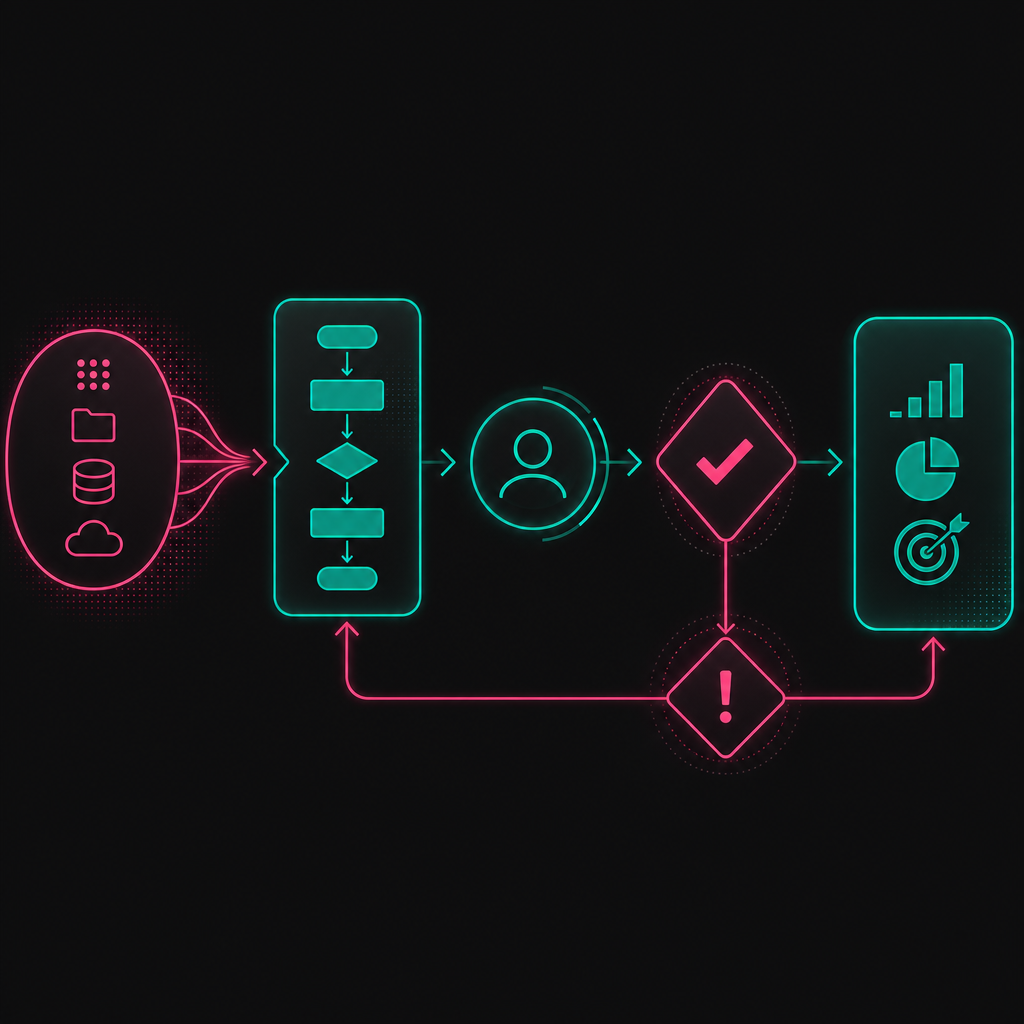
Offshore performance problems often begin as system problems. Before questioning an employee's productivity, confirm that the role has a clear purpose, documented inputs, defined outputs, realistic dependencies and an escalation path. Measuring a person inside a disorganised process produces misleading data and encourages managers to treat operational ambiguity as an individual failure.
Remotee's core position is simple: remote hiring only creates value when it is wrapped in a delivery system. Talent quality matters, but quality alone is not enough. Adding headcount without adding structure is how scaling creates chaos.
The difference between a capacity gap and a capacity crisis is usually a delivery structure problem, not a talent problem.
A useful role operating model should answer these questions:
- What business outcome does the role own?
- Which tasks are recurring, and which require judgement?
- What information must arrive before work can begin?
- Who approves the final output?
- What does acceptable quality look like?
- Which exceptions can the employee resolve independently?
- Which issues require escalation?
- Where is the official process documented?
This distinction matters when an offshore employee appears slow. The employee may be waiting for approvals, correcting incomplete briefs or moving information between incompatible systems. A time-tracking report will show inactivity or extended task duration, but it will not identify the operational cause.
Start with workflow mapping. Document the normal path, then document exceptions. Define the hand-off between the Australian team and the offshore role. Assign ownership to a named position rather than a vague department.
Every recurring process also needs a definition of done. For a payroll workflow, completion does not mean that calculations have been entered. It may include timesheet validation, award checks, leave treatment, deductions, Single Touch Payroll preparation, superannuation handling, reporting and approval evidence.
That is the difference between documenting tasks and documenting delivery.
Set KPIs That Measure Outcomes, Quality and Reliability

A useful offshore scorecard measures whether the role delivers the required result accurately, reliably and with appropriate judgement. Avoid building the scorecard around online hours, messages sent or tasks touched. Those measures can support diagnosis, but they rarely prove that valuable work was completed or that customers and internal teams received the expected service.
A balanced scorecard should cover several dimensions.
Delivery
Delivery measures whether agreed work reaches the required completion point. Useful measures include:
- Work completed by the agreed due point
- Service requests resolved within the defined service standard
- Recurring deliverables completed without manager prompting
- Backlog movement and overdue work
- Hand-offs completed with the required supporting information
Do not reward speed in isolation. A person can close tasks quickly by passing incomplete work downstream.
Quality
Quality measures whether the work is correct and usable. Depending on the role, this may include:
- Rework required after review
- Defects identified through quality assurance
- Accuracy of data entry or reconciliations
- Completeness of reports and supporting evidence
- Compliance with an approved checklist
Quality should be sampled consistently. Managers who only inspect work after a complaint create a distorted view of performance.
Responsiveness
Responsiveness should reflect the actual requirements of the role. It can include acknowledgement of urgent requests, timely escalation and reliable updates when delivery is at risk.
It should not mean instant replies throughout the day. That expectation encourages interruption and makes focused work difficult.
Process improvement
Strong offshore employees should eventually do more than follow instructions. Their proximity to recurring work makes them well placed to identify unnecessary approvals, duplicate entry and unclear templates.
Track whether improvement ideas are raised, tested and documented. Do not penalise staff because a manager has not approved an idea they submitted.
Compliance and risk
For roles handling payroll, finance, customer information or employee data, compliance belongs inside the scorecard. Relevant evidence may include checklist completion, approval records, access-control adherence and timely escalation of anomalies.
Set each measure against a baseline drawn from your own operation. A generic benchmark cannot account for task complexity, system limitations or approval delays. Review the trend alongside work samples and stakeholder feedback rather than reducing performance to a single score.
Create Communication Routines Without Filling Every Calendar
Communication should make priorities, decisions and blockers visible without forcing offshore employees into continuous meetings. Use live conversations for ambiguity, coaching and decisions. Use documented asynchronous updates for status, routine hand-offs and reference material. The goal is reliable information flow, not constant availability or an impressive volume of messages.
Australian and Philippine teams usually have useful working-day overlap, but managers still need to account for daylight saving differences between Australian states. Queensland, for example, does not follow the same seasonal clock changes as New South Wales and Victoria.
Use a communication rhythm with distinct purposes:
- A short operational check-in for priorities and blockers
- Written status updates stored against the relevant project or process
- A manager conversation focused on support, workload and development
- A service review covering trends, exceptions and workflow changes
- An escalation channel for urgent operational or compliance risks
Each meeting needs an owner, agenda and decision record. If no decision, coaching or coordination is required, the update probably belongs in writing.
Avoid treating chat as the system of record. Instructions buried in Slack or Microsoft Teams are difficult to audit and easy to contradict. Move approved procedures into a controlled knowledge base. Record material decisions in the project, ticket or client file they affect.
Communication quality also depends on psychological safety. An employee who fears being blamed for delays will hide blockers until deadlines are missed. Managers should explicitly reward early escalation, provided it includes the known facts, the effect on delivery and the help required.
When managing remote teams in Australia, clarity is more useful than informality. Friendly communication supports relationships, but it cannot replace written ownership and reliable operating rules.
Use Technology for Visibility, Not Surveillance

Technology should show work status, quality, dependencies and risk without monitoring every movement of the employee. Build oversight around workflow systems, service queues, approval records and audit logs. Screen recording, webcam monitoring and keystroke collection create privacy, trust and interpretation risks while offering weak evidence about whether meaningful work was completed.
Choose tools by control requirement rather than brand popularity.
Work management
Platforms such as Asana, ClickUp, Jira and Monday.com can assign owners, record due points and show blocked work. The important configuration choices are status definitions, mandatory fields, approval stages and escalation rules.
A poorly configured platform merely digitises confusion.
Communication
Microsoft Teams and Slack are useful for conversations and alerts. They should connect staff to the work system rather than replace it. Important approvals should be captured in a durable record.
Knowledge management
Use an approved repository for standard operating procedures, templates, policies and training material. Each critical document should have an owner and a review process. Staff need to know which version is authoritative.
Reporting
Dashboards can combine delivery, quality and workload information. Power BI, Looker Studio or reporting within the work platform may be suitable. Keep the dashboard small enough to support decisions. More charts do not create more control.
Access and security
Apply role-based access, multi-factor authentication and approved device controls. Remove access when responsibilities change. Sensitive files should not be copied into personal storage or unmanaged communication tools.
The Office of the Australian Information Commissioner explains that Australian Privacy Principle 8 can apply when personal information is disclosed to an overseas recipient. The Australian organisation may remain accountable for how that information is handled. Review the specific arrangement rather than assuming an offshore contractor automatically removes Australian privacy obligations.
Before introducing employee monitoring, obtain advice on the applicable federal, state and territory requirements. Monitoring rules differ across Australian jurisdictions. Transparency, necessity and proportionality should guide the decision even where a particular control is legally available.
Run Evidence-Based Performance Reviews for Offshore Staff
An effective performance review for offshore staff combines scorecard trends, sampled work, stakeholder input, employee context and agreed development actions. It should not surprise the employee. Performance concerns belong in regular feedback conversations, while the formal review consolidates evidence, recognises progress and confirms the support or change required for the next review period.
Use the same core review standard for Australian and offshore employees. Adjust measures for the role, not the person's location.
A practical review structure includes:
- Role purpose and current responsibilities
- Agreed outcomes and service standards
- Scorecard trends rather than isolated incidents
- Examples of strong work
- Rework, complaints or missed hand-offs
- Process constraints outside the employee's control
- Skills the employee wants or needs to develop
- Support required from the manager
- Agreed actions and how progress will be checked
Evidence needs context. Imagine an accounts support specialist whose completion rate declines after the business changes its approval process. If managers only review closed tasks, the employee appears less productive. If they examine waiting time and rejected inputs, they may find that Australian approvers have become the constraint.
Feedback should be specific. Replace "be more proactive" with a description of the expected behaviour. For example, ask the employee to flag missing timesheets before payroll preparation begins, identify affected employees and record the escalation.
Positive feedback also needs evidence. "Good job" tells the employee little. Explain which decision, behaviour or output was valuable and why it should be repeated.
Where performance is below expectations, separate capability, capacity, clarity and conduct:
- Capability: The employee needs knowledge, training or supervised practice.
- Capacity: The workload or dependency structure is unreasonable.
- Clarity: The expected result or process has not been defined.
- Conduct: The employee understands the requirement but does not follow it.
These causes require different responses. Retraining will not repair an overloaded queue. A new dashboard will not repair unclear ownership. Formal management action may be inappropriate where the process itself is defective.
Build Engagement Through Inclusion, Recognition and Ownership
Offshore employee motivation is strongest when people understand why their work matters, receive fair recognition, have access to decisions and can expand their responsibility. Bonuses and virtual social activities may support engagement, but they cannot compensate for unclear work, poor management, exclusion from information or a role with no path beyond repetitive execution.
Include offshore employees in operational updates that affect their work. If an Australian team changes a customer promise, workflow or service standard, the offshore team should not discover it through rejected tasks.
Recognition should be timely and specific. Connect it to customer value, risk reduction or better delivery. This helps employees understand which behaviours the organisation values.
Development can include:
- Ownership of a complete workflow rather than isolated tasks
- Training in Australian systems, terminology and compliance requirements
- Participation in process reviews
- Responsibility for quality assurance or documentation
- Coaching in stakeholder communication
- Exposure to adjacent functions where access is appropriate
Managers should also watch for second-class team design. Offshore staff should not receive incomplete briefs, delayed approvals and less context, then be judged against local employees who have direct access to decision-makers.
Cultural awareness matters, but avoid reducing individual behaviour to nationality. Clear expectations and respectful questions are safer than assumptions about whether an employee is comfortable disagreeing with a manager.
Work health and safety responsibilities also deserve attention. Safe Work Australia's guidance on psychosocial hazards identifies risks including poor support, lack of role clarity, excessive job demands and remote or isolated work. These are management issues, not location-specific personality problems.
Apply Australian Compliance to Offshore Delivery
Australian businesses remain responsible for the local legal and commercial obligations attached to work performed offshore. That includes privacy, information security, contractual controls and accurate handling of Australian payroll or employment records. Offshoring a task changes who performs it. It does not automatically transfer accountability for the result or remove regulatory exposure.
For payroll-related offshore work, the operating model must account for Australian requirements. The Australian Taxation Office states that Single Touch Payroll is used to report employees' payroll information each time they are paid. The Fair Work Ombudsman also requires specified employee records to be retained for seven years and made available for inspection when lawfully required.
Relevant controls include:
- Approved access to payroll and employee systems
- Separation between preparation and approval
- Documented treatment of leave, allowances and deductions
- Current award and agreement information
- Evidence supporting changes to employee master data
- Single Touch Payroll and superannuation workflows
- Secure storage and retention of records
- Incident and escalation procedures
Payroll should not depend on one busy administrator remembering everything. It is too important to be "mostly right".
Our position is that payroll is often safer when outsourced to specialists, provided the delivery model contains proper controls. Most payroll risk comes from internal overload, manual checks, rushed pay runs and people wearing too many hats.
Specialist payroll accountants, not generalist bookkeepers, can bring structured deadlines, review points and compliance focus to every cycle. Payroll done properly, not squeezed in between tax returns.
Worker classification also requires care. Calling someone a contractor does not determine their legal status. Australian businesses should obtain advice based on the real working arrangement, including the applicable Australian and Philippine requirements.
What Two Payroll Implementations Reveal About Performance Design
These anonymised examples from our own work show that productivity improved when ownership, workflows and approvals changed. Neither result came from monitoring employees more closely. The gains came from redesigning delivery, assigning specialist responsibility and reducing avoidable hand-offs. They demonstrate why offshore performance management should begin with the operating model rather than an employee surveillance tool.
Recruitment agency payroll implementation
A recruitment agency's founders wanted to focus on business development and operational execution rather than payroll and accounting. Hiring and managing additional internal resources was not considered commercially efficient.
We completed discovery, designed a payroll system and established a specialist team around the agency's existing software. The full discovery and implementation process was completed within 2 weeks.
After going live, the founders' recurring involvement became approval of a single email each fortnight. The delivery team managed payroll, superannuation, tax, compliance, timesheets and inbound queries.
The lesson is not simply that work moved offshore. The agency gained a defined approval checkpoint, a documented workflow and clear specialist ownership. That is predictable delivery, not just headcount.
Hospitality recruitment and labour hire payroll change
A hospitality recruitment and labour hire business had multiple internal employees and external accountants involved in payroll. The process was expensive and created a heavy workload around weekly processing.
Our specialist team completed discovery and presented a delivery system that removed the need for the existing payroll staffing arrangement and external accounting involvement. Payroll moved to a fortnightly cycle, and the specialist team assumed end-to-end processing.
The business reduced operating and payroll administration costs. Compliance also improved after the review identified industry award requirements that had not been fully recognised within the previous process.
This case highlights an important performance principle: a busy process is not necessarily a controlled process. Multiple people can create more hand-offs, unclear responsibility and inconsistent checks.
These implementations also informed the Accountee Payroll Process used for established Australian businesses seeking growth without carrying payroll operations internally:
- Payroll Discovery and Setup: Review pay cycles, staff types, awards, systems, approvals and reporting requirements.
- Payroll Transition: Establish access, templates, pay-run calendars, employee data, timesheet flows and approval checkpoints.
- Full Payroll Processing: Handle timesheets, calculations, leave, allowances, deductions, Single Touch Payroll, superannuation and reporting.
- Ongoing Payroll Management: Maintain delivery, resolve issues, support compliance and manage reporting.
Compliance-first payroll, every pay run. The principle applies beyond payroll: specialist roles perform best inside a clearly designed delivery system.
The Delivery System Matters More Than the Dashboard
The common management instinct is to add measurement when offshore productivity feels uncertain. I take the opposite view. Add operational clarity first. A sophisticated dashboard cannot repair unclear briefs, slow approvals or conflicting priorities. Once the workflow is stable, measurement becomes useful because the data reflects performance rather than organisational noise.
This is where many offshore arrangements go wrong. A business delegates a collection of tasks but retains all decisions, context and approvals in the founder's head. The offshore employee is expected to create capacity, yet every meaningful action still depends on the founder.
That is not delegation. It is remote task routing.
A better design transfers a complete responsibility boundary. The role receives defined inputs, owns specific decisions, follows a documented process and escalates only agreed exceptions. The manager reviews outcomes and system health rather than touching every task.
This moves the owner from Doer to Strategist. It also makes underperformance easier to diagnose. Managers can determine whether the failure sits with input quality, process design, employee execution, approval delay or system access.
Our internal 2026 data reinforces this position. Across 15 recruitment agency implementations, structured payroll delivery reduced non-billable partner time by 6-10 hours per pay cycle. That is Remotee and Accountee's own implementation data, not an industry benchmark.
The value did not come from demanding that payroll staff work faster. It came from replacing fragmented founder involvement with specialist ownership, planned approvals and repeatable processing.
When evaluating offshore staff productivity tips, apply a simple test: does the advice improve the delivery system, or does it merely create more observation? Choose the former.
Implement Offshore Performance Management in Practical Phases
A reliable performance model should be introduced in phases rather than imposed as a large reporting project. Begin with role clarity and workflow ownership. Then establish baseline evidence, communication routines and review practices. Add dashboards only after managers and employees agree on what each measure means and how it will influence decisions.
Diagnose the current workflow
Map recurring work from request to completion. Record approvals, systems, queues and exception paths. Ask offshore employees where they wait, where instructions conflict and which work returns for correction.
Define the operating model
Write the role purpose, owned outcomes, decision rights and escalation rules. Establish definitions of ready and done for critical work.
Select meaningful evidence
Choose a small set of delivery, quality, responsiveness, improvement and compliance indicators. Confirm where the data comes from and who reviews it.
Establish management routines
Set a practical rhythm for operational check-ins, written updates, coaching and service reviews. Clarify which issues require immediate escalation.
Baseline before judging
Observe current workflow performance before setting targets. Separate employee-controlled work from delays caused by approvals, incomplete inputs or system outages.
Review and refine
Use performance discussions to identify both employee development needs and process defects. Retire measures that encourage the wrong behaviour or add reporting work without supporting a decision.
Document every material change. Otherwise, employees will be measured against an operating model that exists only in a manager's memory.
Optimise Your Offshore Team's Performance With Remotee
Remotee helps Australian businesses build offshore teams around documented workflows, specialist ownership, compliant controls and measurable delivery. The objective is not simply to fill seats. It is to create reliable capacity that reduces founder dependency and supports consistent operations. Contact Remotee to discuss your roles, workflows and performance system.
References
These sources support the Australian privacy, workplace, payroll, tax and management principles discussed above. They are primary regulator or government sources rather than offshore staffing benchmarks. Operational recommendations in this guide also draw on Remotee and Accountee's supplied 2026 implementation data and anonymised first-hand payroll delivery experience.
- Office of the Australian Information Commissioner, Australian Privacy Principle 8: Cross-border disclosure of personal information
- Australian Taxation Office, Single Touch Payroll
- Fair Work Ombudsman, Record-keeping and pay slips
- Fair Work Ombudsman, Independent contractors
- Safe Work Australia, Psychosocial hazards
- Australian Cyber Security Centre, Essential Eight
FAQ_SCHEMA_JSON
FREQUENTLY ASKED QUESTIONS
Common questions
How do you measure offshore team productivity?
- Measure completed outcomes, quality, reliability, responsiveness and process improvement. Use work-system data, quality samples and stakeholder feedback together. Baseline the workflow so approval delays and incomplete inputs are not incorrectly attributed to the employee.
What KPIs should Australian businesses use for offshore staff?
- KPIs should reflect the role's owned outcomes. Useful categories include delivery, accuracy, rework, backlog movement, timely escalation, stakeholder service and compliance. Targets should be based on internal baseline data and task complexity.
How often should offshore employees receive performance feedback?
- Provide feedback close enough to the work for the employee to act on it. Use regular coaching for current issues and structured reviews to consolidate evidence, development priorities and agreed actions.
Should Australian employers use time-tracking software for offshore teams?
- Time tracking can support billing, capacity planning or workflow diagnosis, but it should not be the primary performance measure. Use it transparently and review applicable privacy, workplace surveillance and contractual requirements.
How can managers motivate offshore staff without bonuses?
- Provide clear ownership, useful feedback, business context, specific recognition and development opportunities. Include offshore employees in decisions affecting their work and remove process friction that prevents good performance.
What Australian compliance obligations apply to offshore teams?
- Relevant obligations can include privacy, cross-border data handling, information security, worker classification, payroll records, tax reporting and work health and safety. Requirements depend on the arrangement and work performed.

Jon Kelly
Founder, Remotee
Jon helps Australian businesses build compliance-led offshore teams that scale without the burnout. NDIS, accounting, mortgage broking, recruitment and digital marketing.
KEEP READING
Related posts
HR offshore staff Australia
Optimising HR Processes with Offshore Staff for Australian Companies
HR offshore staff can help Australian companies manage recruitment administration, onboarding, employee records, reporting and payroll support. The model works…
29 August 2026 · 21 min read
offshore marketing operations Australia
Offshore Marketing Operations Staffing for Australian Brands
Offshore marketing operations in Australia means building a remote team that executes defined marketing work under clear Australian ownership. Suitable roles in…
27 August 2026 · 18 min read
offshore staffing risks Australia
Mitigating Risks in Offshore Staffing: A Guide for Australian Businesses
Offshore staffing risks in Australia are best managed through documented workflows, controlled system access, clear accountability, lawful data handling and tes…
26 August 2026 · 22 min read
READY TO SCALE WITHOUT THE BURNOUT?
Build a compliance-led offshore team in 3–4 weeks.
Tell us about your current bottleneck and we'll show you what a Remotee placement would look like for your operation.
Or get our playbooks emailed to you instead.