
Hiring Part-Time vs Full-Time Offshore Staff: Which is Best for Australian SMEs?
- Offshore staffing
- Remote teams
- Australian SMEs
- Virtual assistants
- Workforce planning

Part-time offshore staff are best for defined, repeatable workloads that do not require constant availability. Full-time staff suit ongoing operational roles with daily dependencies, deeper system knowledge and clear ownership. The right choice depends less on hourly cost and more on workload consistency, management capacity, response requirements and process maturity.
The wrong staffing model creates either idle capacity or constant bottlenecks. Australian SMEs often focus on the quoted rate, then overlook the cost of delayed work, repeated handovers and founder supervision.
This guide explains how to choose between part-time and full-time offshore staff, which roles fit each model, how to calculate practical cost and how to build a delivery structure that works.
Key takeaways
The best arrangement is the smallest dependable capacity block that can own the required workflow without creating delays. Part-time support reduces fixed commitment, while full-time support improves availability and continuity. Neither model works without documented processes, named ownership, realistic service levels and an Australian manager who remains accountable for outcomes.
- Choose part-time when work can be batched, prioritised and completed without continuous coverage.
- Choose full-time when work arrives daily, affects customers or depends on deep operational context.
- Compare total delivery cost, not hourly rates alone.
- An offshore virtual assistant should own defined workflows, not an unrestricted list of miscellaneous tasks.
- Protect data through role-based access, documented controls and prompt offboarding.
- Move from part-time to full-time when recurring work exceeds reserved capacity, not after service quality declines.
Summary comparison
Part-time offshore staffing offers flexibility and lower committed spend, but it requires disciplined scheduling and clearer task boundaries. Full-time staffing provides stronger continuity, faster responses and broader ownership, but only when there is enough recurring work. The table below compares the practical implications for an Australian SME rather than treating hours as the only difference.
| Decision factor | Part-time offshore staff | Full-time offshore staff |
|---|---|---|
| Cost commitment | Lower fixed commitment, but potentially higher coordination cost per task | Higher fixed commitment, with better efficiency when capacity is consistently used |
| Availability | Reserved windows or agreed days | Consistent daily coverage |
| Best workload | Batchable, predictable and clearly scoped | Continuous, interconnected and operationally important |
| Role examples | Basic administration, content scheduling, data entry, research and reporting preparation | Bookkeeping operations, IT support, customer operations and payroll processing |
| Management need | Strong prioritisation and handover discipline | Clear role ownership, coaching and capacity planning |
| Main risk | Fragmented attention and delayed responses | Paying for unused capacity or filling time with low-value work |
| Best growth path | Add reserved hours when a stable backlog develops | Expand responsibilities after quality and process control are proven |
What part-time and full-time mean in offshore staffing
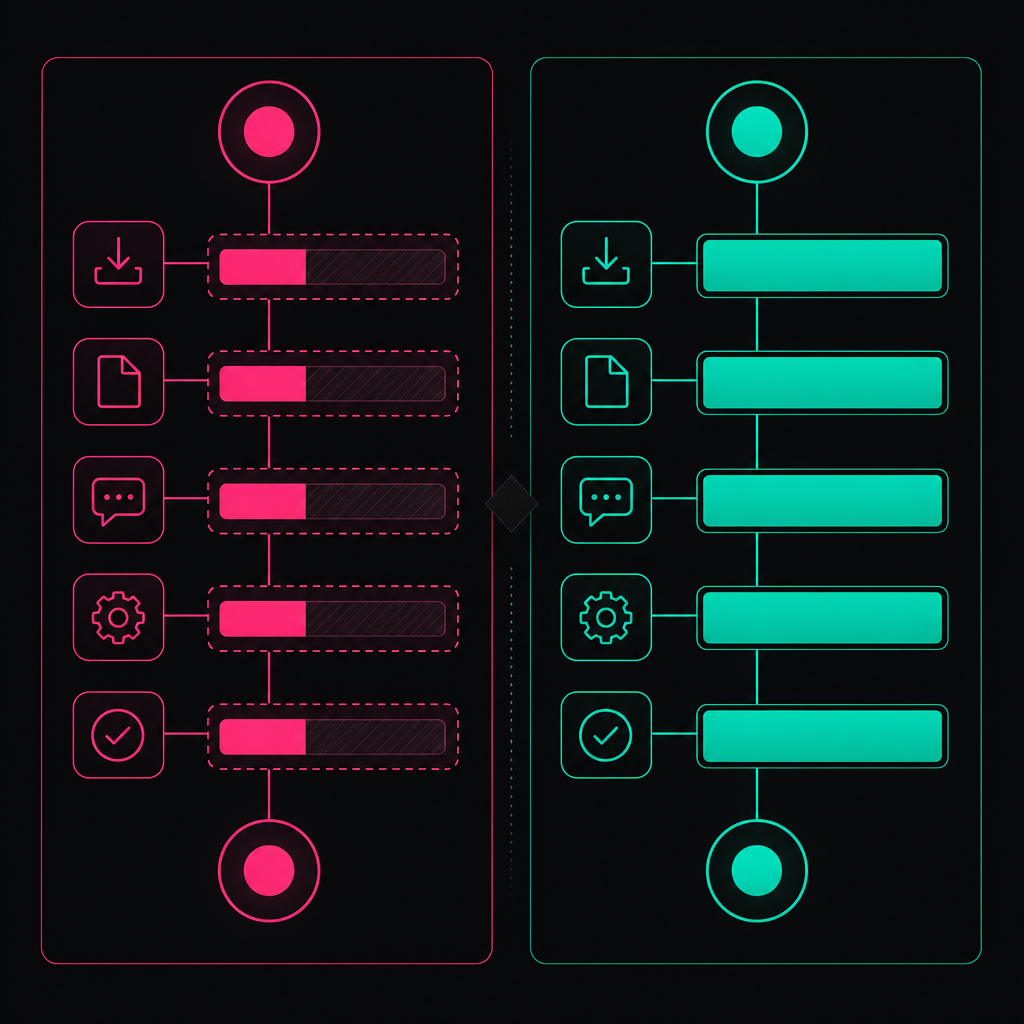
In offshore staffing, part-time and full-time usually describe reserved capacity under a service or engagement agreement. They do not automatically carry the same legal meaning as Australian employment classifications. Before signing, confirm scheduled hours, exclusivity, leave coverage, management responsibilities, local employment arrangements, security controls and the process for changing capacity.
Do not assume Australian employment definitions apply
Australian full-time employees generally work an average of 38 ordinary hours each week under the National Employment Standards, subject to reasonable additional hours. The Fair Work Ombudsman's full-time employee guidance explains the Australian position.
Part-time Australian employees usually work fewer than 38 hours and have regular hours. The Fair Work Ombudsman's part-time guidance provides further detail.
Those definitions should not be copied blindly into a Philippines-based staffing arrangement. Ask the provider what full-time and part-time mean operationally. Important questions include:
- Which hours are reserved for your business?
- Are those hours fixed or flexible?
- Does the person support other businesses?
- Who is the legal employer?
- Who manages payroll, leave and local compliance?
- What happens during illness, leave or staff turnover?
- Can capacity be increased without replacing the person?
A reliable offshore staffing solution should explain the delivery model, not just provide a CV and a monthly invoice.
Capacity is not the same as output
Two people can be available for the same number of hours and produce very different outcomes. Process quality, task clarity, system access and decision authority determine usable output.
A part-time team member with a stable weekly checklist can outperform a full-time team member receiving scattered requests through email, chat and meetings. Adding hours to a broken workflow normally increases activity rather than delivery.
Define the required outputs first. Then purchase enough capacity to deliver them with an appropriate buffer for corrections, meetings and unexpected work.
How to choose the right staffing model
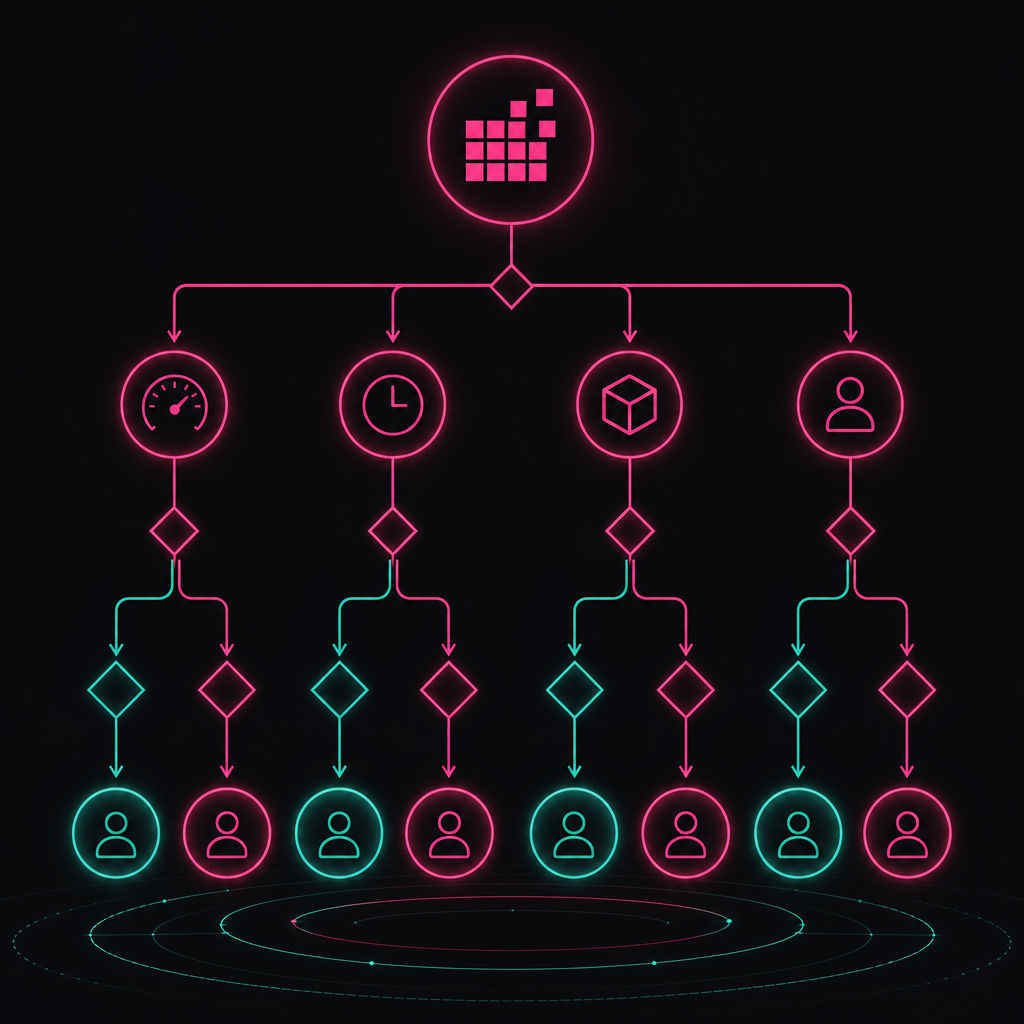
Choose part-time or full-time capacity by examining workload frequency, urgency, complexity and ownership. Part-time works when tasks can wait for a scheduled work block. Full-time becomes appropriate when delays affect customers, revenue, compliance or other employees. The deciding question is whether the role owns a continuous function or completes a recurring task queue.
Run a workload audit before discussing candidates
Review at least one complete operating cycle for the function. That may be a weekly support cycle, a fortnightly pay cycle or a monthly reporting cycle. Record:
- Every recurring task.
- The trigger for each task.
- The normal deadline.
- The systems and data required.
- The person who approves exceptions.
- Whether work can be batched.
- The consequence of a delayed response.
- Seasonal or campaign-related peaks.
Do not estimate workload from memory. Founders frequently remember major tasks but overlook follow-ups, corrections, file management, status updates and stakeholder questions.
Separate the work into three categories:
- Scheduled work: Tasks completed at known times, such as weekly reporting or invoice entry.
- Demand-driven work: Tasks triggered by customers, employees or suppliers.
- Exception work: Problems requiring judgement, escalation or approval.
Part-time capacity fits scheduled work best. Full-time capacity becomes more useful as demand-driven and exception work increases.
Calculate total delivery cost
The practical cost is broader than the staffing fee. Use this model:
Total delivery cost = staffing fee + internal management time + software and access + rework + delay cost + transition cost
A part-time arrangement usually has a lower staffing fee. However, its effective cost rises when managers repeatedly explain tasks, wait for the next availability window or correct rushed handovers.
A full-time arrangement can reduce coordination cost because the person remains inside the workflow. It becomes poor value when the business has not defined enough meaningful work and starts assigning random tasks to keep the person occupied.
When reviewing offshore staffing pricing, check what the fee includes. Ask about recruitment, equipment, local employment administration, replacement support, security, leave coverage and GST treatment where applicable. Compare like with like.
Test the availability requirement
Part-time is usually enough when the answer to each question below is yes:
- Can requests wait until the next scheduled work block?
- Can tasks be grouped into a queue?
- Can another person handle genuine emergencies?
- Are dependencies visible before work begins?
- Can the role succeed without attending most internal meetings?
Full-time is usually safer when the role needs to monitor a queue throughout the day, answer time-sensitive questions, coordinate several teams or maintain a live operational system.
Which roles suit part-time offshore staff?
Part-time offshore staff suit roles with repeatable, batchable outputs and limited real-time dependency. Good examples include basic administration, database maintenance, research, reporting preparation and scheduled social media support. The role should have a stable task queue, defined quality checks and enough flexibility for work to be completed within agreed availability windows.
Basic administration
Administrative work is a strong part-time starting point when tasks are standardised. Suitable responsibilities include:
- CRM updates and duplicate checks
- document formatting and filing
- inbox categorisation
- meeting preparation
- recurring report collation
- supplier record maintenance
- data entry and validation
- travel research without final purchasing authority
Avoid describing the role as simply helping with admin. Create named workflows. For example, replace manage the CRM with:
- Review new records each morning of the scheduled shift.
- Complete required fields from approved sources.
- flag duplicates for review.
- assign records using documented rules.
- publish an exception report before finishing.
That structure makes output measurable and reduces constant supervision.
Social media production support
A part-time team member can prepare content calendars, format approved copy, schedule posts, organise assets and compile platform reports. Strategic positioning, sensitive replies and final approval should remain with an accountable person until clear guardrails exist.
Social media becomes unsuitable for limited part-time coverage when the role includes active community management or rapid customer responses. Scheduled publishing is batchable. Reputation management is not.
Research and offshore virtual assistant work
An offshore virtual assistant can support prospect research, meeting preparation, list cleaning, document creation and recurring coordination. The role works best when each request has a template covering the objective, source rules, output format, deadline and approval point.
Do not use a virtual assistant as an unstructured overflow bucket. A role containing unrelated finance, marketing, customer service and executive support tasks becomes difficult to prioritise and quality-control. Narrow ownership produces better results than a broad task list.
Roles that should not begin part-time
Be cautious with part-time coverage when the role controls customer escalations, security incidents, live transaction processing or deadlines that can trigger compliance consequences. These functions may still be delivered by an external specialist team, but they require dependable coverage rather than casual task allocation.
Which roles suit full-time offshore staff?
Full-time offshore staff suit functions that operate every day, require continuing context or affect several people across the business. Bookkeeping operations, payroll processing, IT support and customer operations often fit this model. A full-time role should own a defined operational result, not merely remain online for a set number of hours.
Bookkeeping and payroll operations
Daily transaction processing, reconciliations, debtor follow-up and reporting preparation benefit from continuity. The person builds familiarity with coding rules, suppliers, exceptions and approval patterns.
Payroll needs stronger controls again. It is a business-critical trust function, not generic administration. Incorrect or late payroll affects staff confidence, cash flow and compliance.
Our position is direct: payroll can be safer with a specialist team than with one overloaded internal administrator. Most risk comes from manual checks, rushed pay runs and unclear ownership. Your payroll should not depend on one busy admin person remembering everything.
Where the function is established, we use The Accountee Payroll Process:
- Payroll Discovery and Setup: Review pay cycles, staff types, awards, systems, approvals and reporting requirements.
- Payroll Transition: Establish access, templates, calendars, employee data, timesheet flows and approval checkpoints.
- Full Payroll Processing: Manage timesheets, pay calculations, leave, allowances, deductions, Single Touch Payroll, superannuation and reporting.
- Ongoing Payroll Management: Resolve issues, maintain compliance controls and keep each pay run on schedule.
This is specialist delivery, not jack-of-all-trades accounting. Payroll done properly. Not squeezed in between tax returns.
IT support
Full-time IT support makes sense when employees need help across the working day or when the role manages onboarding, access changes, device records and recurring maintenance. A ticketing system should define priority, ownership and escalation.
Do not give broad administrator access because it is convenient. Apply least-privilege access, separate administrator accounts and log important activity. The Australian Signals Directorate's Essential Eight provides a recognised baseline for cyber security controls.
Customer and operational support
Full-time coverage is often appropriate when response speed affects the customer experience. The person needs approved answers, escalation rules, service standards and visibility across the customer record.
One full-time person does not create uninterrupted coverage. Leave, illness and turnover still exist. Ask who covers critical queues and where operating knowledge is documented.
How to manage part-time offshore staff effectively

Manage part-time staff through prioritised queues, fixed communication windows and documented acceptance criteria. Do not rely on continuous chat access. Give each workflow an owner, deadline, source of truth and escalation path. The manager's job is to remove ambiguity before the scheduled work block begins, not answer preventable questions throughout it.
Build complete work packets
Every assigned item should answer six questions:
- What outcome is required?
- Why does it matter?
- Which source material is authoritative?
- What does finished look like?
- When is it due?
- What should happen if information is missing?
Attach templates and examples to the process, not to individual chat messages. Otherwise, knowledge disappears inside conversation history.
Use one prioritised queue
Do not distribute work across email, direct messages, meeting notes and multiple project boards. Maintain one queue with visible priorities.
A practical status flow is:
Ready for work > In progress > Waiting for input > Ready for review > Complete
Limit work in progress. Starting several tasks creates the appearance of activity while extending completion times. Require the team member to finish or formally block the highest-priority item before opening another.
Set communication windows
Part-time support does not mean permanent on-call access. Agree on:
- scheduled working windows
- a short start-of-shift priority check
- an end-of-shift handover
- expected response times during and outside scheduled hours
- the channel for genuine urgent issues
Record decisions in the task system. Meetings should resolve ambiguity, not become the only place where instructions exist.
Measure delivery, not presence
Useful measures depend on the workflow. They can include tasks completed by deadline, error categories, reopened work, unresolved blockers and queue age. Avoid measuring keyboard activity or online status as a substitute for output.
Review mistakes by cause. A quality problem may come from unclear instructions, incorrect source data, missing access, insufficient training or individual performance. The remedy differs for each cause.
Protect systems and personal information
Give staff only the access required for their role. Use separate user accounts, multi-factor authentication, password management and prompt access removal when responsibilities change.
The Office of the Australian Information Commissioner's Australian Privacy Principles are relevant when an Australian business handles personal information. If data is accessed from the Philippines, review cross-border disclosure obligations, contracts and security controls. The Philippines also has its own Data Privacy Act, administered by the National Privacy Commission.
How to manage full-time offshore staff effectively
Full-time staff need a role operating system, not a larger task list. Define the result they own, the decisions they may make and the issues they must escalate. Provide daily context during onboarding, then replace constant supervision with documented controls, weekly performance reviews and a visible plan for expanding responsibility.
Start with a role charter covering:
- purpose of the role
- owned workflows
- recurring outputs
- service expectations
- decision authority
- approval limits
- key stakeholders
- security obligations
- performance measures
- backup arrangements
Build onboarding around real workflows. Observation alone is not enough. Use a progression of demonstration, supervised execution, independent execution and sampled quality review.
A full-time team member should have one accountable manager in the Australian business. Multiple managers create conflicting priorities. Other employees can request work, but priority decisions should flow through the named owner or a shared queue.
Hold a weekly operating review covering completed outputs, blocked work, quality issues, upcoming peaks and process changes. Do not turn it into a general catch-up. The aim is predictable delivery.
When should you move from part-time to full-time?
Move to full-time capacity when recurring work consistently fills the available schedule, unfinished tasks are carrying into the next work window or the role requires daily context. Do not wait for customer delays or employee burnout. The change should follow measured demand, redesigned workflows and a clear plan for using the additional capacity.
Warning signs include:
- urgent work regularly arrives outside reserved hours
- the queue grows despite stable quality
- managers hold tasks because the team member is unavailable
- handovers consume too much of the available shift
- the role now coordinates several functions
- daily monitoring has become necessary
- process improvement is repeatedly deferred because delivery consumes all capacity
Before expanding hours, remove obsolete work and fix bottlenecks. More capacity should not preserve unnecessary reporting, duplicate data entry or avoidable approval steps.
Use a staged change:
- Confirm which recurring work is not being completed.
- Remove or automate low-value steps.
- Update the role charter and workflows.
- Define how additional hours will be allocated.
- Agree on a review point with the provider.
- Monitor output, quality and queue age after the change.
Two practical staffing cases from payroll operations
These cases show why capacity decisions cannot be separated from process design. Neither business improved merely by adding a person. Each first clarified the workflow, approvals and compliance requirements, then installed appropriate delivery coverage. They are payroll examples, but the same principle applies to administration, IT support and customer operations.
Recruitment agency with fractional internal involvement
A recruitment agency's founders wanted to focus on new business development and operational execution rather than payroll and accounting. Hiring and managing more in-house resources did not offer the commercial or operational return they wanted.
We completed discovery, built a payroll system and assigned a specialist delivery team. The customised process went live within 2 weeks. The founders now approve one email each fortnight, while the team manages payroll, superannuation, tax, compliance, inbound questions and timesheet queries.
This was not simply a part-time assistant appointment. The business needed fractional internal involvement backed by complete workflow ownership. That distinction matters. Limited founder time only works when the provider owns the operating process.
Hospitality recruitment business moving to dedicated coverage
A hospitality recruitment and labour hire company had several internal people and external accountants involved in weekly payroll. The arrangement was expensive, fragmented and created heavy recurring workloads.
After discovery, the payroll process was consolidated under a specialist team. The pay cycle moved from weekly to fortnightly, internal and external duplication was removed, and previously unrecognised award requirements were addressed. The business reduced operating and payroll costs while improving its compliance process.
Again, this was not a simple switch from one part-time employee to one full-time employee. It was a move from scattered responsibility to dedicated end-to-end coverage. The case demonstrates why ownership and process design matter more than the label attached to headcount.
The capacity problem is usually a delivery structure problem
My view is that businesses move to full-time staffing too quickly when their real problem is fragmented delivery. If requests arrive through several channels, approvals are unclear and no workflow owner exists, more hours amplify the disorder. Fix the operating structure first, then buy the capacity required by measured demand.
We describe this distinction simply: the difference between a capacity gap and a capacity crisis is usually a delivery structure problem, not a talent problem.
Accountee's internal data across 15 recruitment agency payroll implementations in 2026 found a reduction of 6-10 hours of non-billable partner time per pay cycle. That result came from process ownership and approval design, not from moving isolated tasks to the cheapest available person.
This is the practical test I recommend. If the owner disappeared for one operating cycle, could the team identify priorities, complete routine work, escalate exceptions and produce the required report? If not, the immediate need is a better operating system.
Most providers compete on cost, speed or CV volume. Those factors matter, but reliability comes from documented workflows, clear ownership, compliance controls and backup coverage. The objective is predictable delivery, not just headcount.
A practical implementation plan for Australian SMEs
Start with one operational problem, document its complete workflow and select the smallest dependable capacity model that can own it. Avoid outsourcing unrelated leftovers in the first phase. A controlled implementation gives you evidence about workload, quality and management demand before you expand the role or commit to full-time capacity.
Use this sequence:
- Choose the function: Select a recurring workload with a clear business owner.
- Map the process: Document triggers, steps, systems, decisions, exceptions and approvals.
- Classify demand: Separate scheduled, demand-driven and exception work.
- Choose capacity: Match availability to deadlines and dependency levels.
- Define security: Set access, privacy, device and offboarding controls.
- Build the queue: Establish one source of truth for priorities and status.
- Train with real work: Demonstrate, supervise, test and review.
- Measure delivery: Track deadlines, quality, blockers and queue age.
- Review capacity: Increase hours only when recurring demand justifies it.
If you need help deciding whether to hire offshore staff part-time or full-time, speak with Remotee. We can assess the workload, identify the required delivery structure and recommend a capacity model without forcing every role into the same package.
References
These sources provide the employment, payroll, privacy and security context relevant to Australian businesses using offshore staff. They do not replace legal, employment, tax or privacy advice for a specific arrangement. Check current regulator guidance and obtain professional advice where the engagement involves sensitive data, worker classification or regulated responsibilities.
- Fair Work Ombudsman, Full-time employees
- Fair Work Ombudsman, Part-time employees
- Australian Taxation Office, Single Touch Payroll
- Office of the Australian Information Commissioner, Australian Privacy Principles
- Australian Signals Directorate, Essential Eight
- National Privacy Commission Philippines, Data Privacy Act
FAQ_SCHEMA_JSON
FREQUENTLY ASKED QUESTIONS
Common questions
Is it cheaper to hire part-time offshore staff?
- Part-time staffing usually has a lower fixed commitment because you reserve less capacity. It is not automatically cheaper per completed outcome. Repeated handovers, delayed responses, fragmented tasks and manager supervision can offset the fee difference.
How many hours should a part-time offshore employee work?
- There is no universal offshore staffing standard. Choose enough reserved time to complete the recurring queue, meetings, corrections and expected exceptions. The contract should specify working windows and availability.
Can an offshore virtual assistant work part-time?
- Yes. Part-time virtual assistant support works well for scheduled administration, research, data maintenance, document preparation and content scheduling. Results depend on a clear scope, one prioritised queue and complete task instructions.
Which roles are best for full-time offshore staff?
- Full-time staffing is strongest for daily operational functions such as bookkeeping operations, IT support, customer service and payroll processing. These roles benefit from continuing context, reliable availability and deeper system knowledge.
Can I start part-time and move to full-time later?
- Yes, provided the provider supports capacity changes and the team member remains available. Move when recurring demand fills the schedule, work regularly carries over or daily coverage becomes necessary.
How do I monitor offshore staff without micromanaging?
- Use visible workflow measures rather than surveillance. Track completed outputs, deadlines, queue age, blockers, errors and reopened work. Clear ownership and acceptance criteria provide more control than monitoring online presence.

Jon Kelly
Founder, Remotee
Jon helps Australian businesses build compliance-led offshore teams that scale without the burnout. NDIS, accounting, mortgage broking, recruitment and digital marketing.
KEEP READING
Related posts
offshore staffing for small business Australia
Offshore Staffing for Australian SMEs: How to Build Your First Remote Team
Offshore staffing for small business in Australia works when an SME assigns suitable roles to skilled overseas professionals, documents how work moves, protects…
4 August 2026 · 17 min read
Offshore staffing service inclusions
Offshore staffing service inclusions
An offshore staffing service should include workforce planning, candidate sourcing, screening, compliant employment, payroll, onboarding, technology setup, secu…
31 August 2026 · 20 min read
offshore staffing real estate Australia
Offshore Staffing for Australian Real Estate Businesses: Growing Your Portfolio Remotely
Offshore staffing helps Australian real estate businesses increase capacity by assigning documented property management, sales administration, marketing and com…
30 August 2026 · 15 min read
READY TO SCALE WITHOUT THE BURNOUT?
Build a compliance-led offshore team in 3–4 weeks.
Tell us about your current bottleneck and we'll show you what a Remotee placement would look like for your operation.
Or get our playbooks emailed to you instead.