
Offshore Staffing Provider Due Diligence Checklist for Australian Businesses
- Offshore staffing
- Provider due diligence
- Remote workforce compliance
- Payroll controls
- Business continuity

An offshore staffing provider due-diligence checklist should verify the provider's delivery model, legal employing entity, payroll controls, recruitment process, security practices, continuity planning, pricing and contract terms. Complete these checks before selecting candidates or signing. Request documents, test workflows and assign ownership rather than accepting sales claims at face value.
Shortlisting a provider is not the same as validating one. A polished proposal, competitive quote and strong candidate CVs tell you little about what happens when payroll fails, an employee leaves, access must be revoked or responsibilities become disputed.
This checklist helps Australian decision-makers test the operating system behind the talent. That matters because remote hiring creates value only when documented workflows, named owners and repeatable controls support the person doing the work.
Key takeaways
- Conduct due diligence before candidate selection creates pressure to proceed.
- Ask providers to demonstrate workflows, not merely describe their service.
- Confirm who employs staff, administers payroll and owns each compliance task.
- Test workforce continuity, security and escalation arrangements against realistic scenarios.
- Compare total service scope rather than relying on a headline monthly fee.
- Pause procurement when evidence is missing, inconsistent or unnecessarily vague.
Summary table
| Due-diligence area | Evidence to request | Claim to test | Warning sign |
|---|---|---|---|
| Delivery model | Responsibility matrix, onboarding workflow and service standards | Each recurring task has a named owner and escalation path | Responsibility shifts between the proposal, contract and sales conversation |
| Employment and payroll | Employing-entity details, contract template, payroll workflow and insurance certificates | The provider can explain how wages, statutory obligations and employee queries are handled | Unsupported claims that everything is compliant |
| Talent quality | Sourcing workflow, screening criteria, reference-check process and replacement policy | Screening reflects the actual role rather than a generic job description | Large volumes of CVs with little evidence of verification |
| Continuity | Leave process, backup plan, handover template and exit procedure | Work can continue when a team member is absent or leaves | Continuity depends entirely on one person |
| Security | Access policy, device controls, incident process and recovery plan | Access can be limited, reviewed and removed promptly | Security assurances without documents or accountable owners |
| Commercial terms | Itemised fees, currency basis, notice terms and exit obligations | The total cost and consequences of change are understandable | An unusually low quote with unclear exclusions |
When should provider due diligence occur?

Provider due diligence should begin after a credible shortlist is formed but before candidate interviews, deposits or commercial commitments. This sequence preserves objectivity. Once managers meet a strong candidate or invest time in implementation planning, urgency and confirmation bias can make unresolved provider risks seem less important than they are.
Candidate quality can create false confidence. A provider may introduce a capable accountant, recruiter or administrator while lacking the workflows needed to employ, pay, manage and retain that person reliably. The individual can be excellent while the delivery model remains weak.
Run due diligence as a procurement gate. The provider should not progress until it supplies adequate evidence across delivery, employment, workforce, security and commercial controls. Different organisations will require different approval levels, but the gate itself should be explicit.
A checklist you can copy into procurement
Use the following as a working offshore staffing provider checklist:
- Confirm the provider's legal name, business registration, operating address and employing entity.
- Identify who recruits, employs, onboards, manages, pays and supports the offshore employee.
- Request a sample responsibility matrix and end-to-end delivery workflow.
- Review service standards, reporting rhythms, escalation contacts and response processes.
- Request the employment contract template and explanation of local statutory obligations.
- Review payroll administration, approvals, payslip controls and employee query handling.
- Confirm screening, skills testing, identity checks and reference-check procedures.
- Ask how retention is measured and how departures are categorised.
- Test leave, absence, resignation, replacement and handover scenarios.
- Review device ownership, access controls, privacy practices and incident response.
- Confirm backup, disaster recovery and business continuity arrangements.
- Itemise establishment fees, recurring fees, pass-through costs and optional services.
- Confirm invoice currency, adjustment mechanisms and responsibility for currency movement.
- Review notice periods, replacement terms, intellectual property clauses and exit assistance.
- Record missing evidence, unresolved questions, responsible reviewers and approval decisions.
Do not treat the checklist as a questionnaire that the provider can answer with yes or no. Each material answer should point to a document, system record, contract clause, demonstration or named owner.
How do you verify the delivery model and accountability?
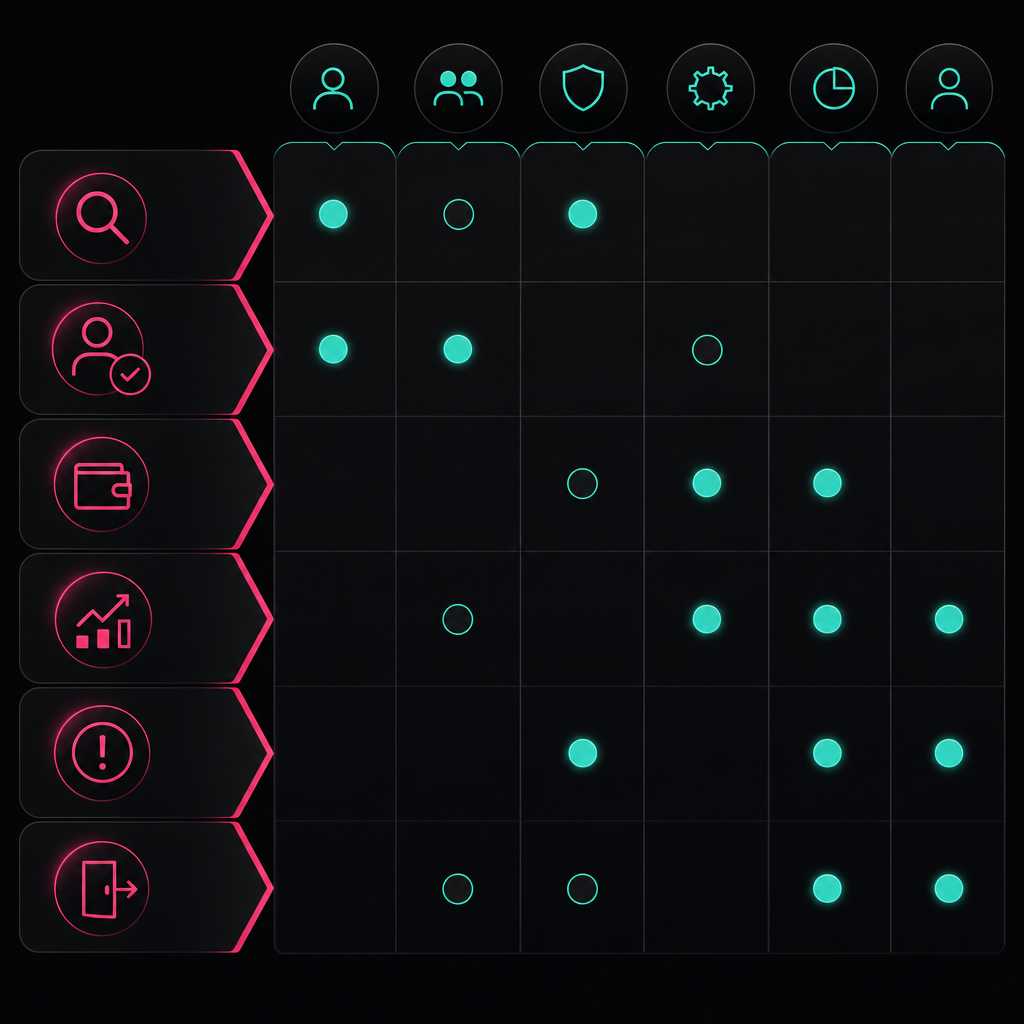
Verify the delivery model by mapping every recurring activity to a responsible party, required input, approval point, service standard and escalation route. The provider should demonstrate how recruitment becomes stable day-to-day delivery. If accountability cannot be explained without phrases such as "we normally handle that", the model is not sufficiently documented.
Start with a responsibility matrix covering recruitment, employment, onboarding, training, workload allocation, performance management, leave, payroll, security, disciplinary matters and offboarding. Distinguish responsibility from participation. Several people may contribute to onboarding, but one person must own its completion.
Ask the provider to walk through a recent or representative implementation using redacted documents. Useful evidence includes:
- A discovery agenda and information request.
- A role scorecard linked to business outcomes.
- An onboarding plan with dependencies and approvals.
- Standard operating procedure templates.
- A reporting calendar and meeting structure.
- Performance review templates.
- An issue register and escalation workflow.
- A handover and offboarding checklist.
The walkthrough matters because a document library does not prove consistent use. Ask who completes each record, where it is stored and how overdue actions are identified. Then select one scenario and follow it through the system.
For example, ask what happens when a team member reports an unexpected absence before a critical deadline. A credible answer should identify who receives the notification, who informs your manager, how work is assessed, what backup options exist and who approves any temporary access. A vague promise to "find cover" is not a continuity process.
Use the contract to confirm the sales promise
Compare the proposal, demonstration and contract side by side. Check whether services described during sales are contractual inclusions or optional support. Pay particular attention to performance management, replacement recruitment, payroll support, local HR advice, equipment, security monitoring and exit assistance.
Service standards also need measurable triggers. "Responsive support" is not a service standard. The contract or operating schedule should define the event being measured, the accountable party, the communication channel and the escalation process. Obtain legal advice before relying on contractual remedies.
A capacity gap can become a delivery crisis
Consider a hypothetical finance team that hires an offshore payroll specialist before deciding who approves timesheets, resolves discrepancies or communicates pay changes. The new employee receives conflicting instructions, a deadline is missed and managers blame capability. The original capacity gap has become a delivery crisis because ownership was undocumented.
The difference between a capacity gap and a capacity crisis is usually a delivery structure problem, not a talent problem. Due diligence should therefore assess the system around the role with the same care applied to the candidate.
What employment, payroll and compliance evidence should you request?
Request evidence identifying the legal employer, applicable employment contract, payroll process, statutory contribution controls, insurance arrangements and compliance oversight. Do not accept a broad assurance that the provider "handles compliance". The provider should explain which entity performs each obligation, which jurisdiction applies and when your business must obtain separate advice.
Begin by confirming the employing entity shown on the worker's contract and payslip. Compare it with the entity named in your service agreement and invoices. If different entities are involved, ask for a written explanation of their roles and contractual relationships.
Evidence worth reviewing includes:
- Legal entity and business registration information.
- A redacted employment contract template.
- Payroll calendars, approval checkpoints and exception procedures.
- Payslip and payroll-report samples with personal information removed.
- Processes for leave, allowances, deductions and final pay.
- Evidence explaining applicable statutory contributions.
- Workers compensation, professional indemnity and cyber insurance certificates where relevant.
- The provider's process for monitoring regulatory changes.
- Escalation arrangements for employee disputes or payroll corrections.
The offshore employment position depends on the worker's location, engagement model and applicable law. Australian businesses should obtain professional legal, tax and employment advice where exposure is material. Provider documentation supports that review, but it does not replace it.
Specialist payroll administration is a control, not just a cost
My position is direct: payroll is often safer when administered by specialists rather than left with an overloaded internal generalist. Most operational risk comes from rushed pay runs, manual checks, unclear approvals and one busy person carrying undocumented knowledge.
Specialist administration introduces calendars, segregated approvals, exception handling, documented inputs and recurring compliance checks. Your payroll should not depend on one busy admin person remembering everything. Payroll is a business-critical trust function because errors affect employees, cash flow, compliance and the employer brand.
For Australian payroll activities, Single Touch Payroll reporting requirements are explained by the Australian Taxation Office. The provider should be precise about whether it administers Australian payroll, offshore payroll or both. These are distinct responsibilities.
Where Australian payroll forms part of the scope, ask how the provider handles STP, super, leave, PAYG withholding, reporting and award-related inputs. Payroll done properly. Not squeezed in between tax returns.
How can you verify talent quality and workforce continuity?
Verify talent quality by examining how the provider defines the role, finds candidates, tests capability and confirms employment history. Then assess whether delivery can continue through leave, absence or turnover. Strong CVs are useful, but they do not prove screening quality, role fit or continuity after placement.
Ask the provider to show how your role brief becomes sourcing and assessment criteria. A credible process should separate required capability from preferences. It should also test the work the person will actually perform.
For a payroll role, a generic interview about attention to detail is weak evidence. A better assessment could examine how the candidate identifies missing timesheets, handles conflicting source data, documents an exception and escalates an approval risk. Any test should respect privacy, intellectual property and applicable employment rules.
Questions to ask about recruitment quality
- Which sourcing channels are used for this role and why?
- Who screens candidates, and what relevant experience does that reviewer have?
- How are identity, employment history and references checked?
- Which skills are tested before a candidate reaches the client?
- How does the provider assess written communication and remote-working discipline?
- Are assessment results retained and available for review?
- How are salary expectations and role scope confirmed?
- What causes a candidate to be rejected?
Reference checking should move beyond dates and job titles. With appropriate consent, questions should test the candidate's responsibilities, reliability, work quality and reason for leaving. Ask the provider how it handles references that cannot be independently verified.
Test retention and replacement claims
Providers frequently promote retention without explaining how they calculate it. Request the definition, reporting period, included population and treatment of probation departures, client-requested removals and internal transfers. If the provider presents a figure, ask for the underlying methodology and a report you can review.
Then inspect the replacement arrangement. Confirm what event triggers replacement, whether recruitment fees apply again, how long support continues, who manages handover and what happens to work during the vacancy. Avoid assuming that a free replacement solves the operational impact of losing role knowledge.
Continuity planning should include approved leave, unexpected absence, resignation and provider-level disruption. The practical controls are documented procedures, shared work queues, current access registers, cross-training and structured handovers. Not every role needs a permanently assigned backup, but every critical role needs a realistic continuity decision.
What security, technology and continuity controls matter?

Security due diligence should verify how people, devices, applications and data are controlled throughout the engagement. Review access approval, authentication, device management, privacy practices, incident response, backups and recovery arrangements. Controls should match the sensitivity of the work rather than relying on a generic claim that the provider follows best practice.
Begin with a data and access map. Identify which systems the offshore employee will use, what information they can view, whether data can be downloaded and who approves access. Apply least-privilege access where practical. Access should be limited to what the role requires and reviewed when responsibilities change.
Request evidence covering:
- Device ownership, configuration and support responsibility.
- Multi-factor authentication and password management.
- Endpoint protection, updates and device encryption.
- Restrictions on local downloads, removable media and personal devices.
- User provisioning, access reviews and rapid revocation.
- Secure communication and file-sharing tools.
- Security awareness and privacy training.
- Incident identification, notification and escalation.
- Backup responsibility, recovery procedures and testing.
- Business continuity arrangements for power, internet and workplace disruption.
The Australian Signals Directorate's Essential Eight provides a recognised baseline for considering cyber controls. It is not a substitute for a risk assessment, and not every control will apply identically to every engagement.
Australian Privacy Principle considerations may also arise where an Australian entity discloses personal information overseas. The Office of the Australian Information Commissioner explains cross-border disclosure under APP 8. Privacy obligations depend on the circumstances, so obtain professional advice rather than assuming the provider carries all responsibility.
Run scenario-based tests
Ask the provider to explain its response to practical events:
- A laptop containing work data is lost.
- A worker receives a suspicious authentication request.
- An employee resigns with immediate effect.
- Internet access fails before a deadline.
- Your business needs all access revoked urgently.
- A security incident affects the provider's wider environment.
For each event, identify the first action, responsible person, notification path, evidence retained and recovery process. A scenario test exposes gaps that policy documents can conceal.
How should you assess pricing, contracts and red flags?
Assess pricing by rebuilding the total commercial arrangement from itemised inclusions, exclusions, currency terms, adjustment rights and exit costs. Then compare those terms with the operating model you verified. A low headline fee is not good value when essential management, equipment, compliance support or replacement services sit outside the quoted scope.
Request a written schedule covering recruitment, establishment, salary, statutory costs, provider margin, equipment, software, workspace, HR support, payroll administration, replacements and exit support. Confirm which costs are fixed, variable or passed through.
Currency exposure deserves explicit treatment. Ask which currency applies, when conversion occurs, whether the provider adds a foreign exchange margin and how salary or statutory cost changes flow into invoices. The goal is not to eliminate every variable. It is to understand who bears it and how changes are approved.
Review these contract areas carefully:
- Service scope and order of precedence between documents.
- Minimum commitment and notice periods.
- Fee review and adjustment mechanisms.
- Replacement triggers, exclusions and process.
- Confidentiality, privacy and security obligations.
- Ownership of work products and intellectual property.
- Liability, indemnity and insurance clauses.
- Non-solicitation or direct-hire restrictions.
- Data return, access removal and transition support at exit.
- Governing law and dispute resolution.
The ACCC's guidance on business contracts is relevant when reviewing standard-form terms and unfair contract term protections. Contract application depends on the parties and circumstances, so legal review remains important.
Red flags that should pause procurement
Pause rather than rationalise when you encounter:
- An employing entity that cannot be clearly identified.
- Compliance claims unsupported by documents or accountable specialists.
- Different answers from sales, operations and legal contacts.
- Reluctance to provide redacted process evidence.
- Service responsibilities that disappear from the contract.
- Retention claims without definitions or reporting methodology.
- Security certifications presented as proof of every operational control.
- A replacement promise without handover or interim coverage arrangements.
- Unusually low pricing with material services excluded.
- Pressure to sign before legal, security or finance review.
- No documented exit process or access-revocation responsibility.
A red flag is not always proof that the provider is unsuitable. It is a reason to stop progression until the issue is explained, documented and accepted by the appropriate decision-maker.
Why I assess operating systems before talent
Most provider comparisons start with candidate availability and price. I reverse that order. First, determine whether the provider can install a reliable delivery system around the role. Talent quality creates value only when workflows, approvals, controls and escalation paths allow that person to perform consistently without creating another management burden.
Remotee's goal is predictable delivery, not just headcount. Adding a capable person to a weak process can increase messaging, checking and rework. That keeps owners acting as Doers when they need to become Strategists.
Our payroll work demonstrates the point. Across Remotee and Accountee recruitment agency clients, internal records from 15 implementations in 2026 show a reported reduction of 6-10 hours in non-billable partner time per pay cycle. Results vary by payroll complexity, existing systems, approval discipline and the work retained by the client.
In one recruitment agency engagement, the founders wanted to focus on business development and operational execution rather than payroll and accounting. We completed discovery, configured a payroll system and specialist team around the client's software, and went live within two weeks, according to Remotee's implementation records.
The resulting operating model reduced the founders' recurring task to approving one email each fortnight. The specialist team handled payroll processing, super, tax, compliance inputs, timesheet questions and inbound payroll queries. The important result was not simply extra capacity. It was clear ownership supported by a repeatable workflow.
That approach reflects the Accountee Payroll Process:
- Phase 1, Payroll Discovery and Setup: Review cycles, staff types, award considerations, systems, approvals and reporting requirements.
- Phase 2, Payroll Transition: Establish access, templates, pay-run calendars, employee data, timesheet flows and approval checkpoints.
- Phase 3, Full Payroll Processing: Manage timesheet review, pay calculations, leave, allowances, deductions, STP, super, reports and pay-run preparation.
- Phase 4, Ongoing Payroll Management: Provide issue resolution, compliance support, reporting and account management.
This is the standard I would apply to any offshore staffing provider. Ask how the provider discovers the work, transfers responsibility, controls recurring delivery and manages exceptions. Specialist payroll accountants, not generalist bookkeepers. Not jack-of-all-trades accounting. Specialist payroll delivery.
References
These sources support the Australian compliance, privacy, cyber security and contracting considerations discussed above. They provide general guidance rather than advice for a particular offshore arrangement. Businesses should confirm how the relevant requirements apply to their structure, information, workforce and contractual relationships.
- Australian Taxation Office, Single Touch Payroll
- Australian Signals Directorate, Essential Eight
- Office of the Australian Information Commissioner, Chapter 8: APP 8 Cross-border disclosure of personal information
- Australian Competition and Consumer Commission, Contracts
- Fair Work Ombudsman, Independent contractors
To assess Remotee's offshore staffing delivery model against this checklist, discuss your due-diligence questions with our team. Bring the role scope, shortlisted risks and evidence requirements. We will show you where responsibility sits, how recurring delivery is managed and which issues require separate professional advice.
FREQUENTLY ASKED QUESTIONS
Common questions
What documents should I request from an offshore staffing provider?
- Request legal entity details, an employment contract template, responsibility matrix, recruitment workflow, payroll process, service schedule, insurance certificates, security policies, incident procedures, continuity plan, fee schedule and exit checklist. Redacted examples are normally sufficient where documents contain sensitive information.
How do I evaluate an offshore staffing provider beyond candidate CVs?
- Assess how the provider defines roles, verifies candidates, manages employment, administers payroll, controls system access and supports performance. Ask for workflow demonstrations and scenario-based tests. Candidate interviews evaluate individuals, while due diligence evaluates the provider's complete delivery system.
Who should complete offshore staffing due diligence?
- The review should involve the operational owner and relevant HR, finance, legal, privacy and security stakeholders. Assign one person to maintain the evidence register, record unresolved issues and confirm that required approvals occur before commitment.
Is the cheapest offshore staffing provider usually the riskiest?
- Not automatically. A low quote becomes concerning when the provider cannot explain how it funds recruitment, employment administration, payroll, management, technology and continuity. Compare equivalent scope and identify all exclusions before deciding.
Should payroll remain in-house because it is sensitive?
- Not by default. Payroll may be safer with a specialist team using documented approvals, calendars and exception controls. Keeping payroll internal does not remove risk when the process depends on overloaded generalists or undocumented knowledge.
What should happen if a provider fails part of the checklist?
- Classify the issue by risk, request clarification and decide whether remediation is possible before signing. Unclear employment responsibility, unsupported compliance claims or inadequate security controls should pause procurement until appropriate specialists review the exposure.

Jon Kelly
Founder, Remotee
Jon helps Australian businesses build compliance-led offshore teams that scale without the burnout. NDIS, accounting, mortgage broking, recruitment and digital marketing.
KEEP READING
Related posts
Australian employer obligations when offshoring
Australian employer obligations when offshoring
Australian employers offshoring work must assess employment status, applicable workplace laws, tax, superannuation, privacy, data security, intellectual propert…
1 September 2026 · 17 min read
Offshore staffing service inclusions
Offshore staffing service inclusions
An offshore staffing service should include workforce planning, candidate sourcing, screening, compliant employment, payroll, onboarding, technology setup, secu…
31 August 2026 · 20 min read
offshore staffing real estate Australia
Offshore Staffing for Australian Real Estate Businesses: Growing Your Portfolio Remotely
Offshore staffing helps Australian real estate businesses increase capacity by assigning documented property management, sales administration, marketing and com…
30 August 2026 · 15 min read
READY TO SCALE WITHOUT THE BURNOUT?
Build a compliance-led offshore team in 3–4 weeks.
Tell us about your current bottleneck and we'll show you what a Remotee placement would look like for your operation.
Or get our playbooks emailed to you instead.