
Offshore Customer Service: Best Practices for Australian Retail and Services
- Offshore Customer Service
- Offshore Staffing
- Customer Support Outsourcing
- Australian E-commerce
- Customer Experience
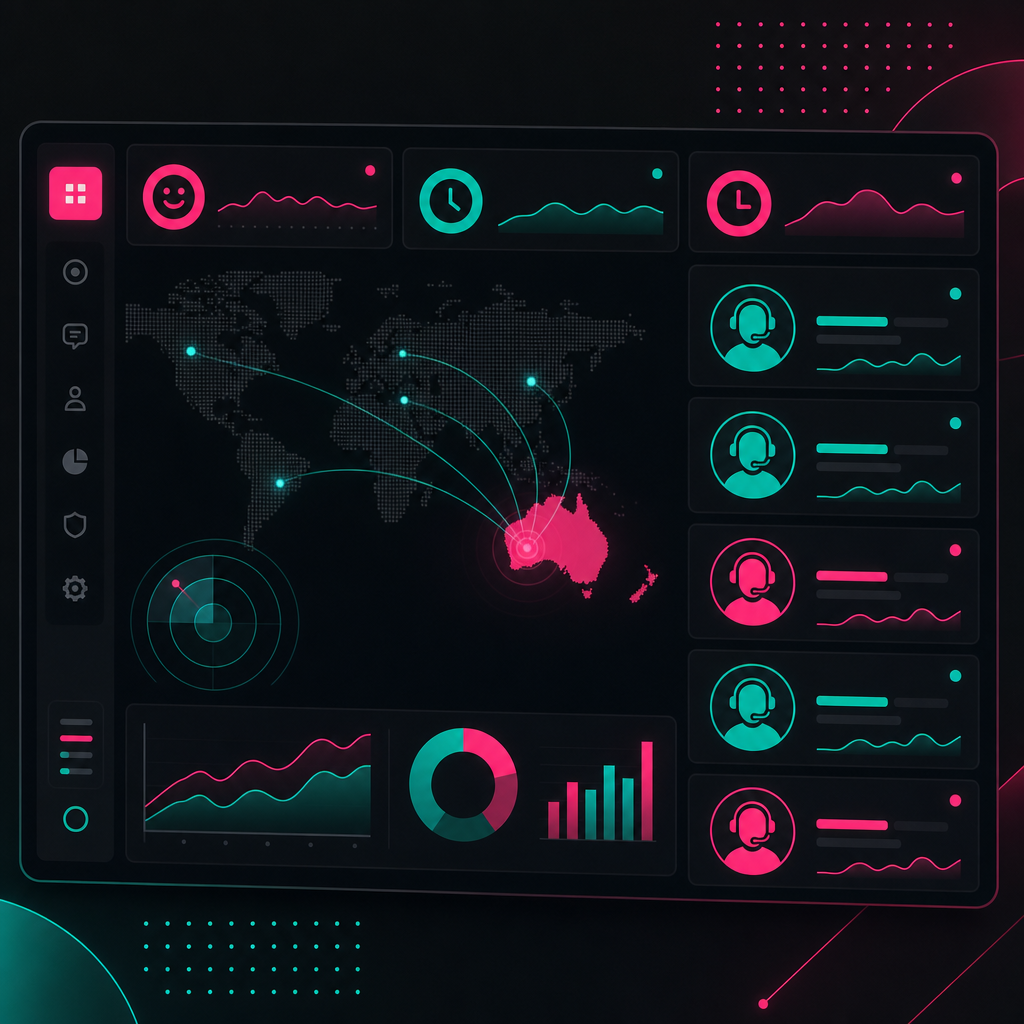
Offshore customer service in Australia works when trained specialists operate inside documented workflows, clear escalation rules, integrated systems and measurable quality controls. Retailers, e-commerce brands and service providers should prioritise cultural familiarity, communication clarity, compliance and operational ownership. The objective is predictable customer support, not simply cheaper headcount.
Offshore staffing can extend coverage and release local teams from repetitive enquiries. It can also create inconsistent answers, unresolved tickets and compliance risks when implementation stops at recruitment.
This guide explains how to build an offshore support function around Australian customer expectations. It covers service tiers, cultural training, communication coaching, Zendesk and Shopify integration, quality assurance, cost drivers and practical implementation scenarios.
Key takeaways
Successful customer support outsourcing depends more on the operating system around the team than the location of the agents. Managers should define ownership, access, escalation and measurement before moving live. These principles apply whether the offshore team handles basic order enquiries or complex account and service cases.
- Document approved answers, escalation paths and decision rights before recruitment.
- Train for Australian terminology, consumer rights and brand-specific service expectations.
- Coach for clarity and comprehension rather than trying to remove an agent's identity or natural accent.
- Connect Zendesk, Shopify and internal systems using controlled permissions and reliable data flows.
- Measure customer satisfaction, resolution time, reopened tickets and quality together.
- Scale ticket complexity only after the team demonstrates consistent judgement.
Summary table: offshore support tiers and cost drivers
Offshore support costs should be assessed by case complexity, coverage, systems access and required supervision. A basic shared inbox is less expensive to operate than an integrated team handling refunds, account changes or regulated complaints. Comparing hourly rates alone hides the management and rework costs created by weak processes.
| Support tier | Typical enquiries | Required access | Cost position | Main cost drivers |
|---|---|---|---|---|
| Basic information | Store policies, delivery updates, service availability and standard FAQs | Knowledge base and limited ticket access | Lower | Training scope, channel volume and roster coverage |
| Transactional support | Order changes, returns, appointment management and account updates | Zendesk plus controlled commerce or CRM access | Moderate | Integration, authentication, quality checks and escalation support |
| Complex resolution | Exceptions, complaints, disputed charges and multi-system cases | Broader operational access with approval controls | Higher | Specialist knowledge, compliance oversight and local decision support |
| Dedicated support operation | Continuous multi-channel coverage across customer segments | Integrated support stack and workforce management | Custom | Coverage model, leadership, reporting, security and service complexity |
A credible provider should explain the complete delivery cost, including management, training, quality assurance and continuity. Remotee's approach to offshore staffing solutions is built around predictable delivery rather than isolated recruitment.
What is offshore customer service in Australia?
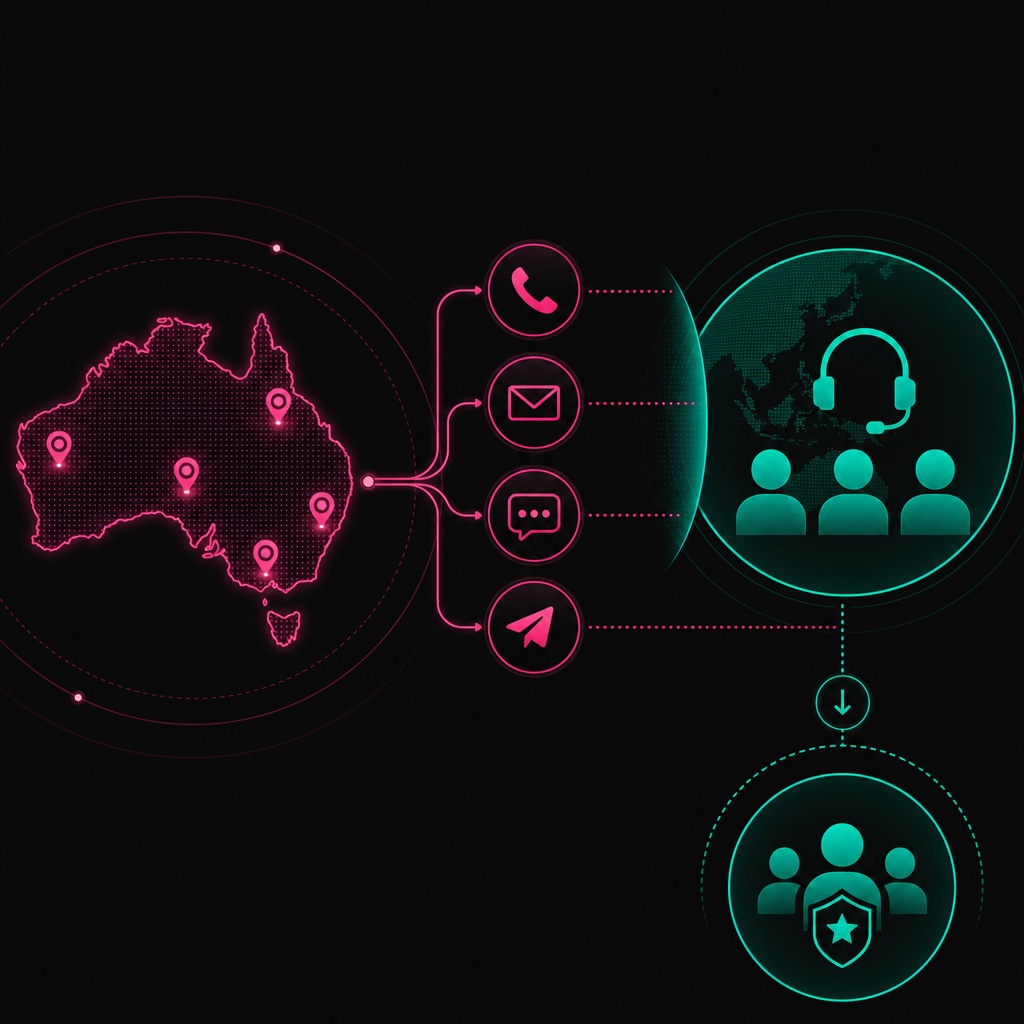
Offshore customer service is the delivery of customer support by team members based outside Australia who work within an Australian organisation's systems, policies and service standards. It can cover email, live chat, telephone, social messaging and back-office case processing while local staff retain appropriate oversight and escalation responsibility.
An offshore call centre is only one possible model. Businesses can also use dedicated support specialists who operate as an extension of the internal team. The distinction matters because call centre capacity does not automatically provide ownership, product knowledge or consistent resolution.
Retail and e-commerce teams commonly delegate order tracking, delivery enquiries, returns administration, product questions and inbox triage. Service businesses may delegate appointment changes, document collection, account maintenance and follow-up communication. Utilities must take additional care with identity checks, hardship indicators, complaint handling and access to sensitive account information.
Australian Consumer Law establishes consumer guarantees for eligible goods and services. Offshore agents therefore need more than a script saying that an issue has been referred. They must recognise when a customer may be asserting a statutory right and route the case correctly. The ACCC's consumer guarantees guidance should inform policies for refunds, replacements, repairs and service failures.
Offshoring does not transfer accountability. The Australian business remains responsible for customer outcomes, privacy controls and representations made by its support team.
How should an offshore support operating model be designed?

A reliable operating model defines what the offshore team owns, what it may decide and when local intervention is mandatory. Every enquiry type should have an approved workflow, system of record, response standard and escalation destination. Without those controls, added capacity increases hand-offs rather than improving customer outcomes.
Start with enquiry mapping. Export a representative set of tickets and group them by customer intent rather than channel. An email asking where an order is and a live chat asking the same question belong in one workflow.
For each intent, document:
- the information the agent must verify
- the systems the agent may access
- the action the agent may complete independently
- any financial or compliance approval required
- the response template and permitted customisation
- the conditions requiring escalation
- the internal owner receiving that escalation
- the evidence that must be recorded in the ticket
Decision rights deserve particular attention. An agent may be allowed to explain a returns policy but not approve an exception. Another agent may process a standard return but require approval for a disputed or unusual request. These boundaries should be visible inside the workflow, not buried in a general handbook.
Ownership must also continue after escalation. Customers should not have to repeat their story because a case crossed teams. The original agent can remain responsible for updates while a local specialist makes the decision. That creates continuity without giving the offshore role inappropriate authority.
Remotee's core position is simple: the difference between a capacity gap and a capacity crisis is usually a delivery structure problem, not a talent problem. Hiring capable people into an undefined queue will not fix unclear ownership.
How do you train offshore teams for Australian customers?
Australian customer service training should combine brand knowledge, consumer rights, local terminology and realistic conversation practice. A generic induction is insufficient. Agents need to understand what Australian customers mean, how they typically describe common problems and which phrases signal urgency, vulnerability, dissatisfaction or a potential complaint.
Build familiarity with Australian language
Create a living terminology catalogue using real, anonymised customer enquiries. It should explain common expressions as well as terms specific to the organisation's sector.
Retail examples may include "click and collect", "out of stock", "raincheck", "store credit" and references to a local suburb. Service businesses may receive requests about quotes, call-out fees, bookings or public holidays. Utility customers may discuss bills, concessions, moving house, outages or payment difficulty.
Training should also cover differences in dates, addresses and measurements. Agents must recognise Australian postcodes, state abbreviations and local time zones. They should confirm ambiguous information rather than make assumptions.
Slang familiarisation is about comprehension, not imitation. Customers can detect forced expressions. Agents should use clear, natural language that matches the brand instead of inserting "mate" into every conversation.
Replace accent neutralisation with communication coaching
"Accent neutralisation" is often the wrong objective. Every speaker has an accent. The operational goal is mutual comprehension under realistic conditions, including background noise, weak mobile reception and unfamiliar product names.
Coaching should focus on pace, sentence stress, confirmation and active listening. Agents can repeat critical details in a structured way, especially names, addresses, reference codes and appointment times. Call reviews should identify specific comprehension problems rather than scoring an accent subjectively.
Written support needs similar discipline. Templates should use Australian spelling, short sentences and direct instructions. Agents need permission to adapt templates when the customer's question does not fit the standard response. Otherwise, technically correct macros can sound evasive.
Train with cases, not presentations
Knowledge checks should use real decisions. Give the agent an anonymised ticket and ask what they would verify, what they can resolve and whether escalation is required. Include incomplete information, frustrated customers and conflicting system records.
Training should continue after launch. Product updates, policy changes and recurring quality failures belong in a controlled learning cycle. Remotee's compliance and training model supports this system-based approach.
How should Zendesk and Shopify be integrated?
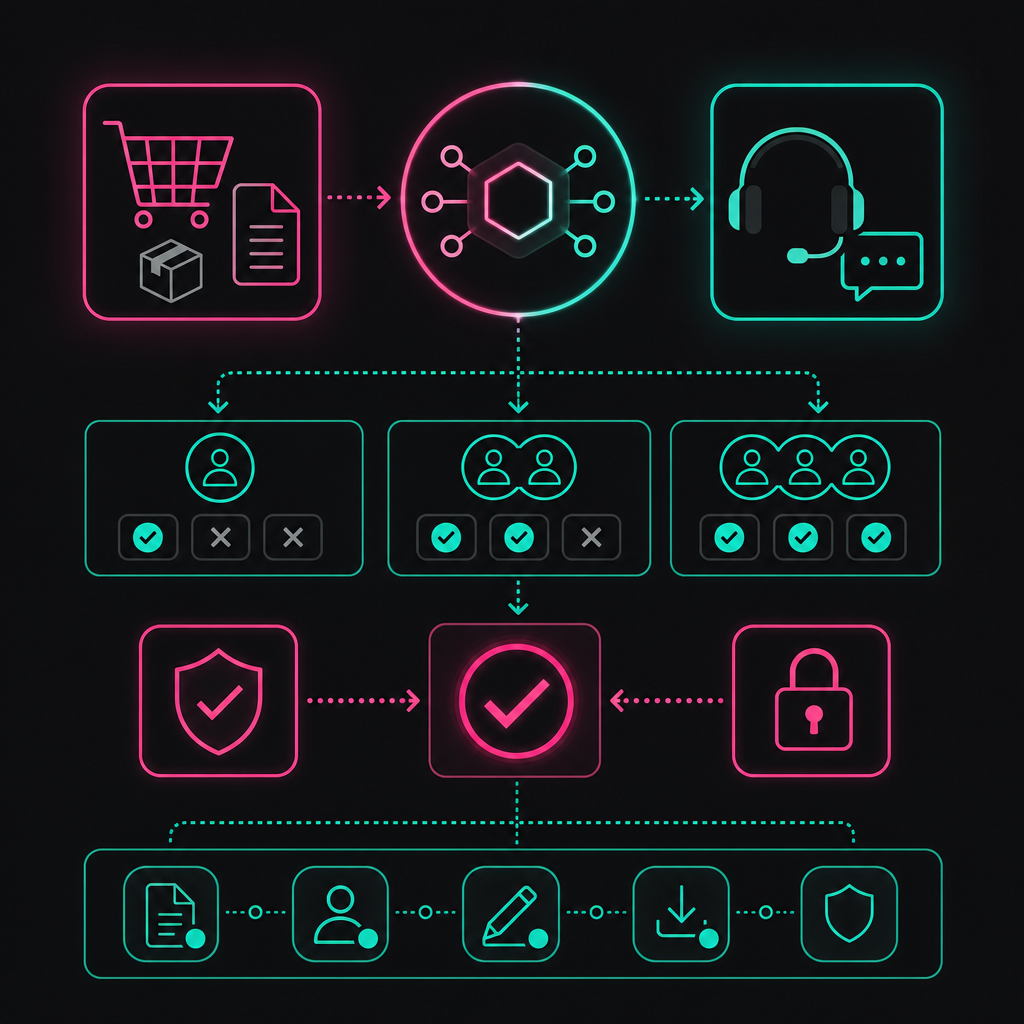
Zendesk and Shopify should be connected so agents can see relevant customer, order and conversation data without copying information between systems. The integration must preserve a clear system of record, limit permissions and log important actions. Convenience should never override privacy, security or approval controls.
For an e-commerce operation, the ticket view should surface the information needed to answer the enquiry. This may include order status, fulfilment state, tracking details and recent customer contact. Agents should not receive broad administrative access merely because occasional cases require it.
Zendesk's developer documentation describes the platform interfaces available for controlled integrations and workflow automation (Zendesk API Reference). Shopify also maintains official API documentation for accessing commerce data and events (Shopify APIs and references). Implementation should use supported interfaces rather than browser workarounds or shared credentials.
Establish a system of record
Define where each data type belongs. Zendesk may hold the conversation and support status, while Shopify remains authoritative for order and fulfilment data. A refund decision might be recorded in the support ticket, but the transaction must be executed and verified in the approved commerce workflow.
Agents should not maintain separate spreadsheets as unofficial case systems. Those files create version conflicts, weaken audit trails and increase privacy exposure.
Use role-based permissions
Provide the minimum access required for each support tier. Basic agents may need read-only order visibility. More experienced agents may process approved actions within defined limits. Sensitive changes should require secondary approval or transfer to an authorised role.
The Office of the Australian Information Commission explains that organisations covered by the Privacy Act must manage personal information according to the Australian Privacy Principles (OAIC APP guidelines). Access design, data handling and offshore disclosure arrangements need legal and security review appropriate to the organisation.
Design failure handling
Integrations fail. Orders can be delayed, customer records can duplicate and synchronisation can stop. Every automated workflow needs a visible failure state and an owner. Agents should know how to identify stale data, confirm information in the source system and report technical faults without improvising.
How should quality and customer satisfaction be measured?
Offshore customer service quality should be measured through a balanced scorecard covering customer perception, resolution effectiveness, process compliance and operational demand. Customer satisfaction alone can hide repeat contacts, while speed alone rewards rushed responses. Managers need enough context to distinguish agent performance from broken policies, stock problems or system delays.
Useful measures include:
- customer satisfaction after a resolved interaction
- first response time by channel and priority
- total resolution time by enquiry type
- reopened or repeated contacts
- escalation accuracy
- quality review findings
- policy and identity-verification compliance
- backlog age and queue health
Do not compare all tickets as if they carry equal effort. A delivery-status question and a disputed charge have different dependencies. Segment reporting by intent, complexity, channel and ownership.
Quality reviews should assess whether the agent understood the request, verified the correct details, applied the approved policy, communicated clearly and recorded the outcome. Feedback must identify a behaviour the agent can change. A vague score such as "needs more empathy" is not operational coaching.
CSAT improvement should be presented as a trend against the organisation's own verified baseline. It should not be promised as a generic offshore staffing result. A rising score is meaningful only when survey response patterns, ticket mix and resolution quality remain visible.
Security also belongs in quality management. The Australian Cyber Security Centre's Essential Eight guidance provides a recognised starting point for controls such as access restrictions, patching and multi-factor authentication.
Two practical offshore customer support scenarios
The following scenarios are implementation models, not claimed client results. They show how retail and service businesses can structure customer support outsourcing without inventing case-study outcomes. Each scenario starts with workflow design, controlled access and escalation ownership before adding broader coverage or more complex responsibilities.
E-commerce brand moving towards 24/7 support
Imagine an Australian e-commerce brand receiving overnight delivery questions, address-change requests and product enquiries. The local team begins each morning with a large queue and spends its most productive hours sorting basic tickets from exceptions.
The brand could establish 24/7 support by first mapping its high-volume intents. Offshore agents would handle approved information requests, order-status checks and inbox triage. Address changes would follow a time-sensitive workflow based on fulfilment status. Refund disputes, suspected fraud and unusual exceptions would move to named local owners.
Zendesk would hold the conversation history. Shopify would remain the source of truth for orders. Approved data would appear within the agent's ticket view, reducing tab switching and manual copying.
The launch decision should depend on demonstrated accuracy, not the calendar. Management would compare queue coverage, resolution quality, repeated contacts and CSAT against the verified baseline. Broader permissions would follow only after stable quality.
Service business reducing ticket resolution time
Consider a service provider whose support team handles booking changes, document requests, account questions and technical escalations. Resolution time is high because agents forward most tickets to operational staff, even when the answer already exists.
The first fix is not more agents. It is an intent-based knowledge base with clear decision rights. Offshore specialists could verify customer details, complete approved booking changes, collect missing documents and answer standard account questions. Technical or contractual issues would enter structured escalation queues containing all required evidence.
This model can reduce avoidable waiting because fewer tickets sit with the wrong owner. However, the business should claim an improvement only after its reporting confirms one. The important design change is eliminating unnecessary hand-offs while preserving appropriate specialist review.
Why delivery structure matters more than cheap headcount
My view is that most offshore customer service failures are designed before the agent starts. The business purchases capacity without defining ownership, workflows, access or escalation. The agent then becomes a human routing layer. Costs may appear lower, but customers experience repetition and local managers inherit more supervision.
This perspective comes from delivery work beyond customer service as well. In our own work with an anonymised recruitment agency, the founders wanted to focus on business development and operations rather than payroll administration. Remotee completed discovery and implementation within 2 weeks, then managed payroll, superannuation, tax, compliance and inbound timesheet queries.
The founders' recurring involvement became approval of one email each fortnight. These are Remotee's own delivery details, not an industry benchmark.
The lesson is directly relevant to customer support. The value did not come from moving tasks to another person. It came from installing an operating model with inputs, checkpoints, ownership and a reliable approval point.
Customer service should be designed the same way. A capable offshore specialist should know:
- which queue they own
- what evidence they need
- what decision they can make
- where the authoritative data sits
- who receives an exception
- how the customer remains informed
Most providers lead with cost, speed or CVs. Those factors matter, but they do not create reliable delivery. Adding headcount without adding system is how scaling creates chaos.
For operations managers, this changes the buying question. Do not ask only, "How quickly can you provide agents?" Ask how the provider documents workflows, manages training, controls access, reviews quality, handles absence and maintains accountability after launch.
How to implement offshore customer service without disrupting customers
Implementation should move from discovery to controlled deployment, followed by measured expansion. Begin with clearly defined enquiries and low-risk permissions. Validate the workflow using real cases, then extend coverage or authority when quality evidence supports the decision. A rushed launch shifts internal disorder onto customers.
Start by identifying the business outcome. It may be extended coverage, a healthier backlog, faster handling of standard enquiries or more local capacity for complex cases. Avoid combining every objective into one launch.
Next, document the current state. Map ticket sources, demand patterns, systems, approval delays, common exceptions and complaint pathways. Identify undocumented knowledge held by individual employees. Your customer support operation should not depend on one busy person remembering everything.
Build the operating materials before live handling begins. These should include intent workflows, response guidance, escalation forms, access rules, outage procedures and quality criteria. Test them against actual anonymised tickets. If experienced local staff disagree about the correct response, the offshore team is not ready to inherit that ambiguity.
Run a controlled deployment with visible local ownership. Review tickets frequently, but distinguish agent mistakes from process defects. If several agents make the same error, the workflow or training may be unclear.
Expand by complexity rather than simply adding volume. Once standard order or booking enquiries are stable, introduce selected transactional actions. Keep complaints, financial exceptions and vulnerable-customer cases within specialised pathways until governance is proven.
Finally, maintain the system. Assign owners for knowledge articles, integration failures, policy updates, quality calibration and workforce continuity. Customer support outsourcing is an operating capability, not a recruitment event.
If you want to build a structured offshore support function around your existing systems, contact Remotee to discuss the workflows, roles and controls required.
References
These official sources support the legal, privacy, security and technical guidance used in this article. They do not provide universal performance promises for offshore customer service. Results should be measured against each organisation's verified baseline, ticket mix and operating conditions.
- Australian Competition and Consumer Commission, Consumer rights and guarantees
- Office of the Australian Information Commissioner, Australian Privacy Principles guidelines
- Australian Cyber Security Centre, Essential Eight
- Zendesk Developer Docs, API Reference
- Shopify Developer Docs, APIs and references
FAQ_SCHEMA_JSON
FREQUENTLY ASKED QUESTIONS
Common questions
Is offshore customer service suitable for Australian businesses?
- Yes, when the work can be documented, supervised and completed through controlled systems. Retail, e-commerce and service businesses can offshore standard and transactional enquiries. Complex complaints, regulated decisions and unusual financial exceptions may require specialised escalation or local approval.
What tasks can an offshore customer service team handle?
- Typical tasks include inbox triage, order tracking, booking changes, standard product questions, returns administration, document collection and account updates. The permitted scope should reflect agent training, system access, legal obligations and clear decision rights.
How do you train offshore agents to understand Australian customers?
- Use real anonymised enquiries, Australian terminology, sector language and scenario-based assessments. Train agents to recognise local addresses, time zones, consumer-rights issues and escalation signals. Communication coaching should focus on clarity and comprehension rather than forced slang or accent removal.
Can an offshore team provide 24/7 support?
- Yes, a rostered offshore model can provide 24/7 coverage when staffing, supervision, handovers and escalation pathways are designed accordingly. Continuous availability should not be confused with continuous resolution. Some cases will still require an authorised local decision-maker.
How much does offshore customer service cost?
- Cost depends on support complexity, coverage, channel mix, system access, supervision, training and compliance requirements. Compare the complete delivery model rather than an hourly rate. Weak workflows can create hidden costs through rework, escalations and management time.
How do you protect customer data when support is offshore?
- Apply role-based access, multi-factor authentication, approved devices, audit logging and documented data-handling procedures. Review Privacy Act obligations and overseas disclosure arrangements with qualified advisers. Agents should receive only the information and permissions required for their role.

Jon Kelly
Founder, Remotee
Jon helps Australian businesses build compliance-led offshore teams that scale without the burnout. NDIS, accounting, mortgage broking, recruitment and digital marketing.
KEEP READING
Related posts
HR offshore staff Australia
Optimising HR Processes with Offshore Staff for Australian Companies
HR offshore staff can help Australian companies manage recruitment administration, onboarding, employee records, reporting and payroll support. The model works…
29 August 2026 · 21 min read
offshore marketing operations Australia
Offshore Marketing Operations Staffing for Australian Brands
Offshore marketing operations in Australia means building a remote team that executes defined marketing work under clear Australian ownership. Suitable roles in…
27 August 2026 · 18 min read
offshore staffing risks Australia
Mitigating Risks in Offshore Staffing: A Guide for Australian Businesses
Offshore staffing risks in Australia are best managed through documented workflows, controlled system access, clear accountability, lawful data handling and tes…
26 August 2026 · 22 min read
READY TO SCALE WITHOUT THE BURNOUT?
Build a compliance-led offshore team in 3–4 weeks.
Tell us about your current bottleneck and we'll show you what a Remotee placement would look like for your operation.
Or get our playbooks emailed to you instead.